

Characteristics and Displaying of Lindera glauca | A branch with clusters of green, berry-like buds

Basic Information about Aomoji
| Plant Name | Aomoji (青文字) |
| Scientific Name | Litsea cubeba |
| English Name | May chang, aromatic litsea, mountain pepper |
| Other Names | Shoga-no-ki (ginger tree), Koshō-no-ki, Taiwan Kuromoji |
| Family/Genus | Lauraceae/Litsea |
| Classification | Deciduous small tree |
| Origin | Japan (western Honshu to Kyushu, Nansei Islands), Taiwan, China, Southeast Asia, etc. |
| Availability Period | December - February |
| Availability | ★★★★☆ |
| Longevity | ★★★★☆ |
※★ is on a scale of 5.
Characteristics of Aomoji
Aomoji is a deciduous small tree belonging to the Litsea genus of the Lauraceae family. It is native to western Japan and Kyushu and is cherished as a plant that heralds the arrival of early spring during the still cold season.
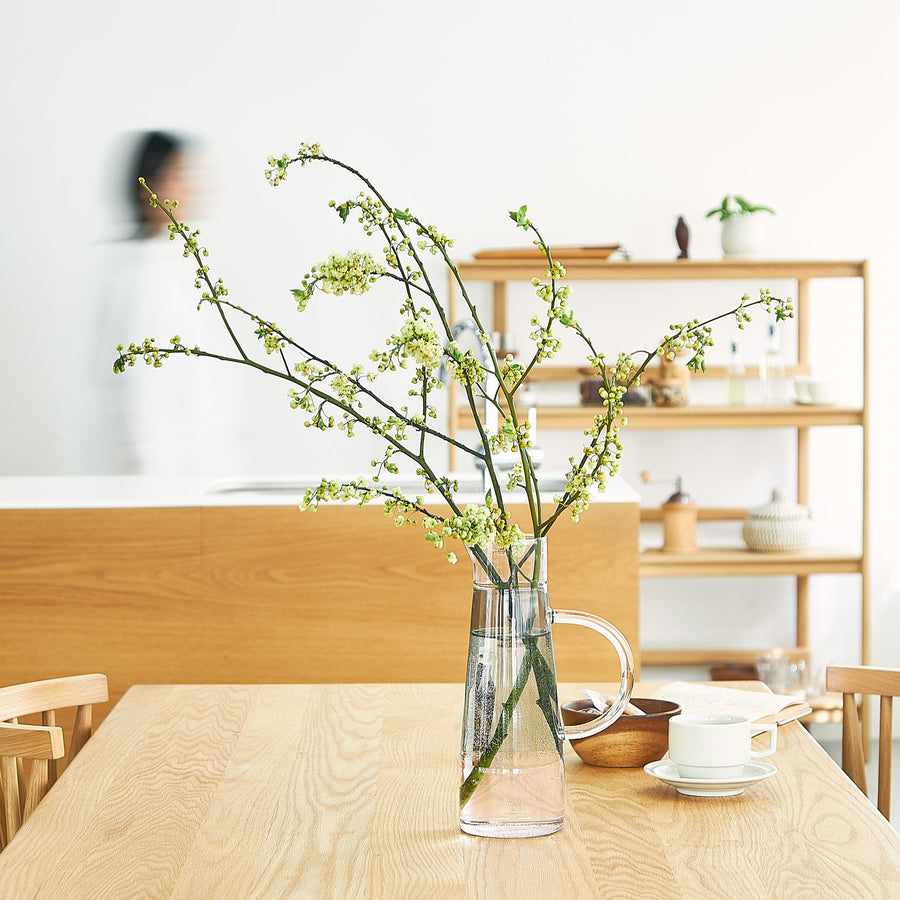
From late winter to spring, before the leaves open, it swells with buds all over its branches and produces delicate, tiny yellow-white flowers. As a branch, it is available with numerous small green buds resembling tiny bells. Its appearance, while simple, has a strong presence and is popular as a floral material for arrangements.
Its branches, leaves, and fruits have a distinctive refreshing lemon-like scent, and its fruit, in particular, is used as a fragrant plant, known as "May chang" in the world of aromatherapy.
In autumn, Aomoji bears dark purple berries, showing different expressions throughout the seasons. It is a plant with the trifecta of charming buds, a lovely scent, and beautiful branch structure, giving it a light and modern impression while retaining a Japanese aesthetic.
Aomoji is a sturdy and easy-to-handle plant, appealing both as a cut branch and a garden tree. It is perfect for enjoying the changing seasons, bringing the first signs of spring.

Flower Language of Aomoji
The flower language of Aomoji includes "many friends," "naturalness," "harmony," and "modest charm." Aomoji is characterized by its soft yellow flowers that bloom in spring and its clean scent. Its understated beauty and ability to blend in with its surroundings imbue it with gentle and peaceful meanings.
"Many Friends"
The sight of Aomoji's small flowers blooming together evokes a sense of connection and expansion. Even without being showy, people naturally gather around it, which is linked to the flower language "many friends." Its gentle presence, which softly calms its surroundings, suggests a kind entity that connects people.
"Naturalness"
Aomoji has an unadorned, simple, and soft impression. Its natural beauty symbolizes "not forcing oneself" and "the comfort of being natural." Its ability to blend in effortlessly anywhere quietly conveys the importance of being true to oneself.
"Harmony"
Aomoji blends well with other plants and gently integrates into any space. Its presence is considered a symbol of "harmony," interacting balancedly with its surroundings. Its ability to enhance the whole without strongly asserting itself is one of Aomoji's charms.
"Modest Charm"
Its not-too-vibrant yellow flowers and subtle scent. As a branch, it is available with many small green buds. The beauty of both the flowers and buds is not overpowering, yet memorable, linking to the meaning "modest charm."
The flower language of Aomoji stems from its gentle colors, scent, and tranquil demeanor. It is a plant with a calm charm that softly announces the arrival of spring.◎
How to Display Aomoji

The key to displaying Aomoji is to arrange it thoughtfully, emphasizing the gentle appearance of its swelling buds, the flow of the branches, and the empty space. By introducing gentle variations in the height and angle of the branches, the small buds will catch the light, creating subtle shadows.
By paying attention to the balance between the sections with continuous buds and the gracefully extending branch tips, you can enjoy Aomoji's characteristic light and dignified beauty◎
Aomoji's flexible branches make it easy to handle and it pairs well with simple vases made of glass or white ceramic.
Incorporating it into a spring display will gently bring a delicate seasonal atmosphere to the space with its subtle scent and pale hues.

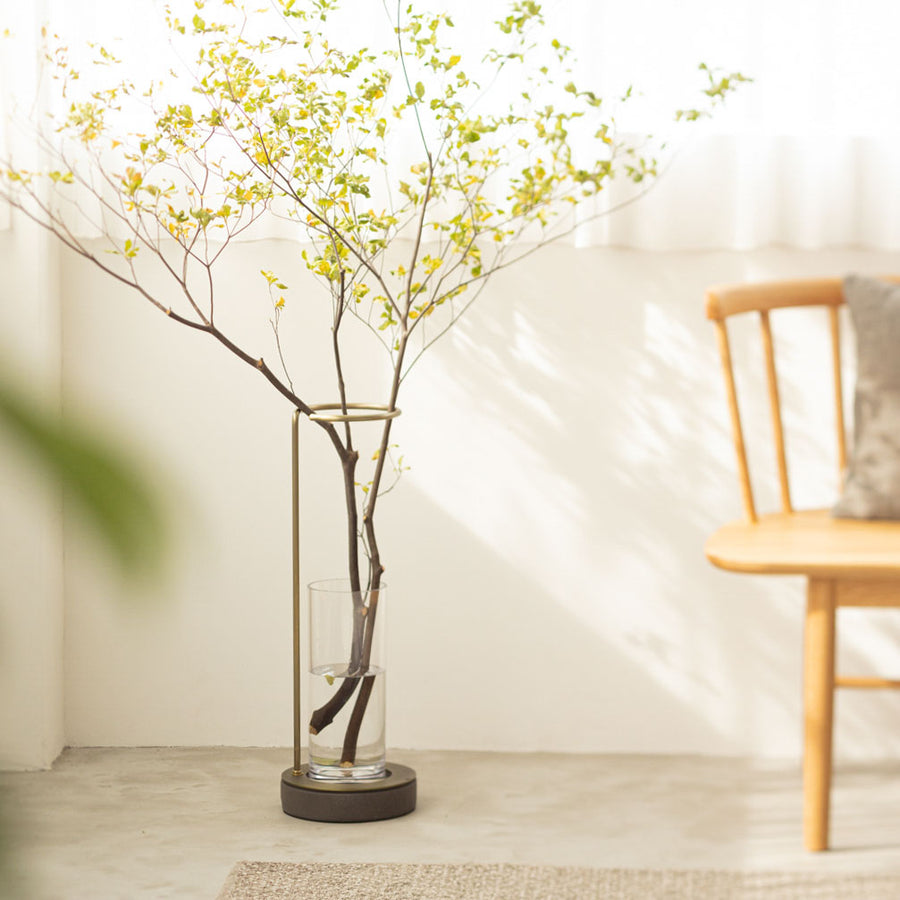
Vase Collection Perfect for Branches
View Products 〉
Precautions when arranging in a vase
Change the water in the vase daily and ensure Aomoji's green buds remain beautiful for longer. It is also important to regularly clean the vase and maintain it in a sanitary condition.
When cutting branches, use clean pruning shears and cut the stems diagonally to aid water absorption. As Nandina branches are flexible, lightly splitting the base will further improve water uptake.
When cutting branches, it is recommended to choose pruning shears that fit comfortably in your hand and are easy to use. Those with sharp blades that can smoothly cut thin branches are ideal.
With just a little care, you'll see the transformation from buds to flowers, and then you can enjoy them for even longer! ♪

Toyama Hamono | Pruning Shears for Life, Can Cut Even Thick Branches
View Products 〉
Aomoji Care Instructions
Aomoji is a plant that allows you to enjoy its delicate branches and the transformation from buds to flowers. By being mindful of its characteristics when caring for it, you can appreciate its gentle expression for longer. Here are the basic care methods for cut branches.
Basic Care
1. Trim upon receipt

Upon receiving the branches, trim them before placing them in a vase.
Additionally, make a cross-shaped cut at the base and use a knife to peel off the bark from the stem. It is recommended to only peel the part that will be submerged in water. This will improve water absorption and help the freshness of the branches last longer.
Moreover, using a flower preservative can further help maintain the freshness of the branches◎
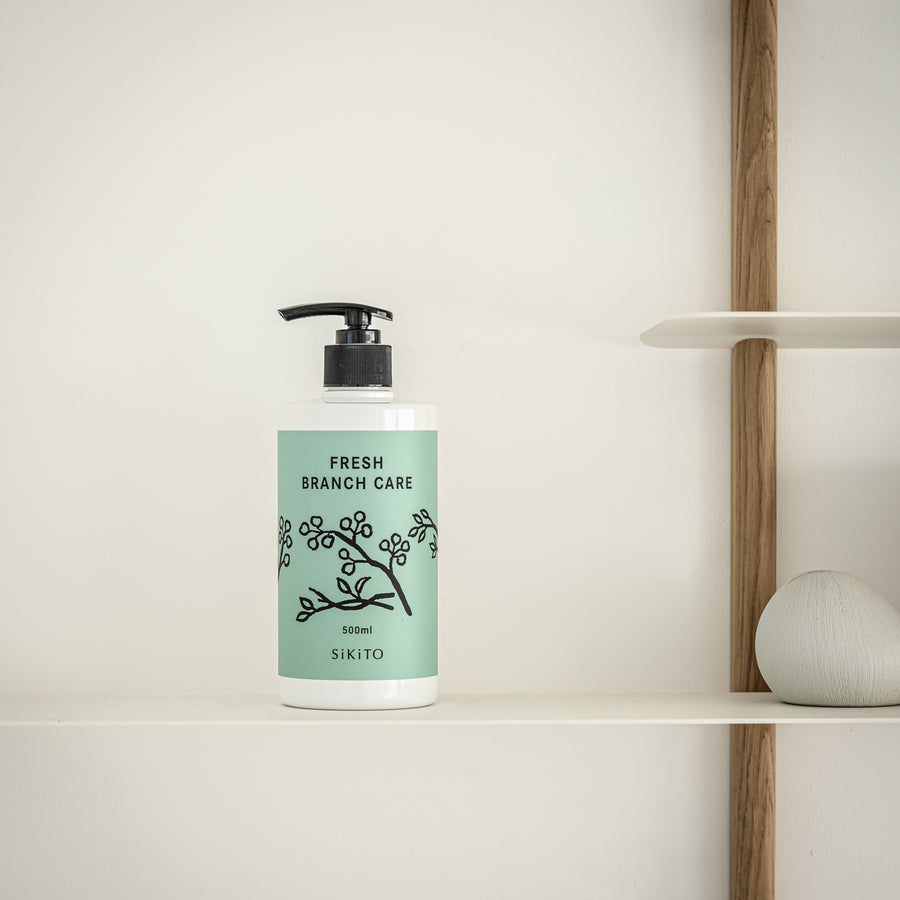
■ Freshness preservative for longer-lasting branches

This is a new freshness preservative created by SiKiTO after researching the ideal nutrient balance for branches. This preservative is expected to provide necessary nutrients to flowers and branches and keep vase water clean.
The specialized freshness preservative for branches is available here.
■ Florist Knife for improved water absorption

A florist knife for cutting flower stems is also useful for peeling the bark of branches. The VICTORINOX florist knife, which improves water absorption by peeling the bark of the submerged part, is available here.
It offers the reliable quality trusted by professionals worldwide.
2. Choose a comfortable spot for the branches
Branches prefer a spot with good ventilation and sunlight, and moderate humidity. Displaying them in a bright location, such as near a window, will help them thrive.
On the other hand, direct exposure to air conditioning can cause dryness and negatively affect flowering, so be cautious.
It's also recommended to display them in quiet and calm spaces like a bedroom or bathroom◎
3. Frequent water changes

Change the water frequently before it becomes cloudy. This is to ensure the stems absorb water easily and to prevent bacteria and mold from growing in the water. Trimming the stems at this time will also help them absorb water better.
By putting in a little extra effort, you can enjoy the beauty of your branches for a longer time.
But if the branches are still not doing well...
Cut the branches and enjoy them compactly

Even with continuous care, water absorption may gradually worsen over time. In such cases, it is recommended to cut the branches shorter.
Cutting them shorter improves water absorption, and if arranged in a smaller vase, you can enjoy the branches in a different atmosphere.
Fun Facts about Aomoji

Fragrance gently diffusing from branches and leaves
Aomoji is a plant with a subtle citrusy scent in its branches and leaves. It's refreshing like lemon, yet has a calming softness that doesn't overpower. When touched or when a branch is cut, a gentle fragrance rises, adding a subtle comfort to the space.
This understated fragrance blends well with the gentle spring air, softly accompanying you during times when you want to reset your mood or relax.
Furthermore, essential oil extracted from Aomoji fruit is known as "May Chang" in the aromatherapy world. It is said to originate from its Chinese name and has been used as a fragrant plant since ancient times. Its refreshing and bright scent is believed to have effects such as uplifting the mood and lightening the atmosphere, and it is still widely used as an essential oil today.
Even when displayed as a cut branch, knowing its background might enrich your perception of its scent◎
Transitioning beauty from bud to fruit
Most Aomoji available are in the form of small, green, unopened buds. The sight of soft, swollen little buds lining the branches has a light beauty that heralds the coming spring. Even in this state, it has a strong presence and is cherished as a floral material for arrangements.
If left as is, the buds will slowly unfurl, and small, pale yellow flowers will begin to bloom. This gently announces the arrival of spring, allowing you to feel the changing seasons.
As more time passes, after the flowers, fruits will appear and gradually ripen with the season, eventually turning black.
The transition from bud to flower and then to fruit has a charm as if time itself is captured within a single branch. Because of this slow, enjoyable transformation, Aomoji is popular as a cut branch and cherished as a material that brings a sense of the season into daily life.
Origin of the name Aomoji (青文字)
The word 'ao' (青) in Aomoji (青文字) refers not to a vivid blue, but a rather dull, greenish hue, which in Japan has historically been referred to as "ao."
Therefore, "aoi ki" (青い木, blue tree) = Aomoji is a name derived from its visual impression. Furthermore, the term "moji" (文字) is not exclusively used for Aomoji; it is a common appellation for plants within the same Lauraceae family.
For instance, Kuromoji (黒文字), which has black spots on its branches, and Shiromoji (白文字), with its bright bark, are also members of this group.
Many of these plants are fragrant woods, and it is thought that the name "moji" encompasses not only visual characteristics but also shared properties. Aomoji, also possessing a refreshing scent in its branches and leaves, is one such plant named as a member of this "moji" group.
Knowing the background of its name might give you a slightly different perception of its scent and demeanor◎
Summary of Aomoji

Aomoji is a deciduous small tree of the Lauraceae family. It is a popular cut branch in early spring, characterized by its plump green buds and the small, pale yellow flowers that eventually bloom in clusters.
It possesses a gentle lemon-like fragrance and has been cherished as a plant that subtly brings the scent of spring into a space. It is often distributed in its bud stage, and one of its charms is being able to enjoy watching the flowers open as it is displayed.
The flower language of Aomoji includes "naturalness," "harmony," and "modest charm." These meanings are attributed to its understated gentle demeanor and its ability to blend harmoniously with its surroundings.
Aomoji's buds and flowers blooming in spring add a light and gentle touch of color to any space. Simply decorating with it brings a sense of the arrival of spring and the changing seasons, making it a branch with quiet charm◎

【SiKiTOのよみもの】枝もの図鑑
よみもの一覧をみる〉

枝もの定期便|自宅で待つだけ、飾るだけ。
商品をみる 〉
PRODUCTS



![[Made to order] Green Summer Wreath made with summer branches (fresh flowers)](http://sikito.com/cdn/shop/files/20250702_-15.jpg?v=1751530871&width=900)



![[Made to Order] Four Seasons and Bonsai: Summer | Japanese Maple](http://sikito.com/cdn/shop/files/yomimono20250912.jpg?v=1756106914&width=900)
![[Pre-Order] Seasons and Bonsai: Summer | Gardenia](http://sikito.com/cdn/shop/files/DSC09951a.jpg?v=1779693971&width=900)
![[Made to Order] Seasons and Bonsai: Summer | Crape Myrtle](http://sikito.com/cdn/shop/files/DSC0468_2.jpg?v=1779774773&width=900)
We also recommend this article


%0A%0A%0A%0A%0A%0A%0AScientific%20Name%0A%0ALitsea%20cubeba%0A%0A%0A%0A%0A%0A%0AEnglish%20Name%0A%0AMay%20chang,%20aromatic%20litsea,%20mountain%20pepper%0A%0A%0A%0A%0A%0A%0AOther%20Names%0A%0AShog...)