

What is Biophilic Design? | Benefits and Interior Design Examples

Biophilic design is a design method that incorporates natural elements into spaces such as offices and homes to improve people's health and well-being.
This article introduces what biophilic design is, its pros and cons, how to incorporate it, and points to note.
If you are interested in biophilic design or aspire to a life surrounded by greenery, please refer to this article.
- What is Biophilic Design?
- Benefits of Incorporating Biophilic Design
- Disadvantages of Incorporating Biophilic Design
- Key Points for Incorporating Biophilic Design
- Examples of Biophilic Design
- Incorporate into Wallpaper
- Incorporate into the Dining Area
- Incorporate around Desks and in Free Spaces
- Summary
What is Biophilic Design?

Biophilic design refers to a design method that incorporates natural elements into a space to improve people's health and well-being.
The concept of "biophilia," proposed by American biologist Edward O. Wilson in the 1980s, is deeply related to the adoption of biophilic design. He believed that "humans instinctively desire to connect with nature, and by interacting with nature, they can achieve health and happiness."
Based on this theory, biophilic design was conceived to "create environments where people can live more comfortably by incorporating natural elements into architecture and interiors."
In fact, Professor Chizuko Mizuniwa of Tokyo University of Agriculture investigated whether plants and flowers in a dental clinic could help reduce tension, using RPP (Rate Pressure Product) [*1] to indicate stress levels.
When RPP values were measured for ① no plants or flowers, ② only plants, and ③ plants and flowers, the results were:
① No plants or flowers > ② Only plants > ③ Plants and flowers
This demonstrated the tension-reducing effect of plants and flowers [*2].
More details about Professor Chizuko Mizuniwa's research at Tokyo University of Agriculture are provided in the article below.

Seasonal Branches Become an "Indoor Garden"
Read more here 〉
[*1]Higher RPP values indicate a state of tension.
[*2]Paper "Changes in Tension Caused by Greening in Subjects - A Case Study of Dental Clinic Examination Rooms" by Chizuko Mizuniwa, Mai Atoh, and Mitsuo Kondo, Journal of Agricultural Science, Tokyo University of Agriculture, Vol. 53, No. 2 (2008).
Benefits of Incorporating Biophilic Design
What benefits can be gained from utilizing biophilic design? Here, we introduce the expected benefits of incorporating biophilic design into offices and homes.
May Reduce Stress and Provide Relaxation
Incorporating biophilic design is expected to reduce stress and provide relaxation effects [3*].
The Ministry of Agriculture, Forestry and Fisheries announced that "people who spend time in rooms with flowers have a 25% suppression of sympathetic nervous system activity, which increases during stress, while parasympathetic nervous system activity, which increases during relaxation, increases by 29%, scientifically proving the healing effect of flowers" [4*].
In modern society, the frequent use of computers and smartphones often places a heavy burden on the brain, making mental and physical refreshment essential. Being in an environment surrounded by nature, such as plants, can lead to stable heart rate and breathing.
By utilizing plants and natural light that provide a sense of openness even indoors, psychological relaxation becomes easier, creating a more comfortable space.
[3*] Seasonal Branches Become an "Indoor Garden"
Increases Happiness
Another benefit of incorporating biophilic design is its potential to increase happiness levels.
Robertson-Cooper, an American company, quantified and published employee "joy" and "sense of purpose" (= happiness) at work. The results showed that people with opportunities to interact with nature experienced up to a 15% increase in happiness [5*].
By incorporating biophilic design not only in the workplace but also at home, an increase in happiness can be expected.
[5*] The Impact of Biophilic Design in Workplaces Worldwide
Improves Work Quality and Productivity
Biophilic design is widely utilized, particularly in offices. When employees' happiness increases, it can lead to improved work quality, productivity, and motivation for the work itself.
Many people have experienced time flying by when they are engrossed in something they love or a hobby.
By engaging in work with a sense of joy and purpose, concentration increases, and productivity improves.
Incorporating biophilic design can potentially lead to increased company performance.
Disadvantages of Incorporating Biophilic Design
While biophilic design offers many benefits, it also has drawbacks. Here, we introduce the main disadvantages of incorporating biophilic design.
Plant Care is Demanding
One of the challenges of incorporating biophilic design is plant management.
Plants require care such as watering and pruning, so if regular maintenance is difficult, hiring a professional service might be an option. If greenery brought into a home is not properly managed and dies, it can't create the intended relaxing space and might even cause stress.
Regular maintenance is an essential element for biophilic design to be effective.
Requires Careful Layout Planning
When implementing biophilic design, a layout that considers safety and traffic flow is essential.
Placing plants on the floor can increase the risk of tripping, and hanging plants may pose a falling hazard.
Furthermore, placing plants near pathways or entrances can obstruct movement, so careful consideration of the layout is necessary.
Key Points for Incorporating Biophilic Design
When incorporating biophilic design, several key points need to be considered. Here, we introduce the most important ones.
Choose Easy-to-Maintain Options

When incorporating biophilic design, it's ideal to choose plants that are easy to maintain. Selecting plants that are difficult to care for can make watering and pruning a burden, potentially leading to their demise.
It is important to reduce the effort of maintenance while bringing the healing power of nature into the space. Therefore, choosing easy-to-grow plants is a key point for biophilic design.
Utilize Natural Light

When placing plants, it's also important to maximize the use of natural light. To incorporate natural light, adjust window placement to ensure ample light reaches indoors.
Additionally, by adjusting curtains or blinds, you can increase the amount of time sunlight enters, creating a bright and open space.
Incorporate Natural Materials

By incorporating natural materials into biophilic design, you can create a warm and calming space.
Using wood or bamboo for furniture, flooring, and wall materials can bring out the natural textures and feel. Additionally, incorporating natural materials like linen, wool, and cotton enhances comfort, bringing a natural warmth to the entire space.
Examples of Biophilic Design
Here are examples of homes that actually incorporate biophilic design.
Incorporate into Wallpaper

Green-toned wallpaper with plant patterns, or woody-toned wallpaper that highlights plants, are recommended ways to incorporate biophilic design.
By incorporating it into wallpaper, you can visually experience nature, allowing natural elements to be included even in environments where actual plants are difficult to place.
However, if the wallpaper design is excessively flashy or has strong colors, it can create a feeling of oppression. Therefore, it's important to choose colors and patterns that match the furniture and the room's atmosphere.
Incorporate into the Dining Area

Incorporating biophilic design into the dining area is recommended because it allows you to bring natural elements into the space and create a pleasant dining experience.
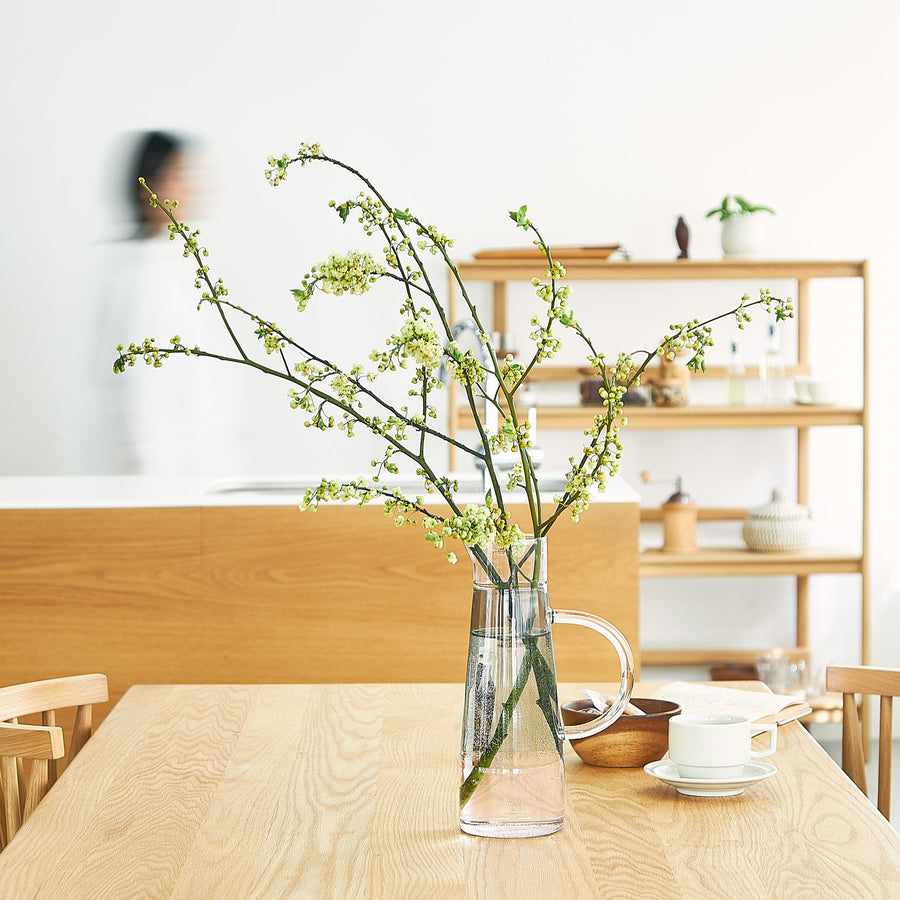
For example, placing plants on the table can create a sense of openness. Especially, choosing small houseplants not only provides visual healing but also allows you to feel nature without disrupting the dining space.
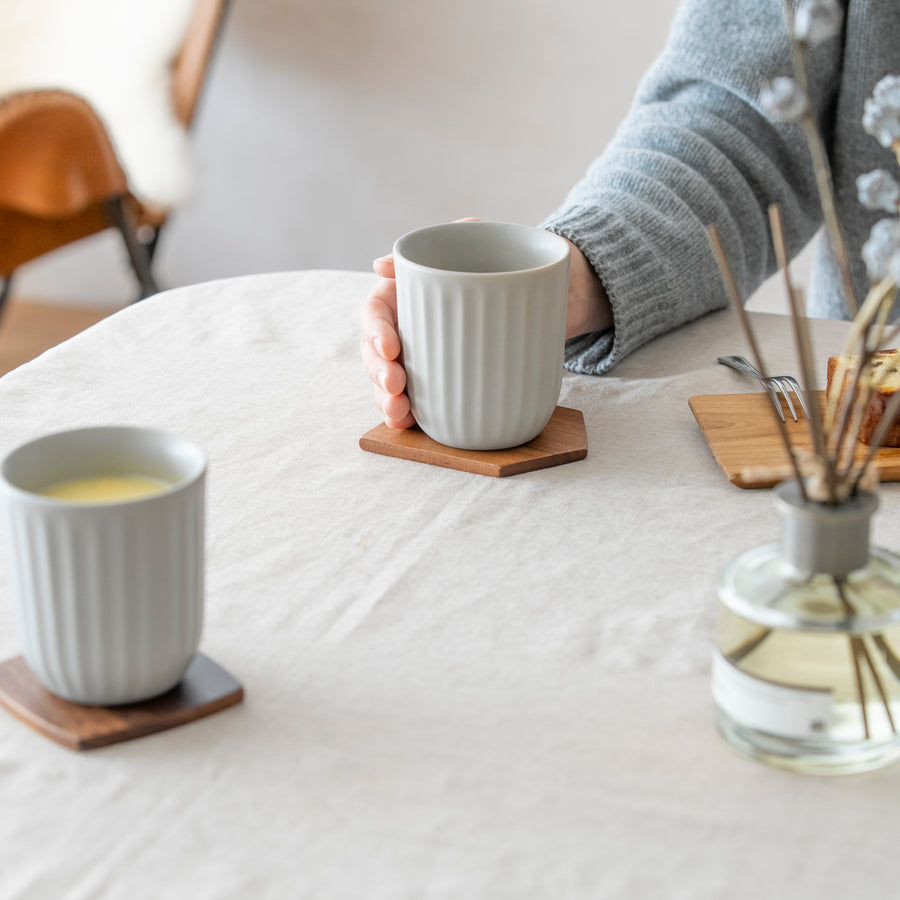
Also, furniture and tableware made of wood create a warm and calming atmosphere. Wooden tables, chairs, and dishes allow you to feel the texture of natural materials and pair perfectly with plants.
By incorporating biophilic design into your dining area, you can make meals more enjoyable.
Incorporate around Desks and in Free Spaces

Biophilic design around desks and in free spaces can make work and relaxation areas more comfortable with natural elements.
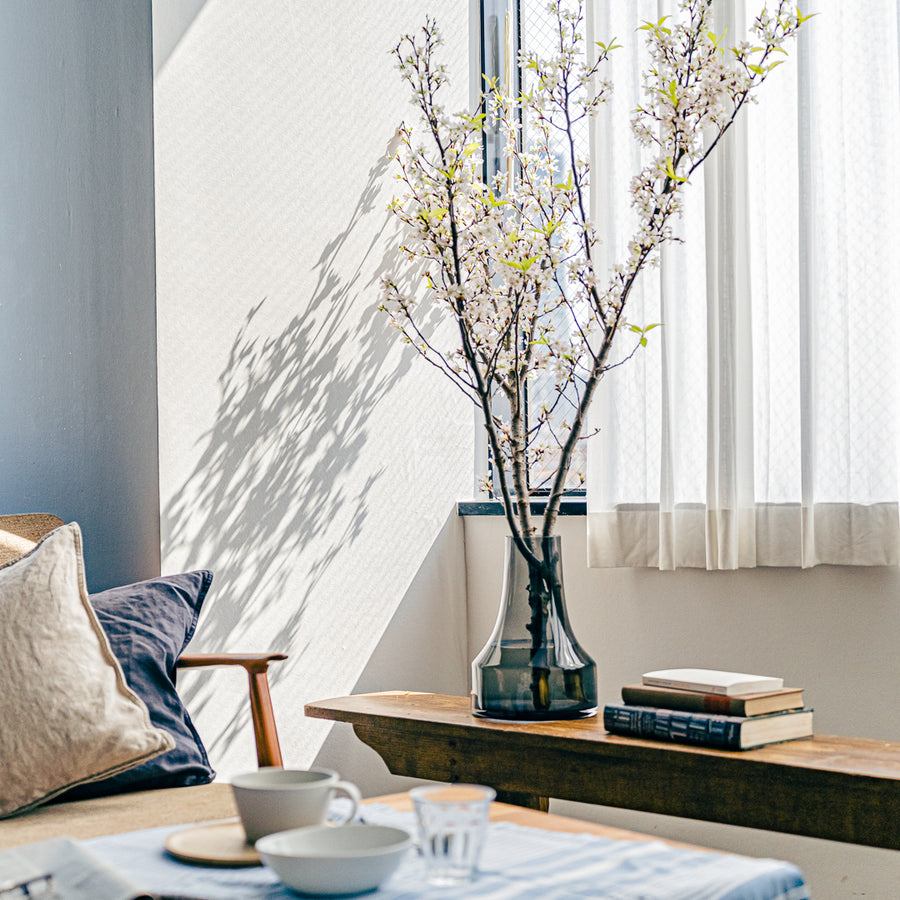
For example, placing houseplants on your desk can provide visual comfort. Small plants or branches are easy to care for and can offer an effective refresh.
Additionally, incorporating natural material furniture and decor is effective. Using wooden desks, chairs, and small decorative items can create a warm, natural ambiance.
It's also recommended to position your desk by a window to incorporate natural light.
Summary
Biophilic design is a design approach that enhances people's mental and physical health and well-being by incorporating natural elements into indoor environments.
By incorporating biophilic design into offices and homes, one can expect reduced stress, improved concentration, and relaxation effects.
Skillfully incorporating biophilic design will help you achieve your ideal and comfortable lifestyle!

Seasonal Branch Subscription | Seasonal Branches Delivered to Your Home
View Products 〉
PRODUCTS

![[Made to order] Green Summer Wreath made with summer branches (fresh flowers)](http://sikito.com/cdn/shop/files/20250702_-15.jpg?v=1751530871&width=900)


![[Made to Order] Four Seasons and Bonsai: Summer | Japanese Maple](http://sikito.com/cdn/shop/files/yomimono20250912.jpg?v=1756106914&width=900)
![[Pre-Order] Seasons and Bonsai: Summer | Gardenia](http://sikito.com/cdn/shop/files/DSC09951a.jpg?v=1779693971&width=900)
![[Made to Order] Seasons and Bonsai: Summer | Crape Myrtle](http://sikito.com/cdn/shop/files/DSC0468_2.jpg?v=1779774773&width=900)
We also recommend this article


It can be the star of your interior! How to choose a vase you won't regret
When creating a stylish interio...


