

[The comfort of branches] Branches that bring the seasons become a 'garden' in your home.

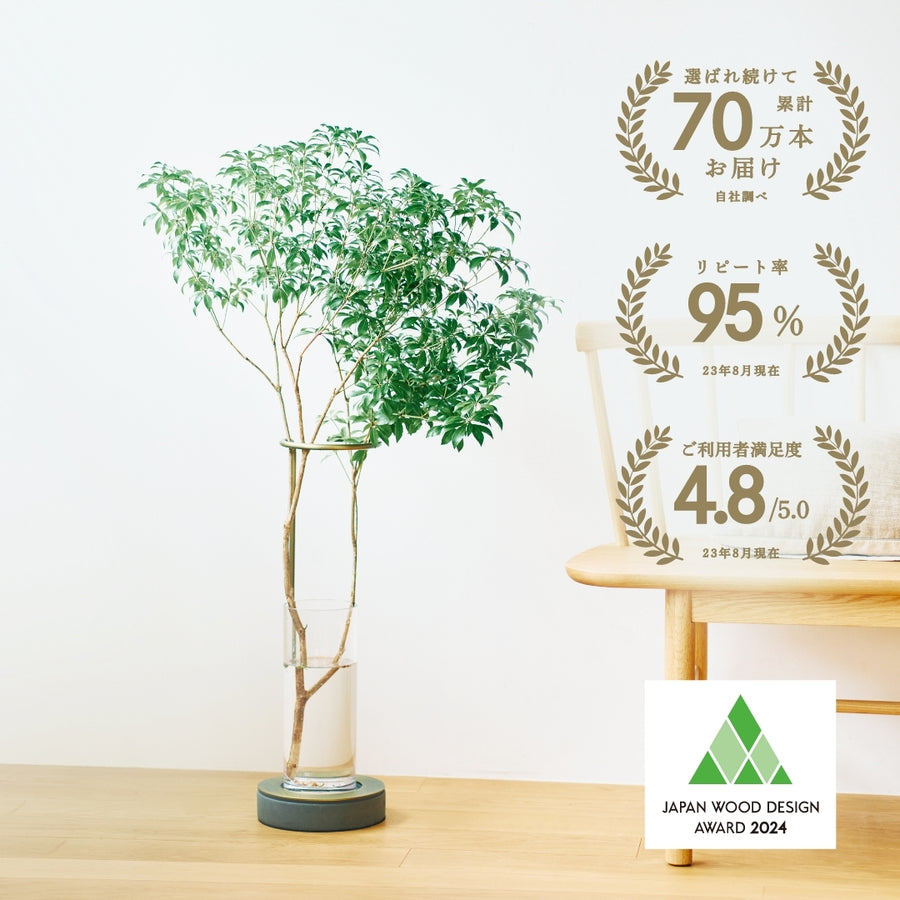
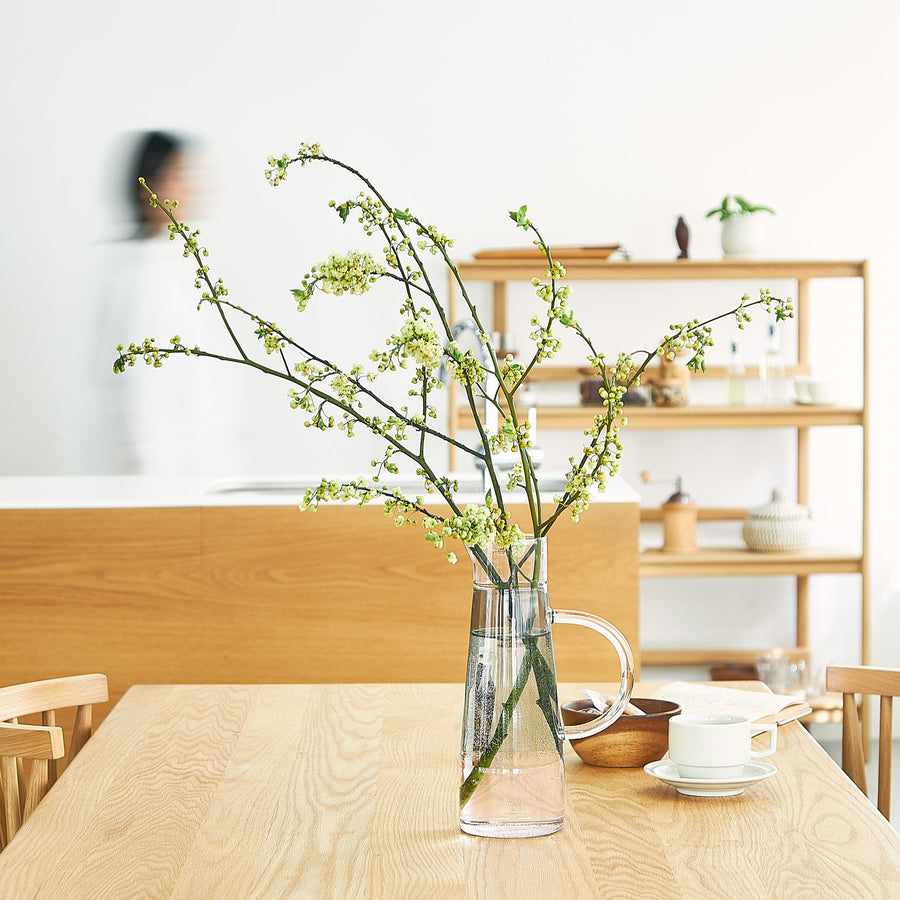
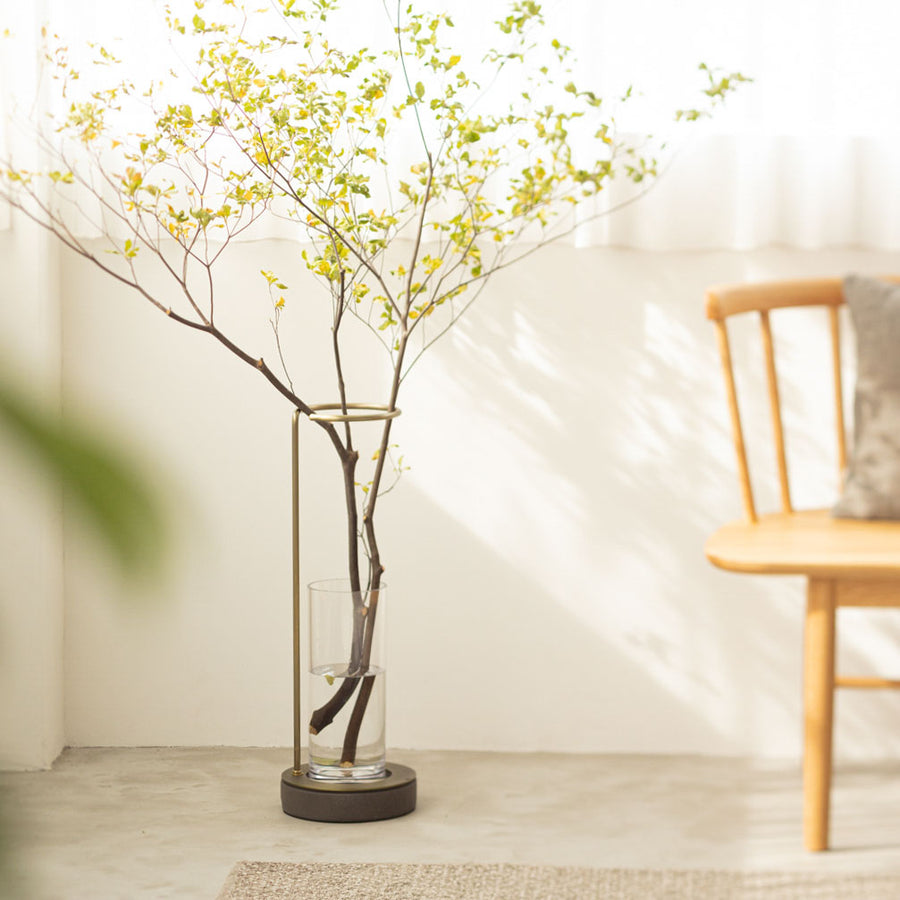
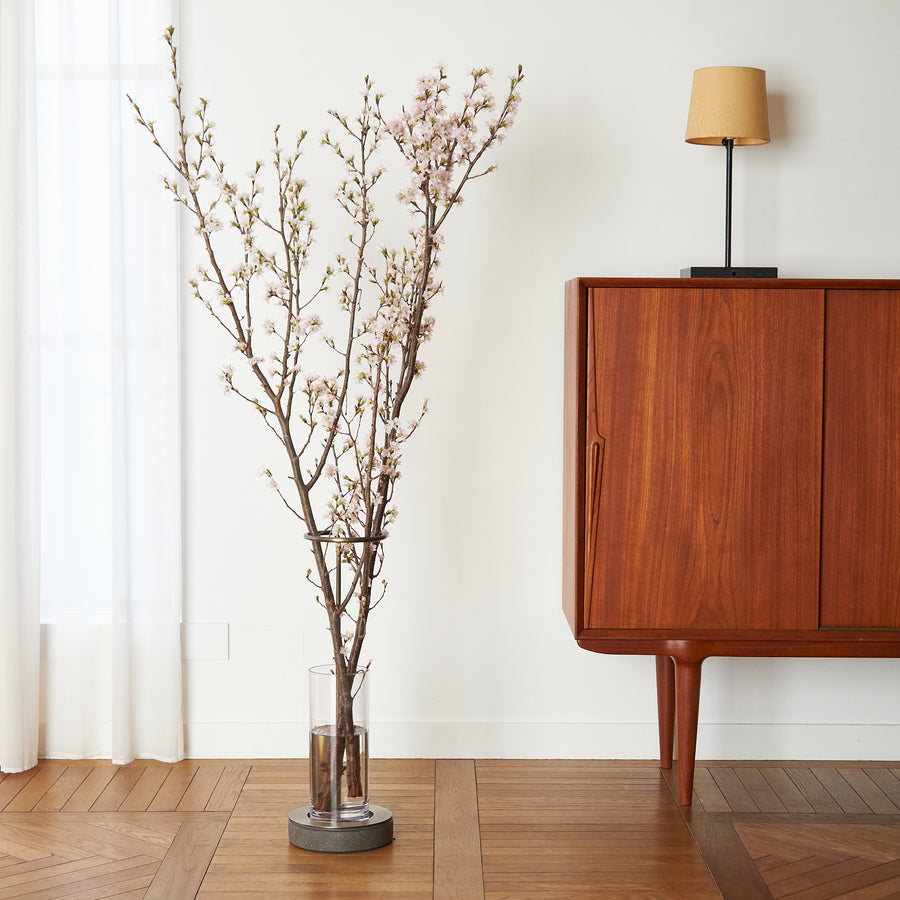
Our "Branch Subscription Service" delivers seasonal branches regularly to your home. It's a service that makes it easy to enjoy long branches that are often difficult to buy in stores.
What is the true nature of that inexpressible comfort we feel when we display branches, that feeling of "being somehow soothed" or "the atmosphere changing"?
We asked Professor Chizuko Mizuniwa of Tokyo University of Agriculture, an expert in landscape and green environments!
What is your specialized field, "Landscape Resources and Plant Science"?

This field broadly covers space creation, including plants, soil, water, and sunlight—the essential elements for growing plants—as well as the ecosystems that reside within them.
One of my research themes is "Green Infrastructure." I am working on how to utilize green spaces to circulate resources in urban development.
Are plants and nature essential for humans?
There's a term called "biophilia," which means that "humans instinctively seek nature."
In the past, in our pursuit of convenience, we tried to eliminate nature from urban life. But we eventually realized that nature is, after all, necessary for humans.

Based on this idea, designing spaces that incorporate nature into urban and living environments is called "biophilic design." I believe that the presence of plants softens a space, and even though it's a small amount, they perform photosynthesis, generating a new kind of air or atmosphere, which contributes to an unconscious sense of security.
Humans are also part of nature, so perhaps plants are what keep us in sync with our daily cycle of waking up in the morning, being active during the day, and feeling sleepy at night, as well as the annual cycle of spring, summer, autumn, and winter.
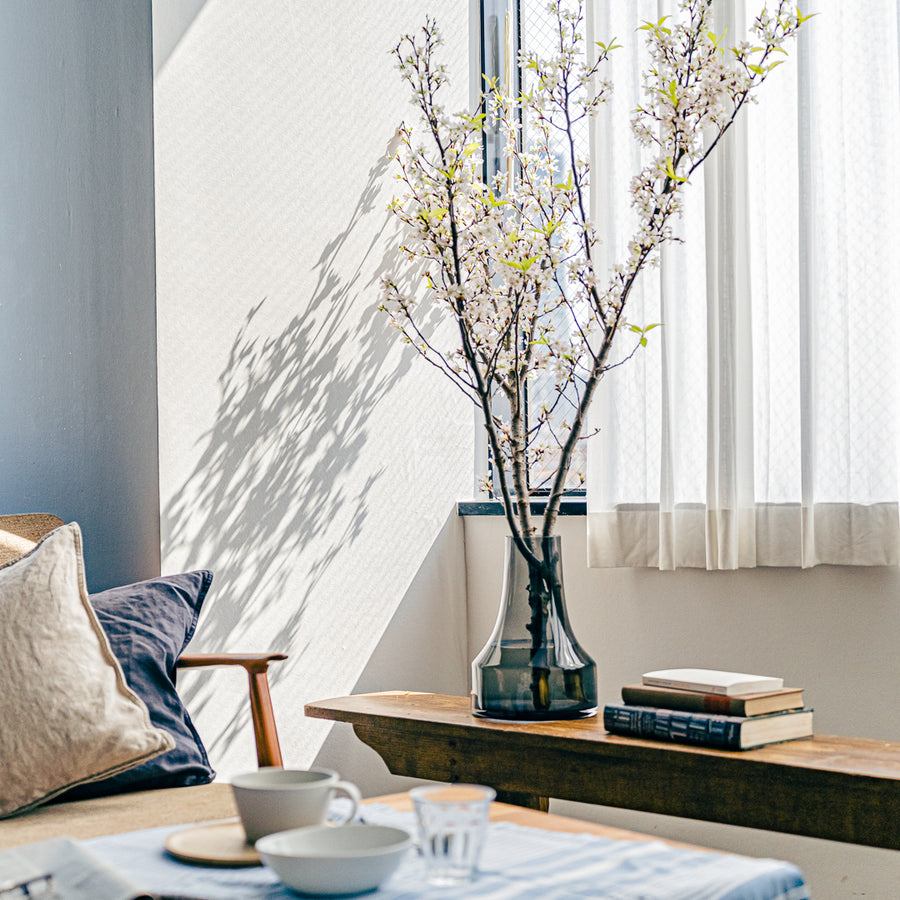
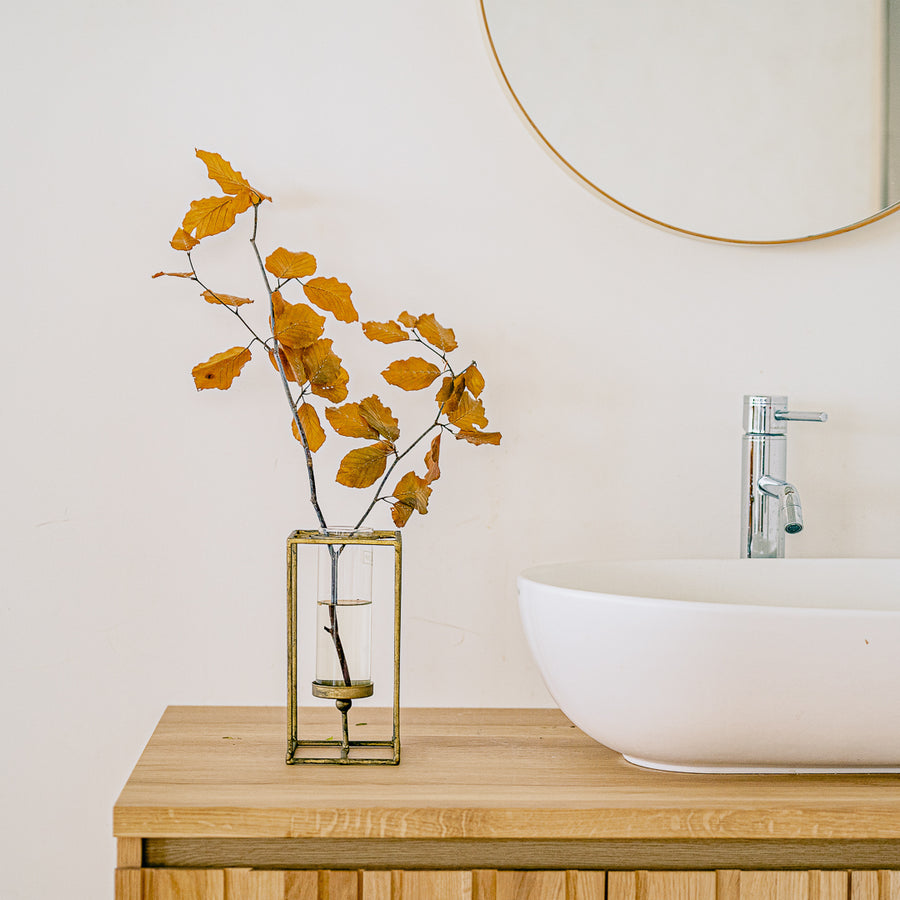
For example, when cherry blossoms bloom, we feel the arrival of spring, and when we see autumn leaves, we sense the deepening of autumn; the appearance of plants makes us feel the seasons. In other words, plants regulate our annual rhythm.

Furthermore, some data (from an American researcher) showed that patients hospitalized in rooms with a view of plants from the window recovered faster than those in rooms with only walls.
From these points, it seems that nature and plants are indeed essential for humans.
It seems to be connected to memories, similar to scents.
That's right. Plants come in various types throughout the four seasons, and while it might be an exaggeration to say they keep time with us, they may be connected to our memories both visually and olfactorily.
The reason why decorating with branches enriches our hearts might be that having something that keeps time with us in our home, or having another living thing around, gives people a sense of comfort, like having a companion.

Is there an "appropriate amount" of greenery to have indoors?
Surprisingly, humans don't actually want so much greenery that it blocks their view.
In one experiment, when children were taken to places with various grass heights, they wouldn't want to go to areas where the grass was taller than their knees. This is apparently due to an instinctive feeling that "places where you don't know what's ahead are dangerous." Adults also don't really want to enter dense thickets, do they?
I believe that nature is not always on humanity's side, so that sense of fear is probably natural.
From this perspective, humans feel that too little greenery is unsatisfying, but too much makes them anxious... We're so selfish, aren't we? (laughs).

Even when I'm planning or managing green spaces, I use the standard of being able to see the sky beyond when planting trees.
In other words, I think the appropriate amount is within the range that one feels they can control.
What prompted you to focus on the theme of "tension reduction through plants" in your research?
This is a personal experience, but I really dislike dentists. However, I kept going to the clinic I was attending at the time, and I tried to find out why.

I then remembered that there was greenery in the treatment room, and it occurred to me that the plants might have contributed to reducing my tension. That was the trigger.
In the experiment, we used the RPP value (Rate Pressure Product) [*1], which indicates a state of tension, to investigate whether plants and flowers in a dental clinic have an effect on reducing tension.
We measured RPP values in three conditions:
① No plants or flowers > ② Only plants > ③ Plants and flowers
The results showed that: ① > ② > ③, which demonstrated the effect of plants and flowers in reducing tension [*2].

[*1] A higher RPP value indicates a higher state of tension.
[*2] Paper: "Changes in Tension Induced by Greening in Subjects - A Case Study of Dental Clinics" by Chizuko Mizuniwa, Mai Atoh, and Mitsuo Kondo, Journal of Tokyo University of Agriculture, Vol. 53, No. 2 (2008).

Are there other positive effects that plants have, besides tension reduction?
Currently, we are working on experiments regarding the effect of plants on "improving efficiency before and after written exams" and "stress reduction."
We are also investigating how much harmful substances plants absorb from the air, and we found that cut flowers are effective against formaldehyde, which causes sick building syndrome.
Formaldehyde is hydrophilic (easily dissolves in water), so plants absorb it and use it as nutrients. About 10 cut flowers can purify the air in a room of about 6 tatami mats.

Considering the properties of formaldehyde, branch plants could also be quite effective, so it would be interesting to conduct an experiment.
This is my personal opinion, but I feel that just having plants around alleviates loneliness, calms irritation, and brings a sense of peace. They also provide visual enjoyment as branches grow and flowers bloom.
The plants we live with at home feel less like a burden of "having to take care of them!" and more like a silent presence that affirms us and watches over us warmly. In terms of photosynthesis creating oxygen, humans cannot live without oxygen, after all.
How do you feel about the increase in people decorating their homes with plants during the pandemic?
There's a Japanese word "katei" (家庭) for "home" or "family," which is made up of two characters: "ka" (家) for "house" and "tei" (庭) for "garden." If you think about what's in a garden, it's plants, and you can feel the changing seasons there.

Just like the biophilia discussion at the beginning, there's a growing trend to prefer natural things over artificial ones. For example, even with roses and tulips, more people prefer varieties closer to their original species than those that have undergone extensive breeding.
Branch plants fit perfectly with this naturalistic trend, and above all, by displaying them in a home without a garden, you can create a 'garden' there.

Professor Mizuniwa, with her broad and deep knowledge and academic perspective, provided numerous insights into the appeal of branches that we couldn't articulate ourselves.
Among them, the discussion about "home" was particularly eye-opening. We encourage you to create a "garden" in your own home with our "Branch Subscription Service."
PROFILE | Chizuko Mizuniwa
Professor, Department of Landscape Architecture, Faculty of Regional Environmental Science, Tokyo University of Agriculture.
Her research themes include "Establishing Environmental Improvement and Interaction through Greenery and Application Methods" and "Establishing Conservation and Utilization of Green Spaces and Lawns." She participates in urban planning by companies and government agencies.

枝もの定期便|自宅で待つだけ、飾るだけ。
商品をみる 〉
PRODUCTS

![[Made to order] Green Summer Wreath made with summer branches (fresh flowers)](http://sikito.com/cdn/shop/files/20250702_-15.jpg?v=1751530871&width=900)

![[Made to Order] Four Seasons and Bonsai: Summer | Japanese Maple](http://sikito.com/cdn/shop/files/yomimono20250912.jpg?v=1756106914&width=900)
![[Pre-Order] Seasons and Bonsai: Summer | Gardenia](http://sikito.com/cdn/shop/files/DSC09951a.jpg?v=1779693971&width=900)
![[Made to Order] Seasons and Bonsai: Summer | Crape Myrtle](http://sikito.com/cdn/shop/files/DSC0468_2.jpg?v=1779774773&width=900)
We also recommend this article

[Behind the Scenes of the Branch Subscription] From Market Procurement to Delivery
We'll be introducing the behind-the-s...

"We want to deliver this beauty, known only to glass artisans." - Sghr
Sghr (Sugahara) is a glass product ma...


