

What is Japandi? | Features of a Familiar Interior and Stylish Ways to Incorporate It

Japandi is the latest interior design style that blends Japanese and Nordic aesthetics.
This article provides a detailed explanation of the characteristics and appeal of the Japandi style, essential tips for incorporating it, and recommended interior items.
If you're interested in Japandi, please use this as a reference.
What is Japandi Style?
Japandi style is an interior design style that combines Japanese and Nordic designs. The name "Japandi" is a portmanteau of "Japan" and "Scandi" (Scandinavian).
Japandi is gaining attention as a cutting-edge interior style, having set a record for search queries related to interior styles in the U.S. Search numbers are also gradually increasing in Japan, indicating it will likely become an even more prominent interior style in the future.
Japandi style is characterized by its simple, functional, and warm design. This article provides a detailed explanation of "Japandi style," which has gained global popularity in recent years.
The History of Japandi Style
The Japandi style began around the 1860s, shortly after Japan reopened its borders, when William Carstensen, a Danish naval officer, became deeply fascinated by Japanese aesthetics.
Upon returning to his home country, William found common ground between the Japanese concept of wabi-sabi (an aesthetic concept emphasizing simplicity and negative space) and the Danish concept of hygge (a Danish word for "cozy atmosphere" or "enjoyable time").
Later, his publication "Japans Hovedstad og Japaneserne" (A Voyage on a Russian Warship) is said to have piqued the interest of designers in his home country.
The Japandi style, which combines the charms of both Nordic and Japanese cultures, continues to attract many admirers today.
The Catalyst for Japandi Style's Popularity
The Japandi style is said to have started gaining attention around 2020. With the global pandemic of COVID-19, people spent more time at home, leading to an increased emphasis on "comfort and security at home."
The natural materials and calming color palettes of Japandi style interiors rapidly grew in popularity as spaces that promote relaxation.
Furthermore, amidst growing environmental awareness, such as SDGs, the Japandi style's incorporation of sustainable materials and traditional techniques also contributed to its popularity.
The Japandi style, which aligns with current lifestyle values, is expected to gain even more traction in Japan.
Commonalities in Japandi Style Interiors
The common threads found in Japandi style interiors are an emphasis on "simple yet warm spaces," "sustainable designs using natural materials," and "functionality and comfort."
Japandi is not a typical "Nordic x Japanese modern" interior style; it is an innovative, cutting-edge interior style that prioritizes ease of living and a relaxing atmosphere.
7 Essential Tips for Japandi Style
To incorporate Japandi style, there are important points to consider when choosing and arranging interiors. Here are 7 indispensable tips.
1. Use plenty of natural materials for interiors

Natural materials are an indispensable element in Japandi style. Incorporating natural materials such as wood, linen, ceramics, and washi paper brings warmth and calmness to the space, creating a comfortable living environment.
Examples include cushions woven from linen or cotton, ceramic planters, washi paper lamps, and wooden low tables.
When incorporating natural materials, it is recommended to pay attention not only to the design but also to the "aging of materials" and the "warmth of handcraftsmanship" to experience the intrinsic charm unique to natural materials.
2. Incorporate negative space throughout the room

In Japandi style, refined simplicity is a crucial point. Among these, the concept of "negative space" is particularly important.
Examples of simple "negative space" include placing just one vase on a wooden low table, or hanging a single painting on a wall with ample space around it. Instead of trying to fill every space, aim to "enjoy the empty space."
Choosing simple, low-profile designs for furniture like tables and sofas will create more negative space and a greater sense of openness throughout the room.
3. The balance of Nordic and Japanese is "7:3"

In Japandi style, the ideal balance for incorporating Nordic and Japanese design is considered to be "7:3."
By basing the style on Nordic design, Japandi can create a warm and tranquil relaxing space that meets modern living demands. Adding 30% Japanese interior elements will also bring out a unique Japanese elegance.
For example, it is recommended to choose Nordic-style large furniture such as tables, sofas, and chairs, while incorporating Japanese elements into small items like lighting and vases.
4. Unify the entire room with neutral colors

In Japandi style, the key is to unify the room's color palette, including the interiors, with simple, calming colors based on neutral tones that enhance the beauty of natural materials.
It is recommended to base the room predominantly on "earth colors" or "neutral colors." Earth colors are shades found in nature such as wood, soil, and plants, including browns, terracotta, khaki, and moss green.
"Neutral colors" are achromatic colors like black, white, and gray. Among these, white and gray are particularly easy to incorporate into Japandi style.
If the overall light colors make the room seem indistinct, incorporating black interior items can add an elegant touch by providing contrast and tightening the space.
5. Create a relaxing space with soft lighting

Lighting not only brightens a room but also significantly influences its impression and atmosphere.
In Japandi style rooms, instead of using a single bright light source, it's recommended to disperse gentle light using table lamps and pendant lights.
Furthermore, choosing lighting that emits a soft, enveloping glow can enhance the beauty and sense of relaxation in the space.
Selecting lights with adjustable brightness and color temperature will allow you to create a more comfortable and personalized tranquil space.
6. Embrace a minimalist style

Minimalist style is a design that eliminates waste to highlight essential beauty. In Japandi, the simplicity of having fewer possessions is considered a crucial element for making a space beautiful.
As we live our daily lives, clutter inevitably accumulates in our rooms. While it may be difficult to declutter all at once, focus on gradually tidying up and simplifying your space.
If you have a lot of items, consider using "hidden storage" such as cabinets with doors to conceal their contents.
With fewer items in the room, the quality of each piece of furniture and item is enhanced, creating an overall calm atmosphere.
7. Place houseplants and branches

In Japandi style, incorporating houseplants and branches as interior decor is highly recommended. Not only does it harmonize well with Japandi's characteristic use of natural materials, but placing greenery also provides visual relaxation. Plants are also said to have a calming effect on the mind.
Furthermore, for Japandi style, which emphasizes negative space, placing simple yet impactful branches is particularly suitable.
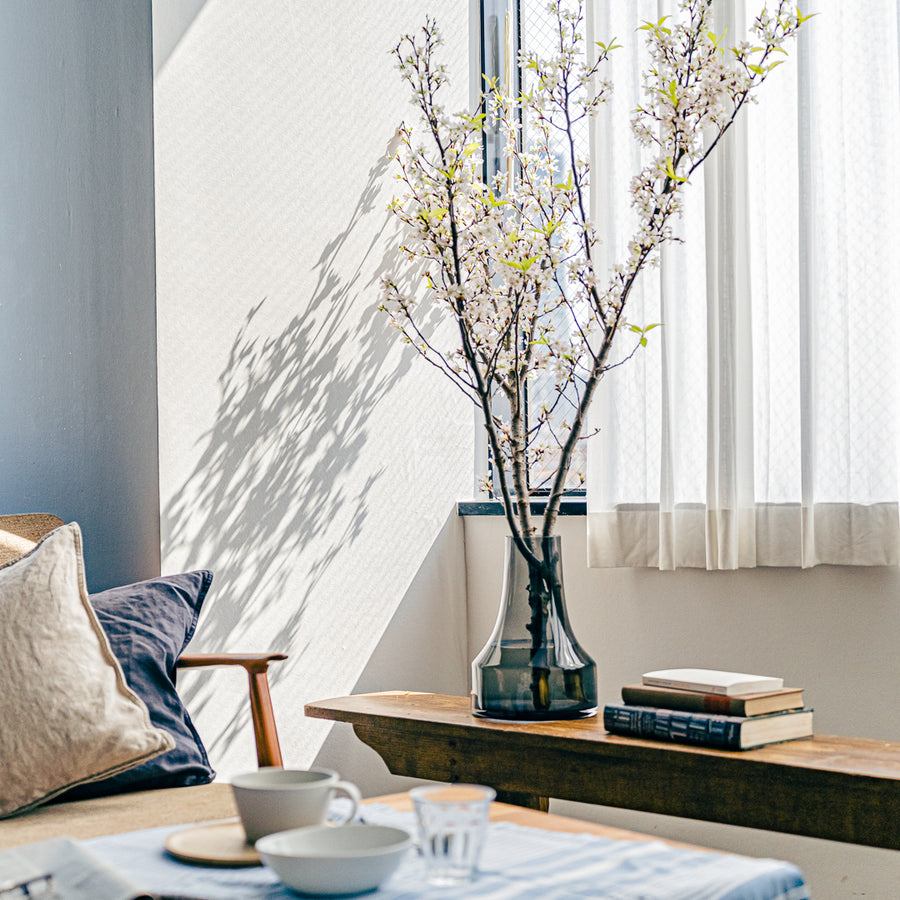
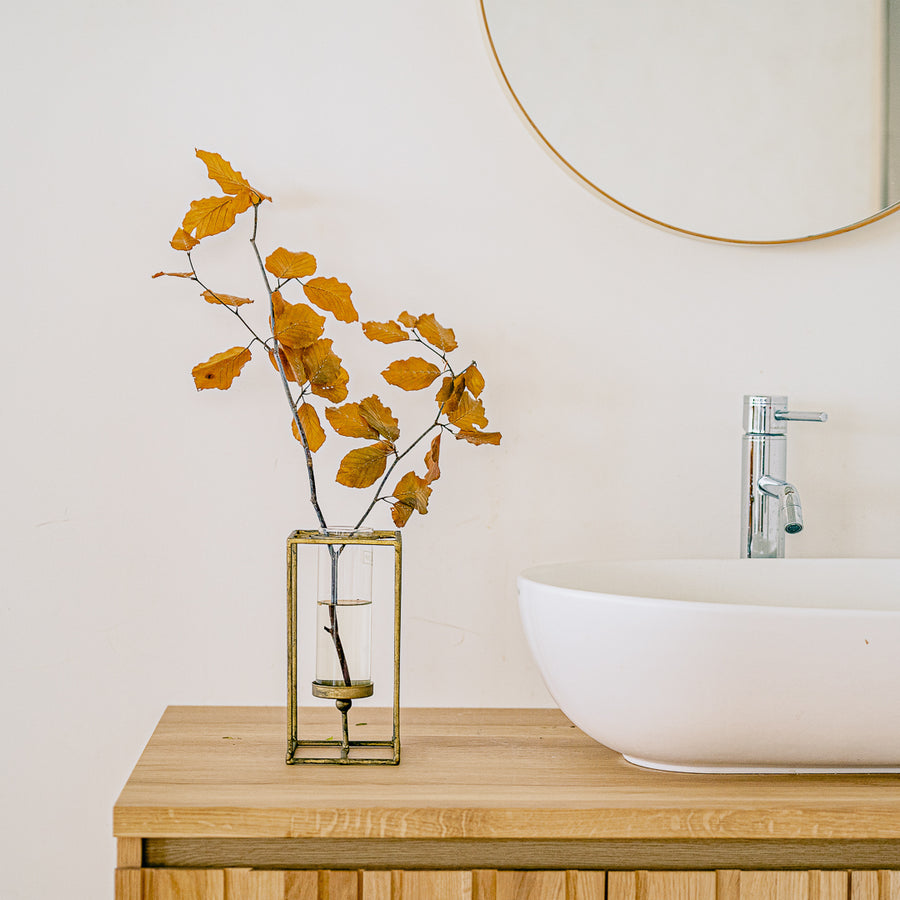
By incorporating seasonal branches such as forsythia (Rengyo) with bell-like yellow flowers in early spring, cherry blossoms cherished as Japan's national flower in spring, refreshing dodan-tsutsuji in summer, wild roses with their changing fruit colors in autumn, and white-painted dried branches in winter, you can achieve an even more refined Japandi style.

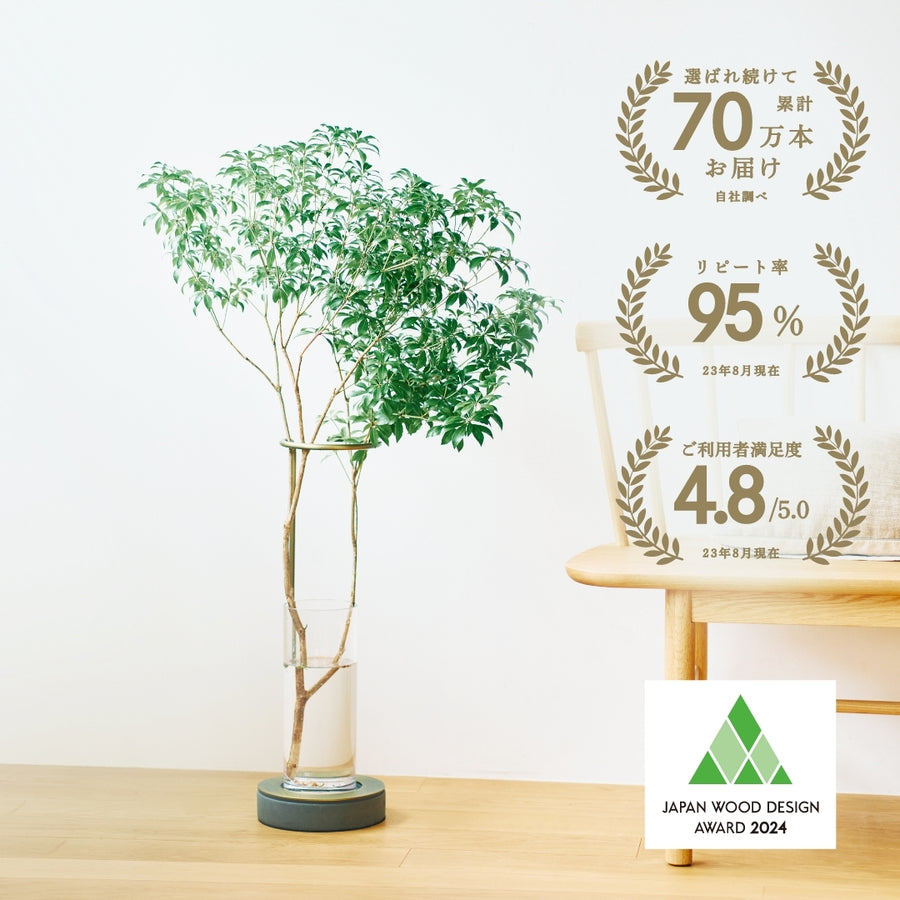
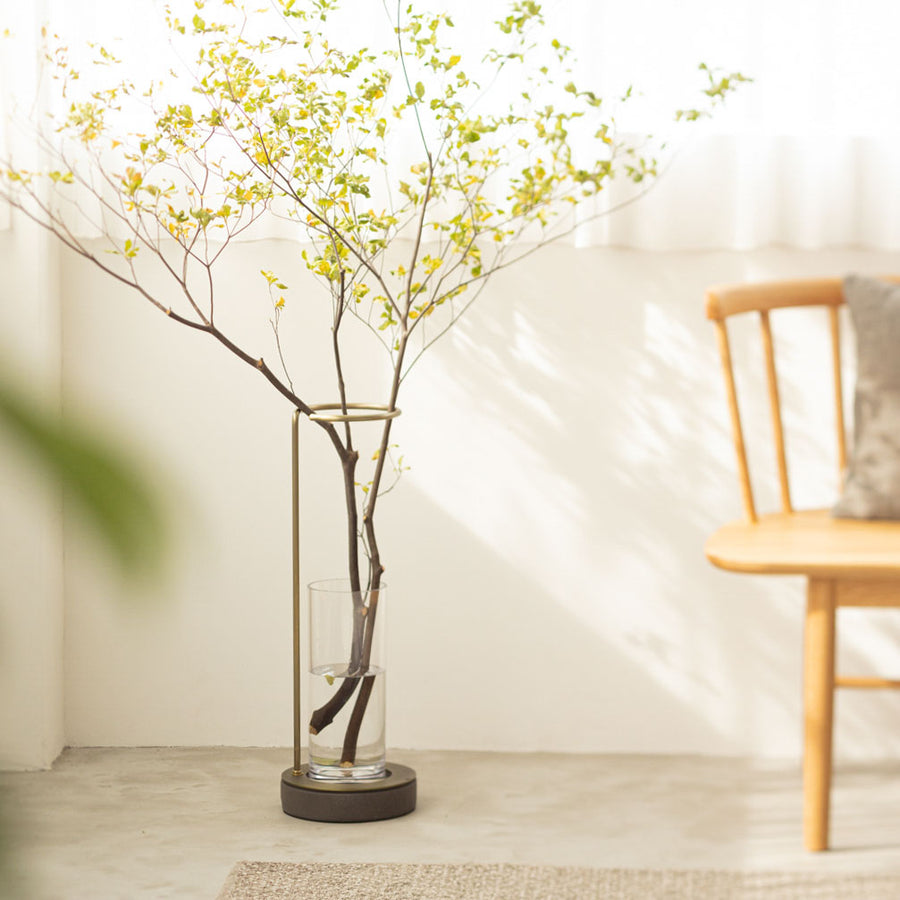
Fagot | Symmetrical and Stable Branch Vase
View Product 〉
Interior examples incorporating branches
Many people might want to incorporate Japandi style into their homes but are unsure which branches to choose.
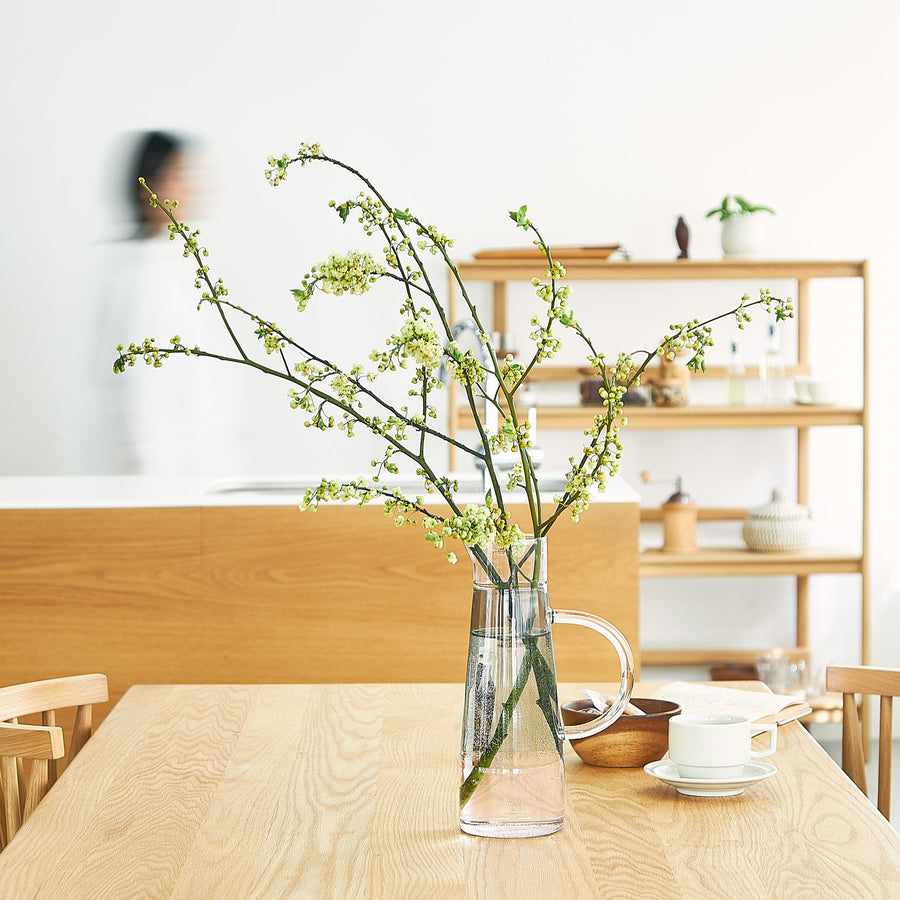
SiKiTO offers a "branch subscription" service, delivering seasonal branches expertly curated to your home.

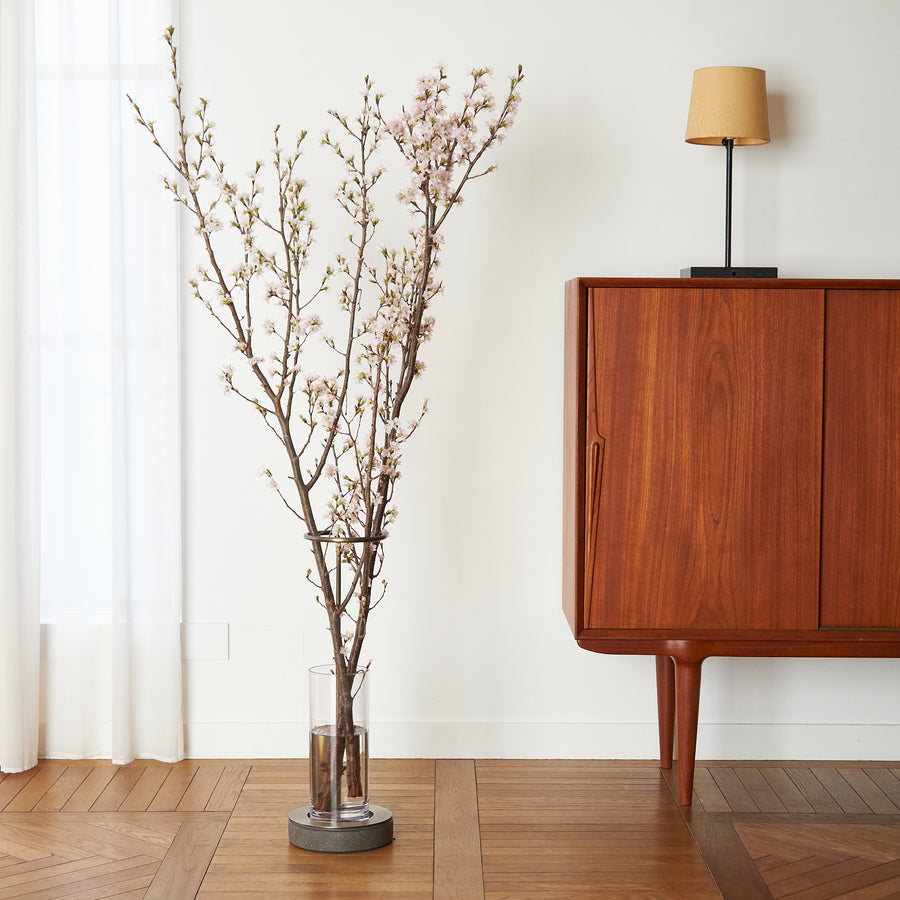
We carefully select and deliver seasonal branches, such as "Rengyo" with its distinctive bell-shaped yellow flowers in early spring, "Cherry Blossoms" cherished as Japan's national flower in spring, refreshing "Dodan-tsutsuji" in summer, "Wild Roses" with their changing fruit colors in autumn, and "White-painted Branches" (dried branches painted white) in winter, allowing you to feel the changing seasons.

Branch Subscription | Seasonal branches delivered to your home
View Product 〉
We also offer a wide range of vase designs, from simple to unique, which are essential for enhancing the beauty of branches.
Moreover, the ideal branches for Japandi interiors are not limited to those placed in vases.
Seasonal decorations like Christmas wreaths and New Year's ornaments, or "Sola Cubes" (sola cube) that encapsulate real plants and flowers in transparent acrylic cubes, can also create an elegant and sophisticated space.
Branches, which add color without disrupting the room's atmosphere, are perfect interior items for Japandi style, which emphasizes "beauty achieved by eliminating excess."

Seasonal Decorations | Wreaths & Swags
View Product 〉

Sola cube | The Quietly Frozen Forms of Plants
View Product 〉
Summary
This article introduced "Japandi," a cutting-edge interior style gaining significant attention.
Japandi style creates a space that evokes relaxation and comfort by harmonizing Nordic and Japanese elements.
By paying attention not only to large furniture but also to interior items like lighting and vases, you can create an even more captivating Japandi style.
SiKiTO offers a wide array of Japandi style interior items and branches, beyond those introduced in this article. Enjoy creating a higher-grade room with SiKiTO's unique interiors!
PRODUCTS
![[Made to order] Green Summer Wreath made with summer branches (fresh flowers)](http://sikito.com/cdn/shop/files/20250702_-15.jpg?v=1751530871&width=900)

![[Made to Order] Four Seasons and Bonsai: Summer | Japanese Maple](http://sikito.com/cdn/shop/files/yomimono20250912.jpg?v=1756106914&width=900)
![[Pre-Order] Seasons and Bonsai: Summer | Gardenia](http://sikito.com/cdn/shop/files/DSC09951a.jpg?v=1779693971&width=900)
![[Made to Order] Seasons and Bonsai: Summer | Crape Myrtle](http://sikito.com/cdn/shop/files/DSC0468_2.jpg?v=1779774773&width=900)
We also recommend this article

A deciduous tall tree of the genus Pr...


