

Characteristics and Displaying Wild Roses | Branch with cute berries that change from green to red in autumn

Basic Information about Nobara
| Plant Name | Nobara (Wild Rose) |
| Scientific Name | Rosa multiflora |
| English Name | Japanese Rose, Wild Rose |
| Other Names | Noibara, Ubara, Umara |
| Family/Genus | Rosaceae / Rosa |
| Classification | Deciduous broadleaf / Climbing shrub |
| Origin | Japan (Hokkaido to Kyushu), Korean Peninsula |
| Availability Period | September - November |
| Availability | ★★★★☆ |
| Vase Life | ★★★★☆ |
*Ratings are on a scale of 1 to 5.
Characteristics of Nobara
Nobara is a deciduous broadleaf plant belonging to the rose family, genus Rosa, and is a plant with rustic beauty that grows wild in the mountains and fields of Japan. After blooming white flowers from spring to early summer, as the season progresses, it bears small, lovely green fruits that gradually turn red, adding color to the autumn scenery.
The glossy, radiant fruits, dotted on the branches like small lanterns, quietly announce the arrival of autumn.
They are a feast for wild birds and a seasonal delight for human eyes.
The peak season for its distribution is around October, and it is popular for flower arrangements, wreaths, and as a dried material. Its simple yet striking green and red fruits are perfect for autumn decorations, exuding a somewhat nostalgic atmosphere.
The branches have sharp thorns, so caution is required when handling them, but this wildness is precisely Nobara's charm. It is widely distributed in mountains and riverbanks across Japan, allowing us to feel the changing seasons in its natural form.

Flower Language of Nobara
The flower language of Nobara includes "elegant beauty," "pure love," "rustic charm," "talent," and "poetry," representing quiet and sensitive sentiments.
"Elegant Beauty" and "Pure Love"
The single white flowers blooming in the wild possess an unadorned beauty, like a presence quietly standing in nature. Their modest yet dignified appearance symbolizes elegance and pure love.
"Talent" and "Poetry"
Nobara frequently appears as a subject in art, such as Goethe's poetry and Schubert's songs. Its delicate form stimulates creativity and poetic sensibility, giving rise to these flower meanings.
"Rustic Charm"
Nobara possesses a rustic and approachable atmosphere rather than overt splendor. Its natural beauty is said to give people a gentle and comforting impression, hence the meaning "rustic."
In addition to its spring blooms, Nobara's appeal also lies in its red autumn fruits. These fruits are popular for wreaths and dried arrangements, serving as a reminder of the changing seasons.
How to Display Nobara

Nobara bears fruits that change from green to red, and its slender, flexible branches extend outwards.
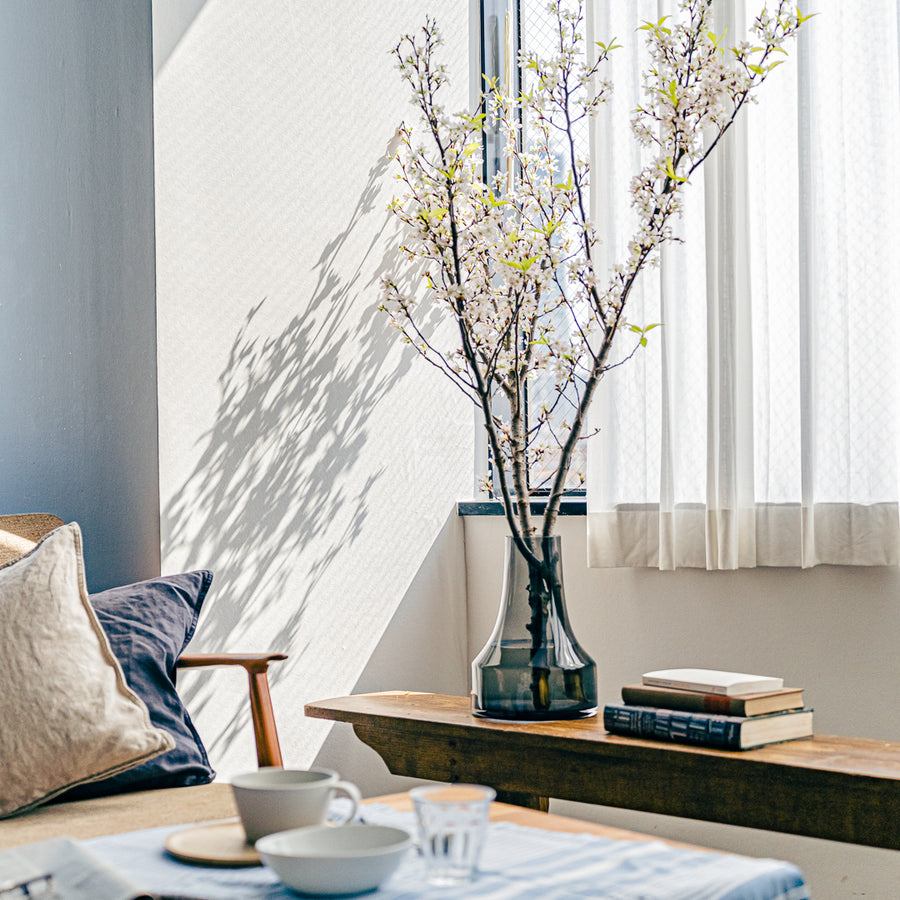
While the branching and flower arrangements vary by individual, typically, its natural, sprawling lines are characteristic. Therefore, it blends well with natural-looking vases or slightly taller containers, allowing for arrangements that capture a slice of the wild landscape.

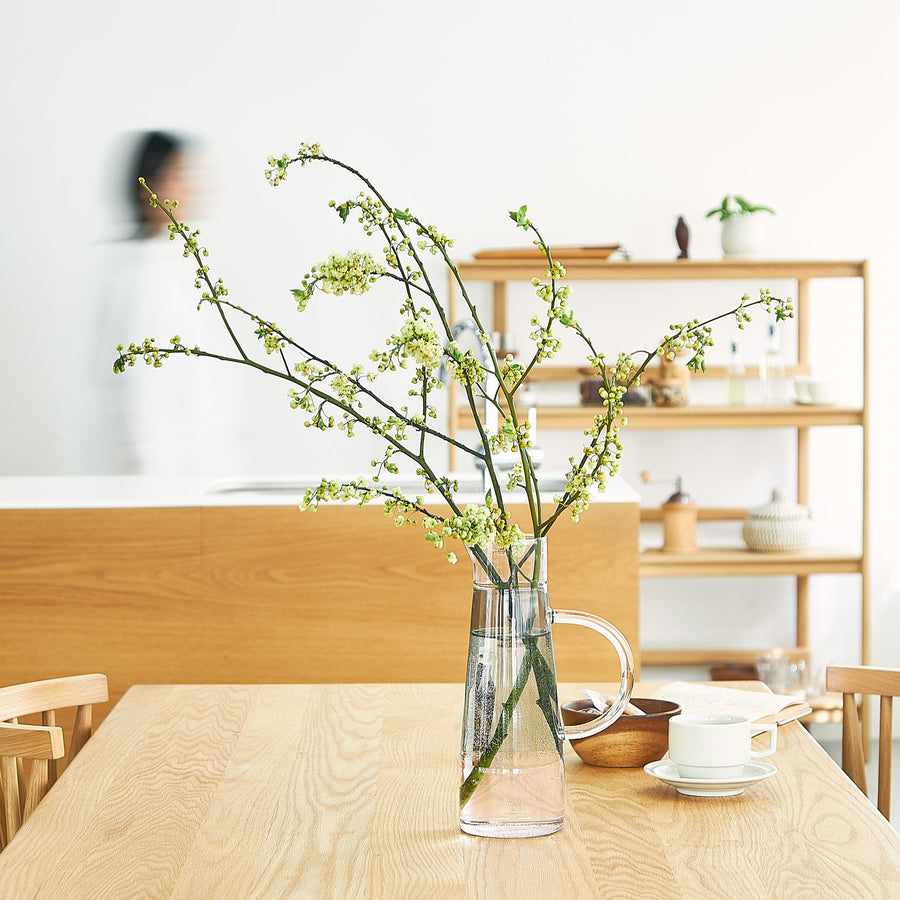
High Jug | A modern pitcher that can also be used as a vase for branches
View Product 〉
Interior Decor Examples with Nobara
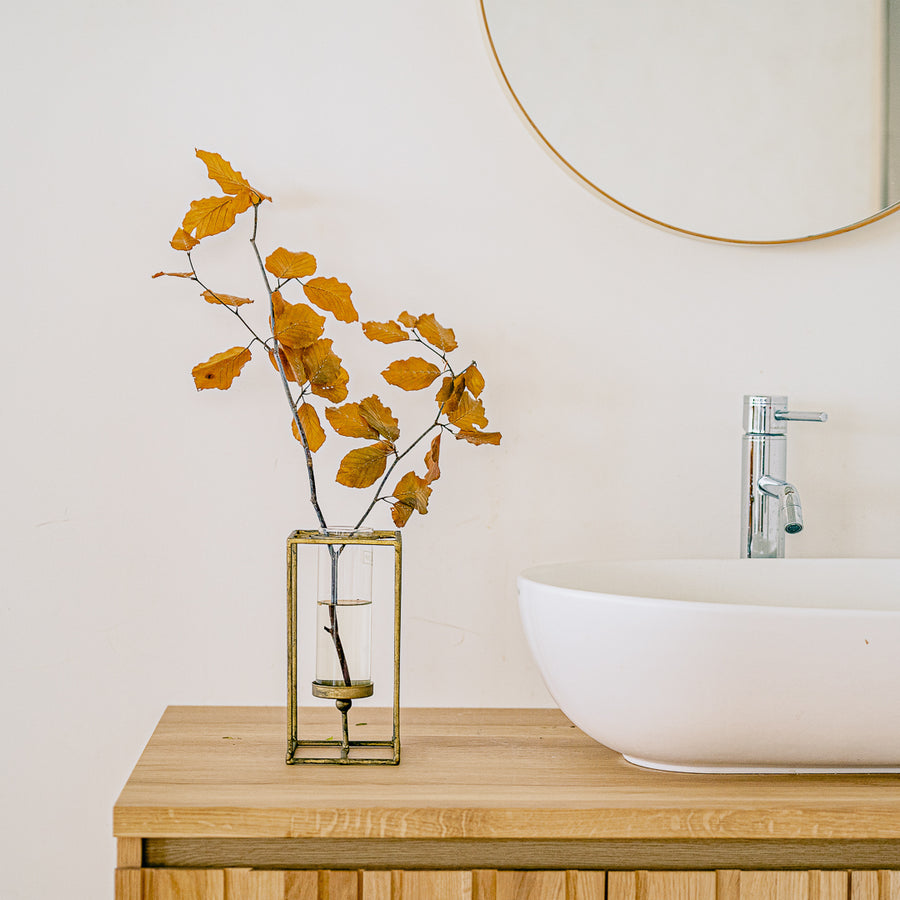
Nobara is a rustic and charming branch material that bears red fruits in autumn. To enhance its natural branching and vivid fruits, warm materials such as wooden or unglazed terracotta vases would be ideal.
Also, using antique-style tin bases or muted-colored ceramic containers will make the red of the Nobara fruits stand out more, creating a calm, autumnal atmosphere.
Even when placed in a clear glass vase, the lines of the branches and the shadows of the fruits will be beautifully reflected, evoking the quiet transition of the seasons.
Enjoy the natural beauty of Nobara's fruits, as if they are whispering of the changing season, gently adding an autumnal touch to your room.
Precautions when arranging in a vase
When decorating with Nobara, it's important to keep the cut ends clean and ensure they can absorb water easily.
Also, removing excess leaves before displaying helps prevent mold and deterioration during drying. Remaining leaves can make the arrangement look heavy, and if they soak in water, they can cause bacteria to grow in the vase.
There's a risk of damaging the surface of the branches, so do not tear them off by hand; instead, carefully trim them with clean scissors or a knife.

Toyama Hamono | Pruning Shears that Cut Thick Branches and Last a Lifetime
View Product 〉
How to Care for Nobara
Nobara is a relatively sturdy and easy-to-grow plant, but daily care is essential. Here are some tips for maintaining healthy branches!
Basic Care
1. Recutting on the day of receipt

It is recommended to "recut" the branches on the day you receive them before arranging them in a vase.
It is also important to make a cross cut at the base or peel off the bark to help them absorb water.
Additionally, branches may become a little tired during transportation, so arranging them in water with a preservative can help them stay vibrant.
■ Freshness Preservative for Long-Lasting Branches

By using a freshness preservative, you can provide necessary nutrients to the branches while keeping the water in the vase clean.
This preservative effectively dissolves sap at the cut ends, making it easier for the branches to absorb water, allowing you to enjoy their beauty for longer.
Furthermore, it has a restorative effect even when plants are stressed, so be sure to incorporate it when arranging your branches.
Branch-specific freshness preservative is available here.
■ Florist's Knife for Improved Water Absorption

The florist knife made by VICTORINOX, which helps improve water absorption by peeling off the bark of the part immersed in water, is available here.
It is a reliable quality product beloved by professionals worldwide.
2. Place branches in a comfortable location
When displaying branches, choose a well-ventilated, cool place away from direct sunlight and air conditioning drafts. It is important to avoid humid environments, as they can damage the branches.
Also, there's no need to worry about sunlight, so enjoying them in quiet spaces like bedrooms or washrooms can be lovely. Different locations will highlight different charms of the branches.
3. Frequent water changes

Changing the water frequently before it becomes cloudy will help keep your plants vibrant. Recutting the stems at this time will also improve water absorption and extend their life.
Furthermore, if there are any slimy areas, gently rub them off by hand to maintain cleanliness.
If your branches are losing vitality...
Cut them shorter and enjoy them in smaller arrangements

Over time, it can become difficult for branches to absorb water. In such cases, it's a good idea to cut the branches shorter.
Cutting the branches shorter not only improves water absorption but also allows you to enjoy their charming, smaller form, which is a bit different from their larger appearance.
Nobara Trivia

Nobara Used as Dyes and Medicine
Nobara (Noibara) has long been utilized as both a dye and a medicinal plant. Its stems, leaves, and fallen flowers were used for dyeing, producing natural shades such as blackish-yellow with iron mordant and bright yellow with alum mordant.
Furthermore, the red fruits (false fruits) that ripen in autumn are known as a crude drug called "Eijitsu," and have been used for diuretic, detoxifying, constipation, rheumatism, and menstrual irregularities.
It is mentioned in the oldest Chinese pharmacopoeia, "Shennong Ben Cao Jing," indicating that it has been a part of people's lives since ancient times.
Nobara distributed as branch material
Nobara is widely distributed in the mountains and fields of Japan, sometimes called Noibara. It blooms white flowers around May to June and grows to a height of 1-2 meters. In autumn, it bears cute, round fruits about 1 cm in diameter.
As a branch material, it is distributed with its fruits from September to November.
These fruits are false fruits, where the tubular part below the flower sepals swells, and their color gradually changes from green to orange, eventually becoming bright red.
When dried, wrinkles appear on the surface, and the color dulls slightly, creating an antique-like texture. It is often used in swags and wreaths.
Recently, thornless varieties have become available due to cultivation improvements, but thorns may occasionally be present, so be careful.
Nobara's Influence on Cultures East and West
Nobara, with its rustic and natural appearance, has been cherished for its flower meanings such as "rustic charm" and "elegant beauty." The single white flowers blooming in the wild exude a modest yet dignified presence, quietly touching the hearts of those who behold them.
In Japan, it has long been a part of people's lives, appearing in classical literature like the "Fudoki" and "Man'yoshu." Especially in the "Man'yoshu," Nobara, as a wild-blooming flower, is celebrated as a symbol of rustic beauty and harmony with nature.
Meanwhile, in Europe, Nobara has been beloved as a subject for poetry and music. The most famous example is Goethe's German poem "Heidenröslein" (Wild Rose), which Schubert set to music as a song for tenor. This "Wild Rose" is still sung worldwide as a masterpiece depicting pure love and transience.
The quiet power of the Nobara flower deeply resonates with people's emotions through words and music.
Nobara Summary

Nobara is a deciduous broadleaf shrub of the rose family, genus Rosa, and is a plant with rustic beauty that grows wild in the mountains and fields of Japan. Its single white flowers, blooming from spring to early summer, have a modest yet dignified presence.
Its flower language includes "rustic charm," "elegant beauty," "talent," and "poetry," reflecting its natural appearance and cultural background. In Japan, it appears in works like the "Man'yoshu" and "Fudoki," and in Europe, Goethe's poem "Heidenröslein" was set to music by Schubert, becoming a famous song, showing its beloved status in literature and music.
In autumn, it bears ripe red fruits, and their appearance, dotted on the branches like small lanterns, quietly tells of the changing seasons. It is also popular as a dried material, and when used in wreaths and arrangements, it can create a rustic yet nostalgic atmosphere.
Nobara may not be flashy, but it leaves a quiet impression on the heart. We encourage you to place it in your favorite vase and incorporate an autumnal ambiance into your home!

【SiKiTOのよみもの】枝もの図鑑
よみもの一覧をみる〉

枝もの定期便|自宅で待つだけ、飾るだけ。
商品をみる 〉
PRODUCTS
![[Made to order] Green Summer Wreath made with summer branches (fresh flowers)](http://sikito.com/cdn/shop/files/20250702_-15.jpg?v=1751530871&width=900)
![[Made to Order] Four Seasons and Bonsai: Summer | Japanese Maple](http://sikito.com/cdn/shop/files/yomimono20250912.jpg?v=1756106914&width=900)
![[Pre-Order] Seasons and Bonsai: Summer | Gardenia](http://sikito.com/cdn/shop/files/DSC09951a.jpg?v=1779693971&width=900)
![[Made to Order] Seasons and Bonsai: Summer | Crape Myrtle](http://sikito.com/cdn/shop/files/DSC0468_2.jpg?v=1779774773&width=900)
We also recommend this article

We visited Hitachinomiya City in the ...


%0A%0A%0A%0A%0A%0A%0AScientific%20Name%0A%0ARosa%20multiflora%0A%0A%0A%0A%0A%0A%0AEnglish%20Name%0A%0AJapanese%20Rose,%20Wild%20Rose%0A%0A%0A%0A%0A%0A%0AOther%20Names%0A%0ANoibara,%20Ubara...)