

Features and Decoration Tips for Wintersweet (Rōbai) | A Branch with Yellow, Wax-like Flowers That Bloom in the Cold Winter

Basic Information on Chimonanthus praecox (Winter Sweet)
| Plant Name | Chimonanthus praecox (Winter Sweet) |
| Scientific Name | Chimonanthus praecox |
| English Name | winter sweet, Japanese allspice |
| Family/Genus | Calycanthaceae / Chimonanthus |
| Classification | Deciduous / Shrub |
| Origin | China |
| Availability Season | December - January |
| Longevity | ★★★☆☆ |
| Distribution Volume | ★★☆☆☆ |
※★ is on a scale of 5.
Characteristics of Chimonanthus praecox
Chimonanthus praecox is a deciduous shrub belonging to the family Calycanthaceae, genus Chimonanthus. As its name suggests, it boasts waxy yellow flowers that bloom in early spring. Its most distinctive feature is its clean and sweet fragrance. It is counted as one of the four great fragrant trees.
In the world of feng shui, it is said to improve overall luck and financial luck, making it a kind of good luck charm. In China, its place of origin, it is revered as one of the "Four Friends of the Snow" (setchū shiyū) along with plum, narcissus, and camellia, representing beautiful flowers that bloom in the snow.
It was introduced to Japan in the early Edo period and has been cherished as an element in ikebana (flower arrangement), tea ceremony flowers, and garden trees. The original Chimonanthus praecox has brownish inner petals, but the commonly available variety is 'Soshin-Rōbai' which has entirely yellow petals.

Chimonanthus praecox Flower Language
The flower language of Chimonanthus praecox includes "modesty," "affection," and "foresight."
"Modesty" and "Affection"
The flower language "modesty" comes from its appearance, quietly blooming early in the harsh winter. Its downward-facing bloom also conveys a sense of reserve and modesty, which is the background of its flower language.
"Foresight"
Chimonanthus praecox is beloved as a precious flower that blooms during snowfall. The flower language "foresight" is linked to its unusual characteristic of blooming in winter, symbolizing a flower that foreshadows the arrival of spring.
Chimonanthus praecox, with its vibrant yellow flowers blooming in the cold winter and bringing hope and gentleness to people, seems to have its flower language derived from its endearing nature.
How to Display Chimonanthus praecox

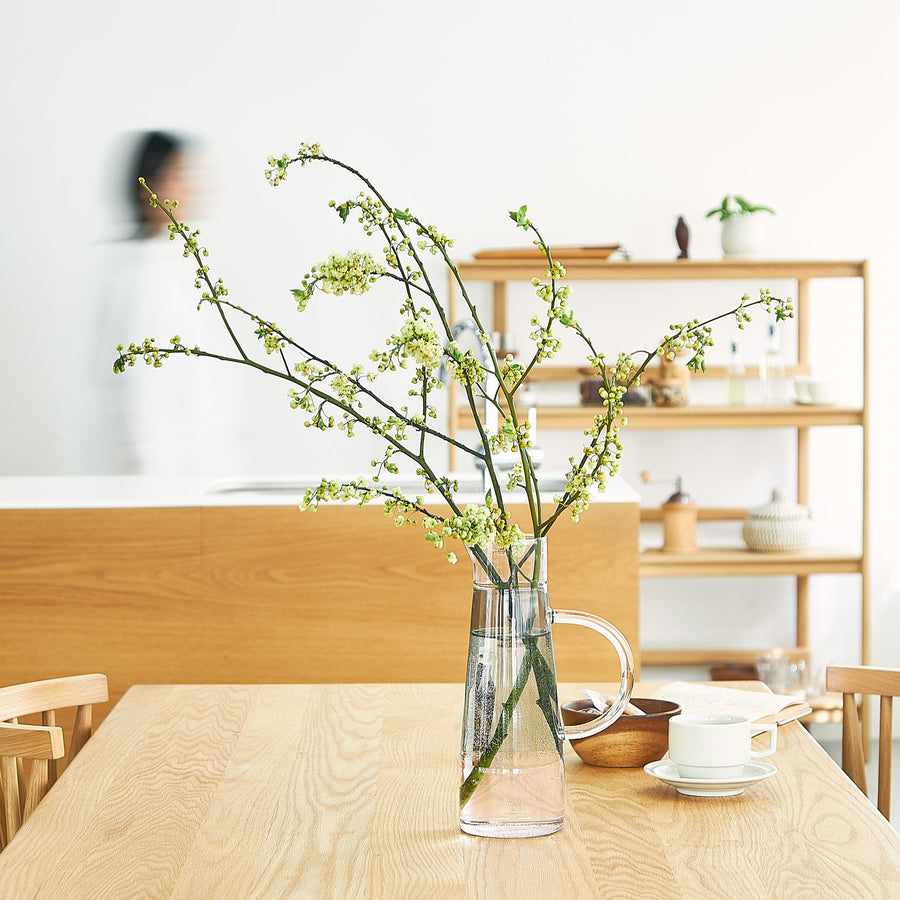
When displaying Chimonanthus praecox, choosing a simple vase with minimal color will complement its modest and elegant atmosphere.
It is beautiful when simply placed in a vase on its own, and also lovely when just the flowers are floated in a dish.
Furthermore, Chimonanthus praecox is an essential early spring floral material for tea ceremony flowers and ikebana. When used in arrangements, it can create a Japanese atmosphere when combined with chrysanthemums, narcissus, etc., or a Western style when using a glass vase.

TONE | Elegant matte porcelain vase for branches
View product 〉
Precautions when arranging in a vase
When arranging flowers in a vase, it's important to consider the overall balance and cut the branches to fit the vase. If left too long, the branches may spread out, or the flower vase may become unstable.
Also, try "mizuage" (re-cutting) by making a diagonal cut 2-3 centimeters from the very bottom of the stem. This extra step increases the surface area of the stem exposed to water, which can help the branches last longer.
Try cutting branches with pruning shears designed for branches and woody plants ◎

Toyama Hamono | Pruning shears for a lifetime, can cut thick branches
View product 〉
Chimonanthus praecox Care Instructions
Chimonanthus praecox is a branch often used as a garden tree because it produces fragrant flowers in winter, but be careful when handling it, as buds and flowers can sometimes fall off. In addition, a little daily care is essential to enjoy Chimonanthus praecox branches for longer ◎
Here, we will introduce basic branch care methods that even beginners can easily do.
Basic Care
1. Recut on the day of receipt

On the day you receive them, recut them before arranging them in a vase. Recutting means cutting the lower part of the stem to promote plant growth.
At that time, make a cross-shaped cut at the base and then peel off a little of the bark, which will make it easier for the plant to absorb water.
To enjoy branches for longer, adding a preservative to the water is also a good idea. It can prevent the vase water from getting dirty and keep the flowers vibrant.
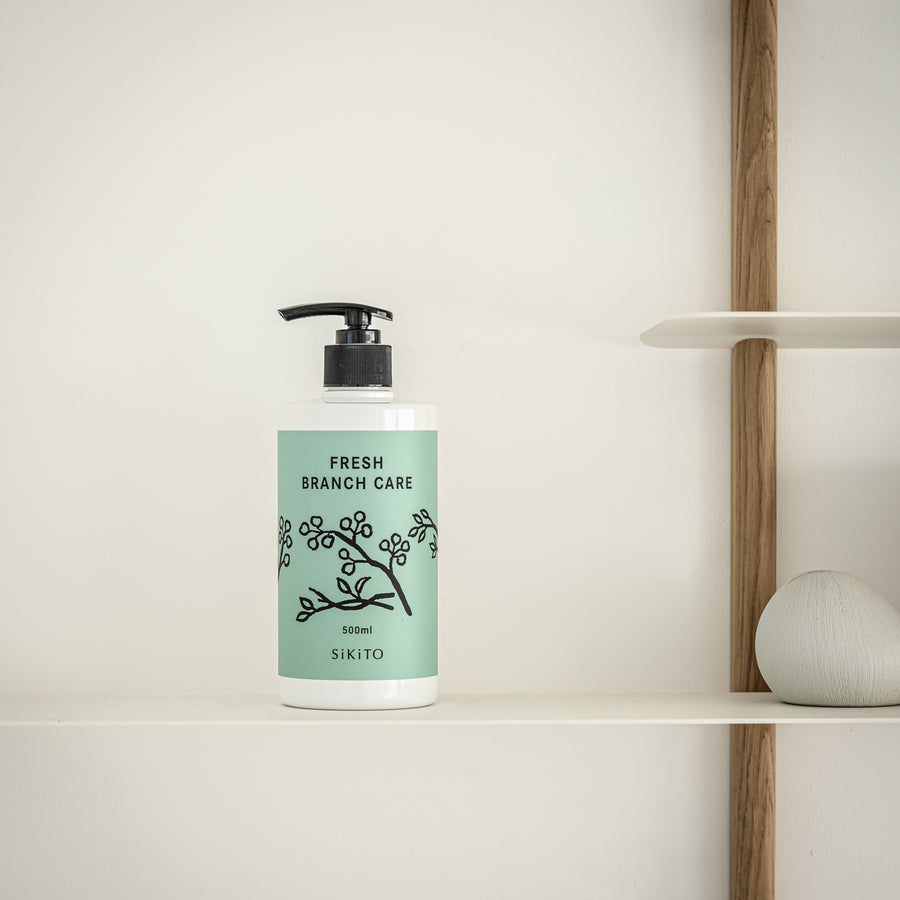
■ Flower preservative to nourish branches

A freshness preservative that provides essential nutrients to flower branches and keeps vase water clean. Recommended for those who want to enjoy their branches for as long as possible◎
It has the effect of dissolving the sap from the cut ends to improve water absorption, which is expected to extend the life of branches.
Branch-specific freshness preservative is available here.
■ Florist knife for better water absorption

When re-cutting, peeling off the bark of the submerged part makes it easier for the plant to absorb water, which can help branches last longer.
For peeling bark, a dedicated sharp knife is recommended. Check out the VICTORINOX florist knife here.
Its quality is trusted by professionals worldwide.
2. Place the branches in a comfortable spot
Branches should be placed in a cool, well-ventilated area, avoiding direct drafts from air conditioners.
They are also cold-hardy, so placing them outdoors, such as by the entrance, is not a problem. Avoid direct sunlight and find a comfortable spot for your branches.
They have a presence that can change the impression of any space, whether it's the living room, entryway, or kitchen. They are also recommended for bedrooms and washrooms◎
3. Change the water regularly

Change the water frequently before it becomes cloudy.
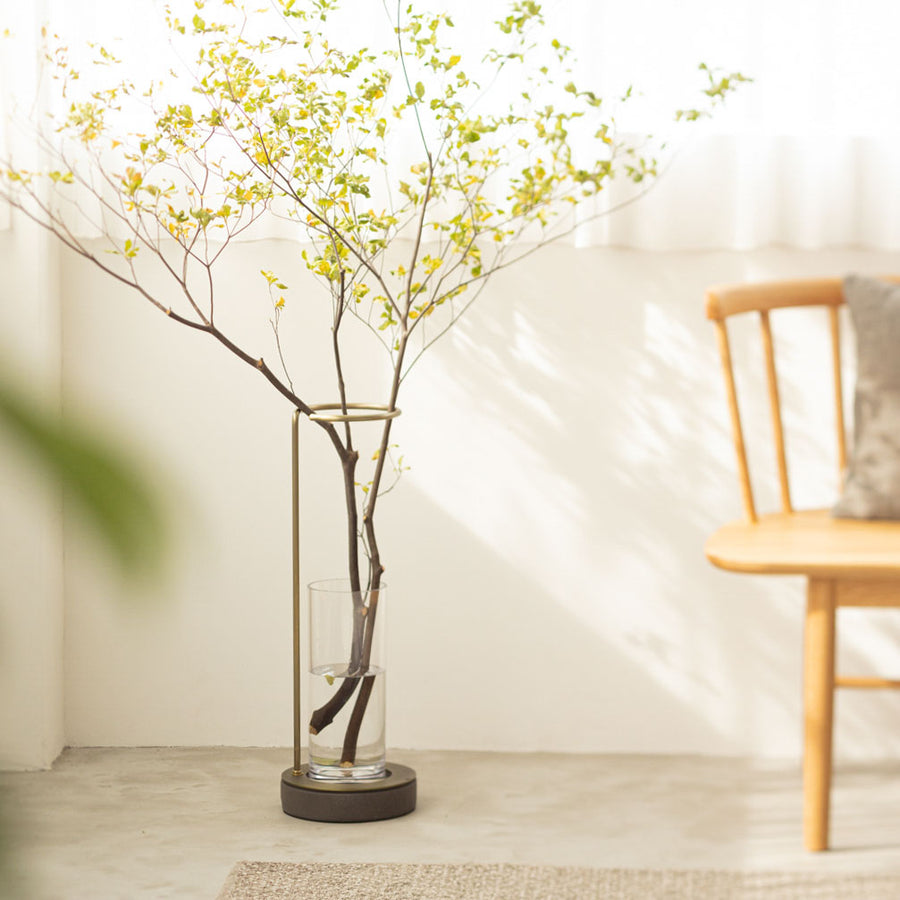
With the EDA VASE, a vase designed for branches, the base is made of polycarbonate, which is lighter and more durable than glass, making water changes easy.
If your branches are still not thriving...
Cut them shorter to enjoy a different look

While many branches last relatively long, over time, they inevitably become less effective at absorbing water. If you feel your branches are starting to wilt, try cutting them shorter and arranging them differently.
Shorter branches absorb water more easily, and arranging them in smaller vases offers a different way to enjoy them ♪
Chimonanthus praecox Trivia

Chimonanthus praecox as a symbol of winter
Chimonanthus praecox is often詠 (yomaru, recited) as a symbol of winter in waka and haiku poetry. It is well-known as a kigo (seasonal word) for winter, and its beautiful yellow flowers and sweet fragrance have been cherished by many poets and writers as a symbol of hope and perseverance amidst the harsh cold.
The famous Ryūnosuke Akutagawa also wrote a haiku:
ーChimonanthus praecox, branches sparse, winter rain clouds.
(Chimonanthus praecox flowers bloom on sparse branches, beneath a sky where winter rain falls.)
In this poem, the beauty of Chimonanthus praecox, along with the stillness and transience of winter, is expressed. Chimonanthus praecox is also known as one of the "Four Friends of the Snow" (setchū shiyū), and as one of the four flowers that bloom in the snow, it has been a subject for waka and literati paintings.
Chimonanthus praecox plays an important role in expressing the seasons in waka through its name and flower characteristics, making it an indispensable presence when composing about winter scenes and emotions.

The name Chimonanthus praecox and its origins
The name "Rōbai" (蝋梅), or Chimonanthus praecox, has several origins, each conveying its characteristics and charm.
First, it is called "lamei" (蝋梅) in China, and "Rōbai" is the Japanese reading of that name. It is also said that the name was given because the texture and luster of its petals are shiny and moist as if coated with wax, reminiscent of a wax sculpture.
Furthermore, there is a theory that Chimonanthus praecox is derived from the fact that it blooms in "Rōgetsu" (朧月), the twelfth month of the lunar calendar.
In English, it is called "Winter sweet," which perfectly describes its appearance, blooming in the cold of winter while emitting a sweet fragrance.
These various origins of its name reflect not only the appearance of Chimonanthus praecox but also its multifaceted charm, including its fragrance and the season in which it blooms.
Summary of Chimonanthus praecox

Chimonanthus praecox is a deciduous shrub of the family Calycanthaceae, genus Chimonanthus. Its glossy, wax-like yellow flowers bloom in early spring, while it is still cold. Its characteristic sweet fragrance is also one of its charms.
Chimonanthus praecox has been cherished as one of the "Four Friends of the Snow" (setchū shiyū) along with plum, narcissus, and camellia, representing beautiful flowers that bloom in the snow.
Its flower language includes "modesty," "affection," and "foresight."
Chimonanthus praecox, with its vibrant yellow flowers blooming in the cold winter and bringing hope and gentleness to people, perfectly embodies its flower language◎

【SiKiTOのよみもの】枝もの図鑑
よみもの一覧をみる〉

枝もの定期便|自宅で待つだけ、飾るだけ。
商品をみる 〉
PRODUCTS




![[Made to order] Green Summer Wreath made with summer branches (fresh flowers)](http://sikito.com/cdn/shop/files/20250702_-15.jpg?v=1751530871&width=900)


![[Made to Order] Four Seasons and Bonsai: Summer | Japanese Maple](http://sikito.com/cdn/shop/files/yomimono20250912.jpg?v=1756106914&width=900)
![[Pre-Order] Seasons and Bonsai: Summer | Gardenia](http://sikito.com/cdn/shop/files/DSC09951a.jpg?v=1779693971&width=900)
![[Made to Order] Seasons and Bonsai: Summer | Crape Myrtle](http://sikito.com/cdn/shop/files/DSC0468_2.jpg?v=1779774773&width=900)
We also recommend this article

[Branch Encyclopedia | Winter] Kuromoji (Japanese spicebush)
This deciduous shrub belongs to the L...

【Branch and Flower Guide | Winter】
Sarcandra glabra (Senryo)
An evergreen shrub belonging to the g...


%0A%0A%0A%0A%0A%0A%0A%0A%0A%0A%0A%0A%0A%0A%0A%0APlant%20Name%0A%0AChimonanthus%20praecox%20(Winter%20Sweet)%0A%0A%0A%0A%0A%0A%0AScientific%20Name%0A%0AChimonanthus%20praecox%0A%0A%0A%0A%0A%0A%0AEnglish%20Name%0A%0Awinter%20swe...)