

Alder Catkin Characteristics and Display Tips | A Branch That Bears Pine Cone-Like Fruits in Winter

Basic Information on Japanese Alder
| Plant Name | Yashabushi (Japanese Alder) |
| Scientific Name | Alnus firma |
| English Name | Japanese alder |
| Alternate Name | Ohaguronoki |
| Family/Genus | Betulaceae/Alnus |
| Classification | Deciduous tall tree |
| Origin | Japan |
| Seasonality | November - December |
| Availability | ★☆☆☆☆ |
| Longevity | ★★★★★ |
※★ indicates a 5-point scale
Characteristics of Japanese Alder
Japanese alder (Yashabushi) is a deciduous tall tree belonging to the birch family (Betulaceae), genus Alnus. It is a natural and charming branch material that has long adorned the landscapes of Satoyama (traditional Japanese agricultural landscapes), growing wild in mountains and along rivers throughout Japan, particularly in western Japan.
It is characterized by its unique appearance, with long, drooping catkins and small, woody fruits appearing simultaneously on the bare branches in winter after the leaves have fallen. Its rustic and understated aesthetic makes it suitable for both Japanese and Western-style interiors and displays.
The fruit of the Japanese alder has an endearing pinecone-like shape and retains its form for a long time, making it attractive for dried arrangements. Its rhythmic branches add a light movement to any space, making it a popular choice for flower arrangements, wreaths, and swags.
In early spring, the catkins gently lengthen and sway in the wind, creating an impressive sight. The bare branches after leaf fall also have an appealing character, making it a popular seasonal branch material.
It is a recommended branch material for winter and spring, offering rustic beauty from nature and the warmth unique to fruiting branches.

Flower Language of Japanese Alder
The flower language of Japanese alder includes "harmony," "simplicity," "resilience," and "regeneration." Japanese alder, which spreads its branches as if melting into nature and quietly bears small fruits and catkins, is cherished as a branch material that exudes natural charm due to its unpretentious beauty and strong vitality.
"Harmony"
Japanese alder is a tree that grows gently in natural landscapes such as mountains and riverbanks, blending in softly. Its dynamic branches and subdued colors naturally integrate into a space, creating a sense of harmony with its surroundings. This peaceful demeanor gives rise to the image of "harmony."
"Simplicity"
Although it does not bear flamboyant flowers, its small fruits and drooping catkins possess the simple beauty of nature itself. Its unadorned charm is popular, and it is cherished as a branch material and a dried material.
"Resilience"
Japanese alder is a highly vital tree that grows vigorously even in barren lands and along rivers. Its ability to retain fruit in cold seasons and firmly root itself in nature conveys a sense of "resilience."
"Regeneration"
Japanese alder shows an appealing appearance even after losing its leaves in winter and extends soft catkins in spring. As it cycles through the seasons and reveals new expressions, it is also cherished as a branch material that evokes "regeneration" and "new beginnings."
The flower language of Japanese alder is derived from its natural yet vigorous way of life and its gentle, Satoyama-like charm. It's a natural and captivating branch material that offers the warmth unique to fruiting plants◎
How to Display Japanese Alder

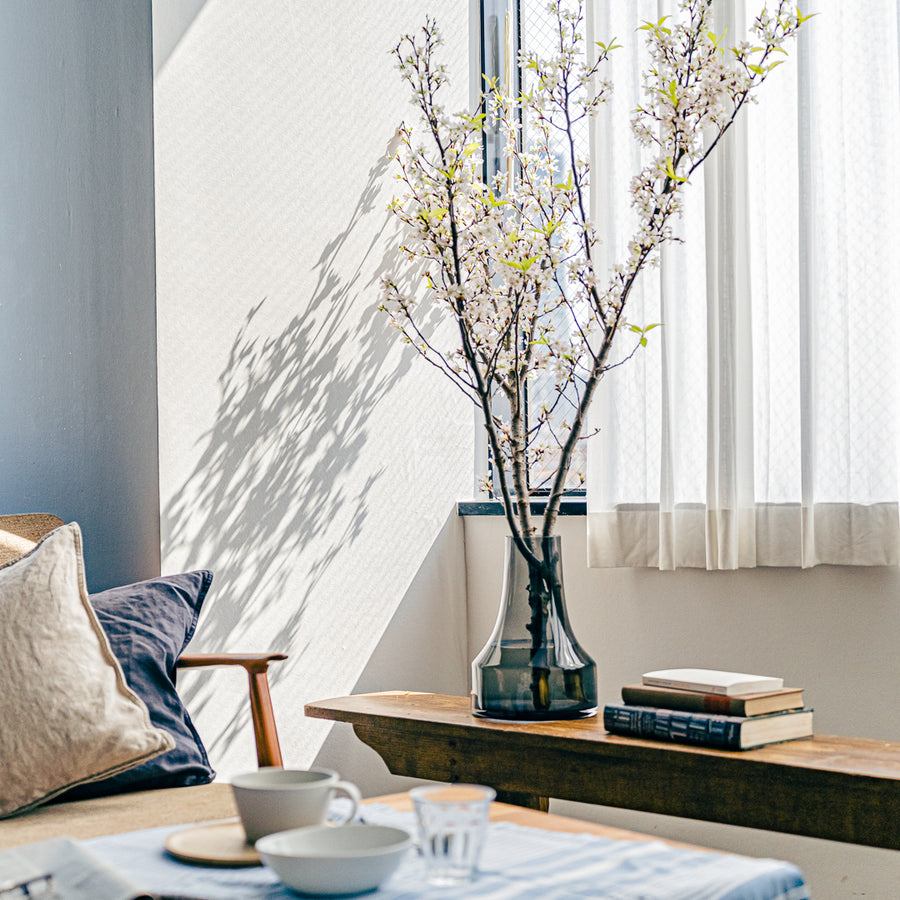
When displaying Japanese alder, the key is to enjoy the natural lines of the branches, utilizing the continuous small, pinecone-like fruits and the movement of the catkins. By creating height differences in the branching and allowing space, the unique rustic and light atmosphere of Japanese alder is enhanced.
By being mindful of the fruiting parts and the empty space of the gracefully extending branch tips, you can enjoy a natural and serene beauty◎
Japanese alder has a distinct presence thanks to its fruits, making it an excellent match for simple glass vases, ceramics, or Japanese-style vases with an antique feel.
Incorporating it into your winter-to-spring decor will add a gentle seasonal touch to your space with its natural branch form, creating a calm atmosphere.

Vase Collection Perfect for Branches
View Products 〉
Precautions when arranging in a vase
Change the water in the vase daily to keep the branches beautiful for a long time. It is also important to clean the vase regularly to maintain a sanitary condition.
When cutting branches, use clean pruning shears and cut the stem diagonally to aid water absorption. Nanten branches are flexible, so lightly splitting the base can improve water uptake even further.
When cutting branches, it is recommended to choose pruning shears that fit comfortably in your hand and are easy to handle. Sharp blades that can smoothly cut thin branches are ideal.
With just a little care, you can see the transformation from buds to blooms and enjoy them for even longer!

Toyama Hamono | Pruning Shears for Life, Even Cutting Thick Branches
View Products 〉
How to Care for Japanese Alder
Japanese alder is a branch material that allows you to enjoy the natural movement and appearance of its small pinecone-like fruits and catkins. Its dry-textured fruits maintain their shape for a relatively long time, so by following basic care instructions, you can enjoy its charm for even longer. Here are some basic care tips for branch materials.
Basic Care
1. Trim on the day of receipt

Trim your branches on the day they arrive before placing them in a vase.
Additionally, make a cross-shaped incision at the base and use a knife to peel away the outer skin of the stem. It is recommended to only peel the part that will be submerged in water to improve water absorption and help the branches stay fresh longer.
Furthermore, using a freshness preserver can help maintain the freshness of the branches even more◎
■ Freshness preserver for long-lasting branches

This is a new freshness preserver created by SiKiTO after researching the ideal ingredient balance for branches. This preserver is expected to provide essential nutrients to flowers and branches and keep the vase water clean.
The specialized freshness preserver for branches is available here.
■ Florist Knife for improved water absorption

Florist knives for cutting flower stems are also useful for peeling the bark of branches. The VICTORINOX florist knife, which helps improve water absorption by peeling the bark of the submerged part, is available here.
Its quality is trusted by professionals worldwide.
2. Choose a comfortable spot for your branches
Branches prefer a location with good ventilation, ample sunlight, and moderate humidity. Displaying them in a bright spot, such as near a window, will help them thrive.
However, direct exposure to air conditioning can cause branches to lose vitality due to dryness or hinder flowering, so be careful.
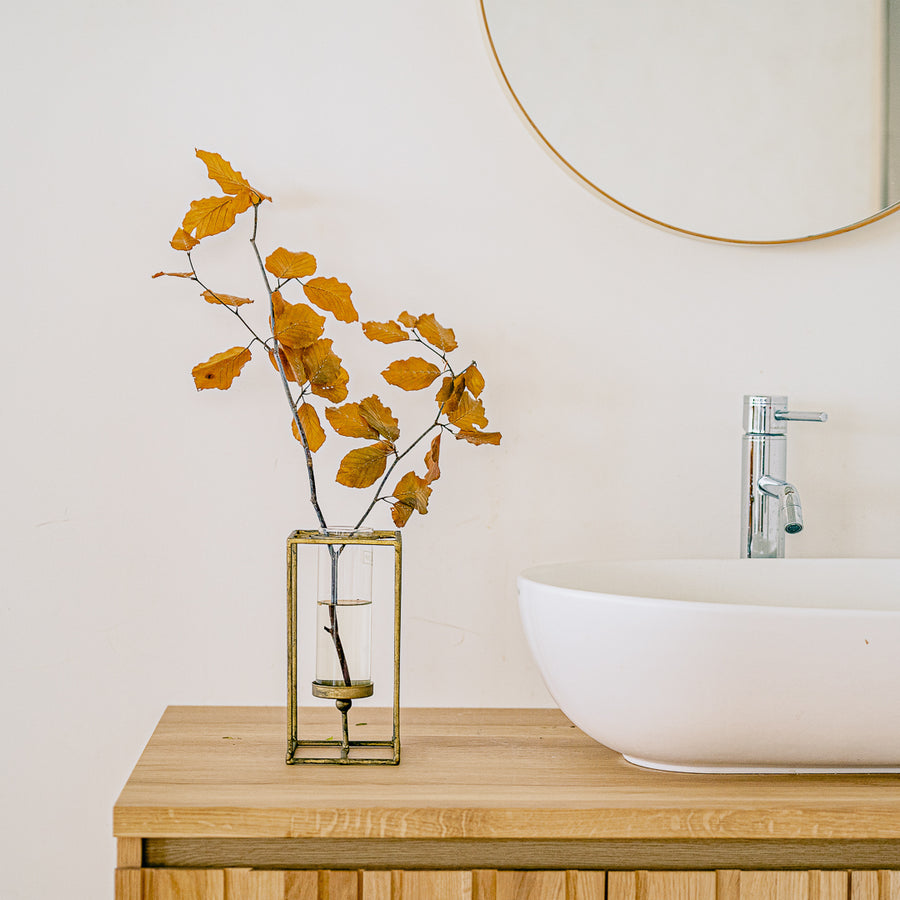
It is also recommended to decorate them in quiet and calm spaces such as bedrooms or bathrooms◎
3. Frequent water changes

Change the water frequently before it becomes cloudy. This is to help the stems absorb water and prevent bacteria and mold from growing in the water. At the same time, re-trimming the stems will also help them absorb water again.
Just a little extra effort will allow you to enjoy the beauty of branches for longer.
If your branches are still not looking lively...
Cut the branches to enjoy them compactly

Even with continuous care, the water absorption of branches may gradually deteriorate over time. In such cases, it is recommended to boldly cut the branches short.
Cutting them short improves water absorption, and by arranging them in a smaller vase, you can enjoy the branches in a different way.
Trivia about Japanese Alder

The Charm of Japanese Alder, a Branch Material Where the Fruit Takes Center Stage
Japanese alder (Yashabushi) is a deciduous tree of the birch family (Betulaceae) that grows wild in mountains and along rivers. It is a rare type of plant where, "the fruit takes center stage rather than the flowers." The small, pinecone-like fruits (catkins) that remain on the branches from autumn to winter retain their shape for a long time, allowing you to enjoy their unique character.
These catkins grow in clusters at the end of branches, creating a natural and rhythmic appearance. For this reason, they are often used not only as decorative branches but also as material for wreaths, swags, and arrangements, adding natural movement and accent to a space. Even when dried, they maintain their shape well, and their deepening color over time makes them a long-lasting and easy-to-incorporate interior material.
Furthermore, the branches themselves have an aesthetic appeal, with their natural, un-straightened curves being one of their charms. They easily create atmosphere even when simply placed in a plain vessel, blending well with various styles of spaces, both Japanese and Western.
Although not flashy, Japanese alder is a seasonal branch material that adds depth to a space through the presence of its fruits and the expression of its branches.
Meaning of the Name "Yashabushi"
Yashabushi is written with the kanji "夜叉五倍子". There are various theories about the origin of the name, but it is attributed to the plant's characteristics and historical uses.
"Yasha (夜叉)" is a word of Buddhist origin, known in Japan as a demon or fierce being. One theory suggests that this character was used because the uneven surface of the fruit looked eerie, likening it to a demon's appearance. Another theory posits that it was named after the Japanese alder's wild and strong growth in mountains and rivers, and its somewhat wild branching habit.
"Bushi (五倍子)" originally refers to "gallnuts" that form on trees like the sumac (Rhus javanica). These have been used since ancient times as dyes rich in tannin and as ingredients for ohaguro (tooth blackening). Since Japanese alder fruits also contain tannin and have a history of being used as a dye, the name "Bushi" was given.
Thus, the name "Yashabushi" is a Japanese name that combines "Yasha," representing the demon-like uneven surface and the wild, vigorous natural appearance, and "Bushi," indicating its fruit's role as a dye, reflecting the plant's characteristics and uses.
Japanese Alder and the Culture of Ohaguro (Tooth Blackening)
Japanese alder is also known by the alternate name "Ohaguronoki" (tooth blackening tree). This name comes from its deep connection to the historical Japanese practice of "ohaguro."
Ohaguro was a traditional Japanese custom of blackening teeth, which became popular among court nobles around the Heian period and later spread among samurai families and married women. Black, lustrous teeth were considered a symbol of beauty, maturity, marital status, and social standing.
Japanese alder was used as a material for creating the dye. Its fruits contain a high concentration of tannin, and when boiled, the liquid was combined with an iron-containing solution to produce a black pigment, which was then applied to the teeth to blacken them.
During the Edo period, ohaguro became widespread, and plants like Japanese alder and sumac were vital dye resources. It is said that Japanese alder was particularly valued as a practical material because it was easy to harvest and preserve.
Thus, Japanese alder can be considered one of the plants that supported the aesthetics and culture of daily life.
Summary of Japanese Alder

Japanese alder is a deciduous tall tree of the birch family (Betulaceae), genus Alnus. It is a branch material characterized by its unique appearance, with fruits (catkins) taking center stage, growing abundantly in the mountains and along rivers, especially in western Japan.
The sight of small, pinecone-like catkins strung along the branches, conveying natural movement, is rustic yet impactful, adding a natural accent to any space as a branch material. Its charm lies in the fact that it retains its shape even when dried, and its colors deepen beautifully over time.
The catkins of Japanese alder are widely used not only as decorative branches but also as materials for wreaths, swags, and arrangements. Combined with their naturally curving branches, they are a versatile plant that blends well with various spaces, both Japanese and Western.
The flower language of Japanese alder includes "harmony," "simplicity," "resilience," and "regeneration." These meanings are embedded in its ability to grow vigorously in nature and retain its fruits for a long time, despite not being flashy.
With its quiet presence unique to fruiting plants and branches that evoke the atmosphere of wild mountains, Japanese alder is a seasonal branch material◎

【SiKiTOのよみもの】枝もの図鑑
よみもの一覧をみる〉

枝もの定期便|自宅で待つだけ、飾るだけ。
商品をみる 〉
PRODUCTS
![[Made to order] Green Summer Wreath made with summer branches (fresh flowers)](http://sikito.com/cdn/shop/files/20250702_-15.jpg?v=1751530871&width=900)

![[Made to Order] Four Seasons and Bonsai: Summer | Japanese Maple](http://sikito.com/cdn/shop/files/yomimono20250912.jpg?v=1756106914&width=900)
![[Pre-Order] Seasons and Bonsai: Summer | Gardenia](http://sikito.com/cdn/shop/files/DSC09951a.jpg?v=1779693971&width=900)
![[Made to Order] Seasons and Bonsai: Summer | Crape Myrtle](http://sikito.com/cdn/shop/files/DSC0468_2.jpg?v=1779774773&width=900)
We also recommend this article

【Branch Encyclopedia | Autumn】
Spiraea (Autumn Leaves Dye)
Deciduous shrub of the genus Spiraea...


%0A%0A%0A%0A%0A%0A%0AScientific%20Name%0A%0AAlnus%20firma%0A%0A%0A%0A%0A%0A%0AEnglish%20Name%0A%0AJapanese%20alder%0A%0A%0A%0A%0A%0A%0AAlternate%20Name%0A%0AOhaguronoki...)