

Characteristics and Displaying Pieris Japonica: A Popular Summer Branch Plant with Glossy Dark Green Leaves

Basic Information on Japanese Andromeda
| Plant Name | Japanese Andromeda |
| Scientific Name | Pieris japonica subsp. japonica |
| English Name | Japanese andromeda |
| Alternate Name | Ashibi |
| Family/Genus | Ericaceae / Pieris |
| Classification | Evergreen broadleaf tree / Shrub |
| Origin | Japan |
| Availability Period | July - March |
| Volume of Distribution | ★★★★★ |
| Longevity | ★★★★★ |
*★ indicates a 5-level rating.
Characteristics of Japanese Andromeda
Japanese Andromeda is an evergreen shrub of the Ericaceae family, genus Pieris. It has appeared in the Manyoshu, and has been familiar to Japanese people for a long time. It blooms from March to May with many charming small white flowers.
Our regular branch delivery service offers Japanese Andromeda in summer with beautiful dark green leaves. With its refreshing beauty, it is also heat-resistant, and the gloss of its leaves pairs perfectly with the summer sun.
Among cut branches, it is very long-lasting, and can last for more than 3 months if adapted to its environment.
Its leaves and fruits contain toxic components such as grayanotoxin and quercetin, and it is written as "馬酔木" (Asebi, lit. "horse-intoxicating wood") because horses that eat it stagger as if drunk. There is no harm in viewing it or touching it.

Flower Language of Japanese Andromeda
The flower language of Japanese Andromeda includes "sacrifice," "pure heart," "devotion," and "let's travel together."
"Sacrifice" and "Pure Heart"
Japanese Andromeda is called "Japanese andromeda" in English. This is because a plant already existing overseas called "andromeda" (Japanese name: Hime-shakunage) was very similar in appearance to Japanese Andromeda.
For this reason, the flower meanings "sacrifice" and "pure heart" are derived from the story of Andromeda, the princess of Ethiopia in Greek mythology.
From this story, Andromeda's "pure heart" and "sacrifice" of herself became the origin of the flower language.
"Devotion"
"Devotion" means to dedicate oneself. As mentioned in the legend, it is thought to be derived from Andromeda's act of becoming a sacrifice for her country, or from Perseus, who risked danger to rescue Princess Andromeda.
"Let's travel together"
This flower meaning is attributed to the way Japanese Andromeda blooms when the cold winter ends and the warmth of spring can be felt, inspiring a desire to go somewhere far away with a loved one, stimulating the urge to travel.
The flower language of Japanese Andromeda often seems to be derived from romantic episodes, such as the story of the princess and hero in Greek mythology, or the feeling of wanting to travel with a loved one.
How to Display Japanese Andromeda

Japanese Andromeda is a very popular cut branch for summer interior decoration, with its beautiful, glossy, dark green leaves. It is incredibly versatile; simply placing long branches in a vase creates a refreshing feel and instantly transforms the atmosphere of a room into something stylish.
Cut into smaller pieces, it can also create a fresh impression in places like washrooms or on tabletops.◎

High Jug |A modern pitcher that also serves as a vase for branches
View Product 〉
Interior Examples with Japanese Andromeda
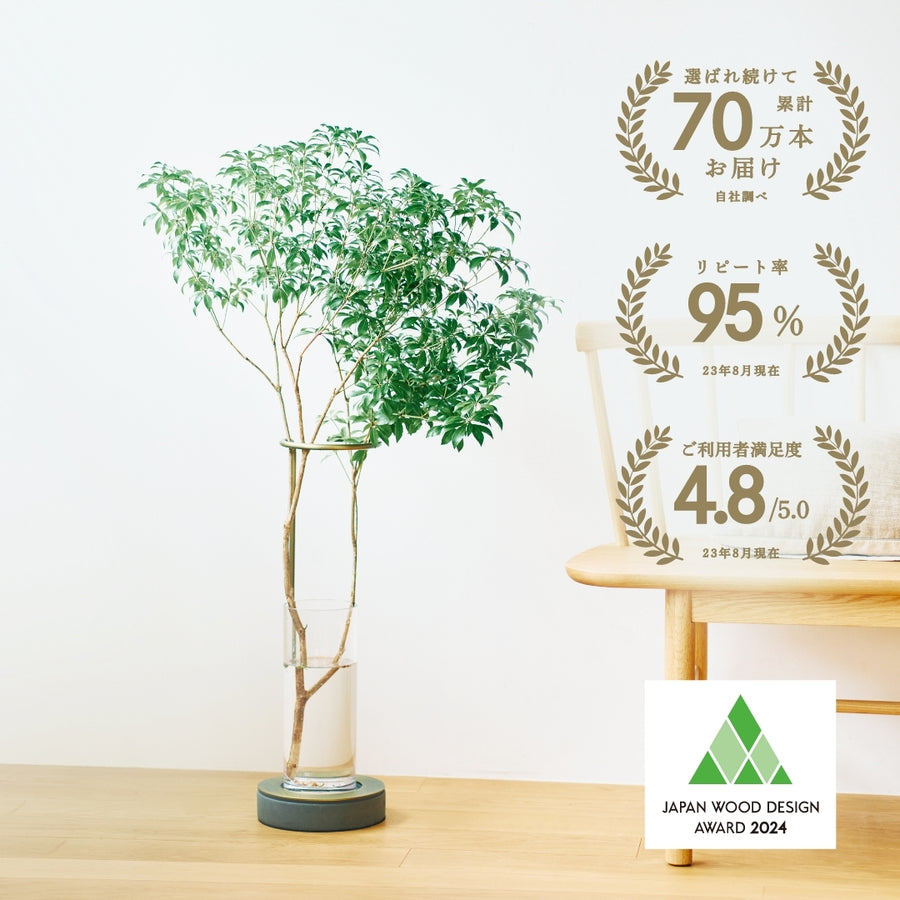
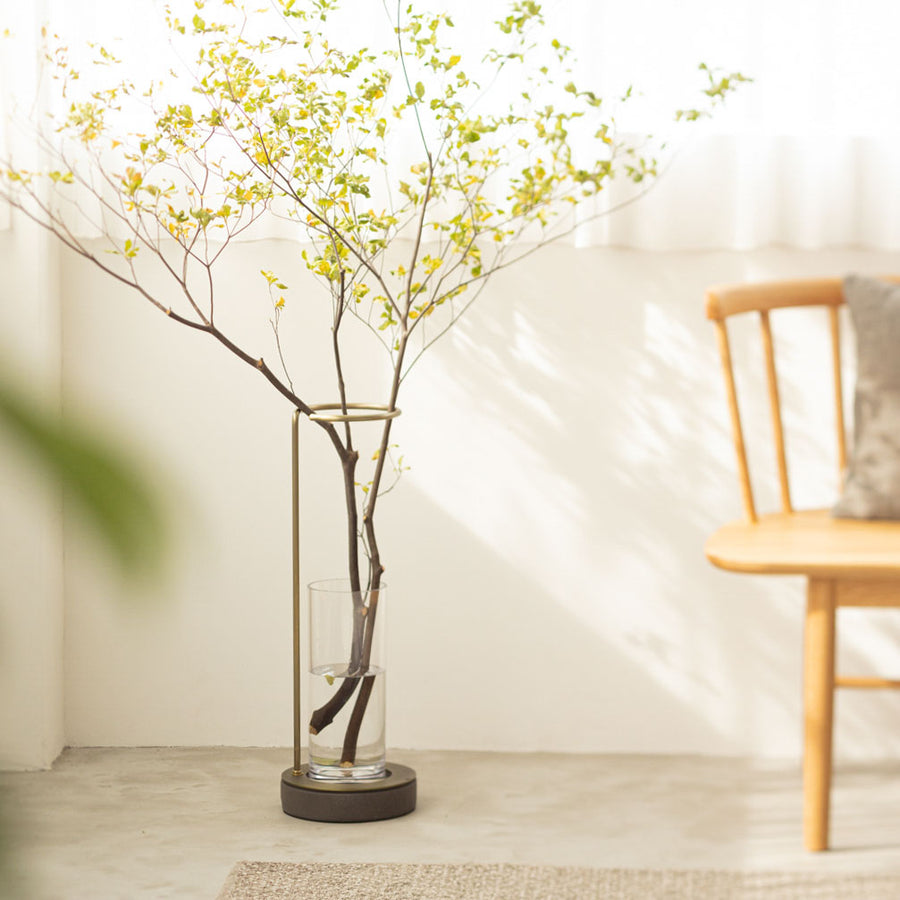
Tall, large Japanese Andromeda branches have a striking impact. Simply placing a vase with them on the living room floor can transform the entire room into a sophisticated space.
Using a clear glass base will highlight the movement of the water and the beautiful lines of the branches, providing a sense of coolness.
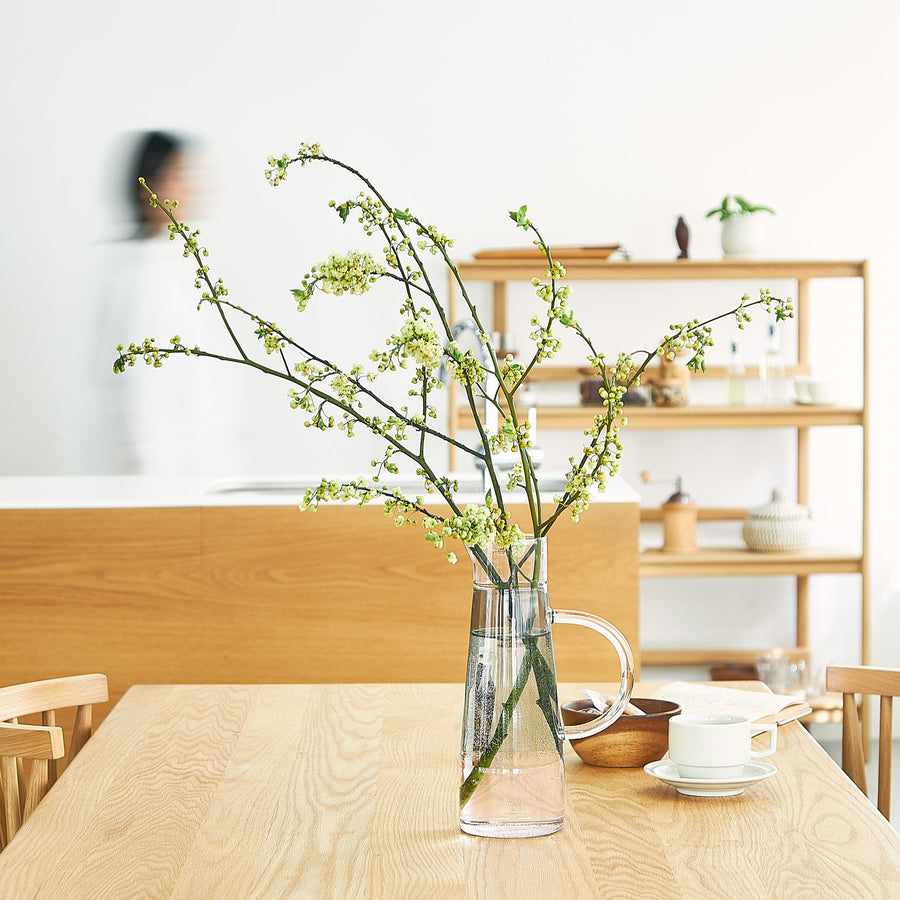
Furthermore, decorating areas like the kitchen or dining table with them can create a fresh and refreshing atmosphere.
Important points when arranging in a vase
When arranging in a vase, the important point is to cut the branches to fit the vase, considering the overall balance. If you display them too long, the branches may spread too much and be difficult to manage.
Cut the bottom 2-3 centimeters of the stem diagonally and "water-raise" it to help it absorb water before displaying.
When cutting branches, using pruning shears designed for branches and flowering trees is recommended.◎

Toyama Hamono | Pruning shears that can cut thick branches and last a lifetime
View Product 〉
How to Care for Japanese Andromeda
Japanese Andromeda is very robust and popular for its longevity, but daily care is, of course, essential. Here, we introduce basic care methods for cut branches.
Basic Care
1. Trim on the day of receipt

Upon receipt, cut a small portion of the stem and trim it before placing it in a vase.
At this time, make a cross cut at the base and peel off the bark with a knife to improve water absorption.
Since branches can be stressed during transportation, it is also recommended to use a freshness preserver with a life-extending agent.
■ Freshness Preserver for Longer-Lasting Branches

Why not try a freshness preserver to provide necessary nutrients to your branches and keep the water in your vase clean?
It has the effect of dissolving sap at the cut end to improve water absorption, allowing you to enjoy your branches for longer.
You can find dedicated branch freshness preservers here.
■ Florist Knife for Better Water Absorption

The VICTORINOX florist knife, which improves water absorption by peeling the bark off the part submerged in water, can be found here.
It offers reliable quality, loved by professionals worldwide.
2. Display branches in a comfortable spot
Branches prefer a cool, well-ventilated spot away from direct sunlight and air conditioning drafts.
You don't need to worry about sun exposure, so it's also recommended to display them in bedrooms or washrooms.
3. Regular Water Changes

It's important to keep the water clean. Change it regularly before it gets cloudy. At that time, recutting the stems will help them absorb water again.
If there is any sliminess on the stems, gently wipe it off with your hand.
If your branches are losing vitality...
Try cutting them shorter and displaying them in smaller arrangements.

As time passes, it becomes increasingly difficult for branches to absorb water. When this happens, try cutting them shorter and arranging them in smaller pieces.
Shorter branches absorb water more easily, and the appearance of small branches can also be refreshingly beautiful.
Trivia about Japanese Andromeda

Japanese Andromeda has been loved for a long time, even praised in the Manyoshu.
Japanese Andromeda, which grows wild in mountainous areas of Honshu, Shikoku, and Kyushu, is also popular as a garden tree and bonsai. Its history is very old, and it has been cherished since ancient times, even appearing in the Manyoshu.
Near the water, the young Japanese Andromeda, though small, gathers faintly to bloom. ― Hakushu Kitahara
<Modern Translation>There is a young Japanese Andromeda tree by the water. Although it is still small, it is faintly gathering to bloom, announcing the arrival of spring.
My love for you, my dear, is now in full bloom, like the Japanese Andromeda flowers in the deep mountains. ― Author Unknown
<Modern Translation>My heart, secretly longing for you, is now in full bloom, like the Japanese Andromeda flowers blooming in the deep mountains.
The Japanese Andromeda appearing in the Manyoshu is often sung about in the spring season. Its bell-shaped white flowers evoke the arrival of spring, expressing heartwarming moments and feelings of love.
The Manyoshu is characterized by collecting waka poems from people of various social statuses, from commoners to emperors. It is clear that it was loved and deeply rooted in people's lives, not just by a certain class.
Japanese Andromeda as a Cut Branch
Japanese Andromeda is an evergreen broadleaf shrub that can grow 1.5 to 5 meters tall. While it grows wild throughout Japan, the Japanese Andromeda with small leaves that is popular for ornamental purposes is said to grow in clusters in the forests around Nara, Wakayama, and Mie, and cut branches harvested from these regions are widely distributed in the flower industry.
Its leaves are soft and reddish when new, and shipping begins around July when they turn green and harden. It then remains available for a long period, until around March of the following year.
The leaves and fruits contain toxic compounds such as grayanotoxin and quercetin. The name "Asebi" (馬酔木), meaning "horse-intoxicating wood," comes from the way horses stagger as if drunk after eating it. There is no danger in touching it with your hands, but care should be taken to prevent small children and pets from accidentally ingesting it.
It is one of the most long-lasting cut branches, and is a summer staple in SiKiTO's regular cut branch delivery service.◎
Summary of Japanese Andromeda

Japanese Andromeda is an evergreen shrub of the Ericaceae family, genus Pieris, popular in summer for its glossy, dark green leaves. It has appeared in the Manyoshu and has been cherished by Japanese people for a long time.
Its leaves and fruits contain toxic components, and it is written as "馬酔木" (Asebi, lit. "horse-intoxicating wood") because horses that eat it stagger as if drunk.
Its flower language includes "sacrifice," "pure heart," "devotion," and "let's travel together."
It is a cut branch that is easy for beginners to grow due to its strong vitality, and it is also famous as a garden tree.Display it in a simple vase to get through the hot summer refreshingly.◎

【SiKiTOのよみもの】枝もの図鑑
よみもの一覧をみる〉

枝もの定期便|自宅で待つだけ、飾るだけ。
商品をみる 〉
PRODUCTS



![[Made to order] Green Summer Wreath made with summer branches (fresh flowers)](http://sikito.com/cdn/shop/files/20250702_-15.jpg?v=1751530871&width=900)


![[Made to Order] Four Seasons and Bonsai: Summer | Japanese Maple](http://sikito.com/cdn/shop/files/yomimono20250912.jpg?v=1756106914&width=900)
![[Pre-Order] Seasons and Bonsai: Summer | Gardenia](http://sikito.com/cdn/shop/files/DSC09951a.jpg?v=1779693971&width=900)
![[Made to Order] Seasons and Bonsai: Summer | Crape Myrtle](http://sikito.com/cdn/shop/files/DSC0468_2.jpg?v=1779774773&width=900)
We also recommend this article

Enkianthus Perulatus Features and Display Ideas | A Refreshing Green Branch Popular in Summer
A deciduous broadleaf tree belonging ...


