

Feijoa Characteristics and Display Tips | A Branch with Beautiful Dark Green and Silver Contrast

Feijoa Basic Information
| Plant Name | Feijoa |
| Scientific Name | Acca sellowiana |
| English Name | Feijoa, Pineapple Guava |
| Other Names | Pineapple Guava |
| Family/Genus | Myrtaceae / Acca |
| Classification | Evergreen shrub |
| Origin | South America (southern Brazil, Uruguay, Paraguay, northern Argentina) |
| Availability Period | October-January |
| Volume of Distribution | ★★★★☆ |
| Longevity | ★★★☆☆ |
*★ indicates a 5-point scale
Characteristics of Feijoa
Feijoa is an evergreen shrub belonging to the genus Acca in the Myrtaceae family. Its coin-sized oval leaves offer a beautiful contrast with their deep green top surface and silvery-white underside.
Native to the highlands of South America (southern Brazil, Uruguay, northern Argentina, etc.), it arrived in Japan in the early Showa period and has a somewhat exotic feel. It is available as a valuable green material from October to January in late autumn. It boasts excellent cold and drought resistance and thrives as a garden tree in warmer regions.
In early summer, it produces beautiful white and crimson flowers, and in autumn, it bears oval-shaped fruits. When ripe, the fruit releases a refreshing sweet aroma and is also known as "pineapple guava," offering a tropical taste reminiscent of a blend of pineapple and banana.
Feijoa's leaves, flowers, and fruits all possess charm. While exuding a tropical ambiance, it is also robust and easy to grow, making it a highly popular plant for both ornamental and edible purposes.

Feijoa Flower Meanings
Feijoa flower meanings include "fruitful life," "passion," "trust," and "contented heart." These positive and forward-looking meanings are attributed to its tropical splendor and strong, vigorous vitality.
"Fruitful Life"
After blooming in early summer, feijoa bears fragrant fruits in autumn. Its long growth process and abundant harvest are said to symbolize "a life that bears fruit through effort" and "fulfilling days." Often cultivated as a home fruit tree, it is cherished as a plant that wishes for "abundance" and "prosperity."
"Passion"
The feijoa flower has white petals with a fiery crimson interior. This striking contrast is believed to represent hidden passion and a strong inner spirit. It carries a perfect meaning for a gift to someone who, though outwardly calm, possesses a strong core and follows their convictions.
"Trust" and "Contented Heart"
Robust and easy to grow, consistently producing flowers and fruits each year, feijoa symbolizes "unwavering trust" and "a peaceful and stable relationship." Furthermore, its sweet fragrance and the bounty of its fruit evoke "the richness of nature" and "inner fulfillment," giving rise to the flower meaning "contented heart."
The flower meanings of feijoa seem to have been inspired by its beauty and the resilience of its fruits, leading to positive interpretations.
How to Display Feijoa

When decorating with feijoa leaves, the key is to highlight their glossy, thick leaves and sophisticated silver-green color. Simple yet striking, they create a natural and elegant ambiance.
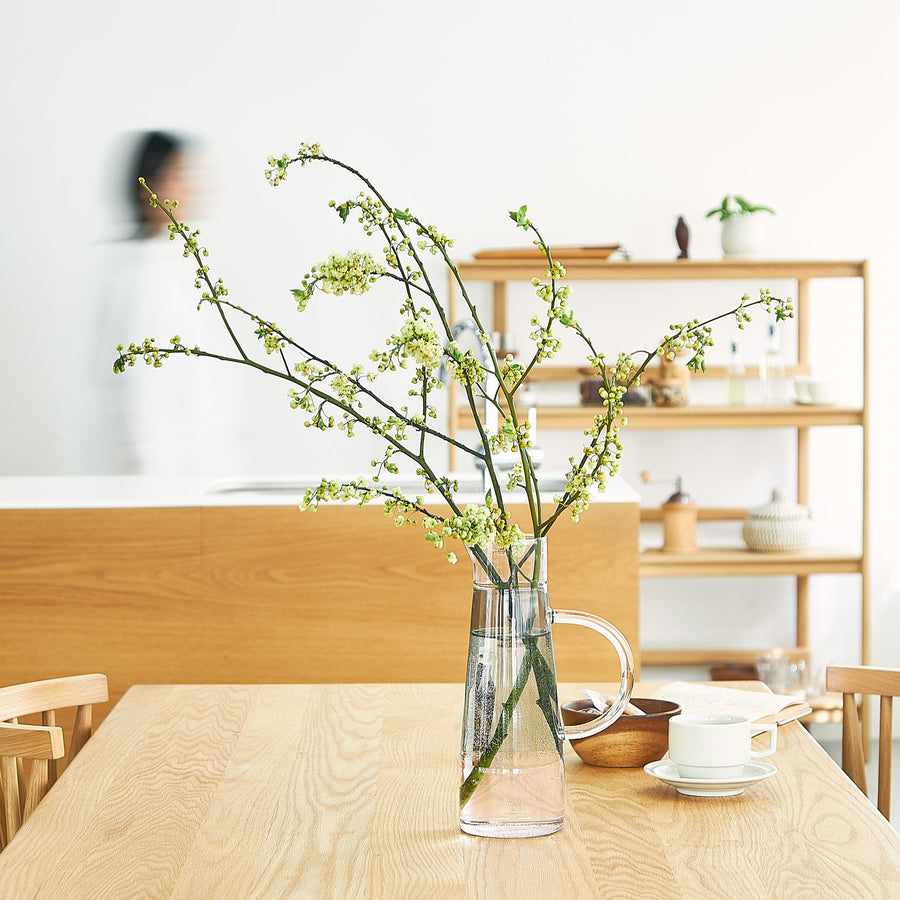
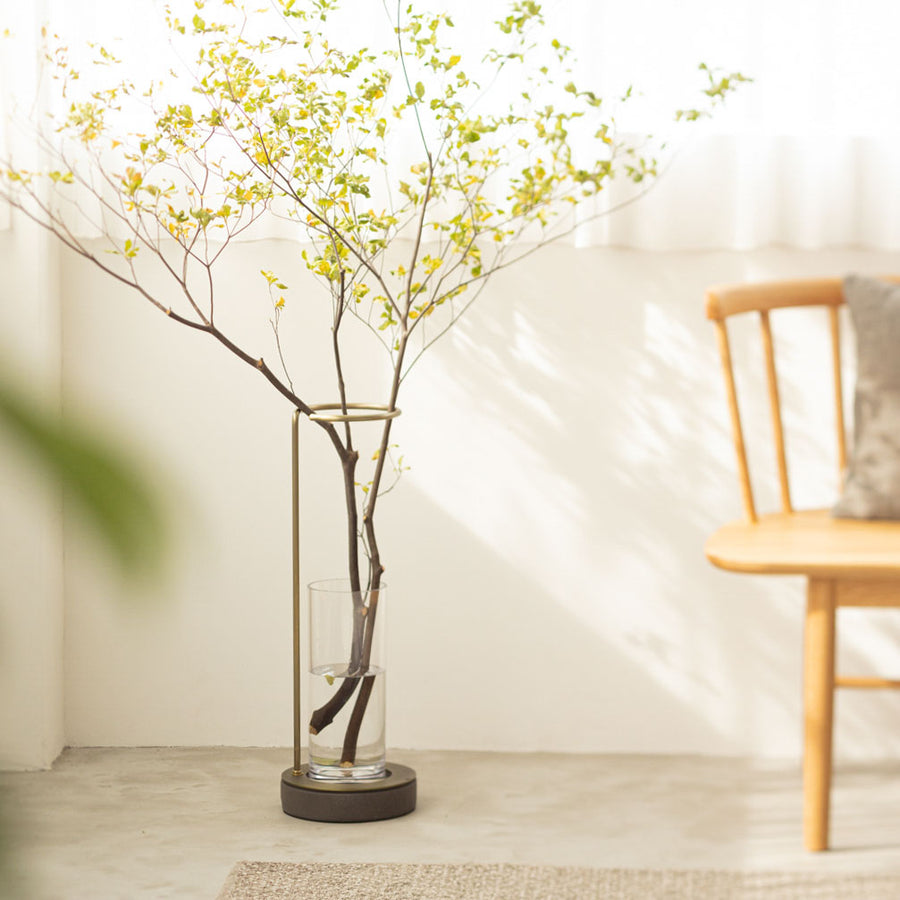
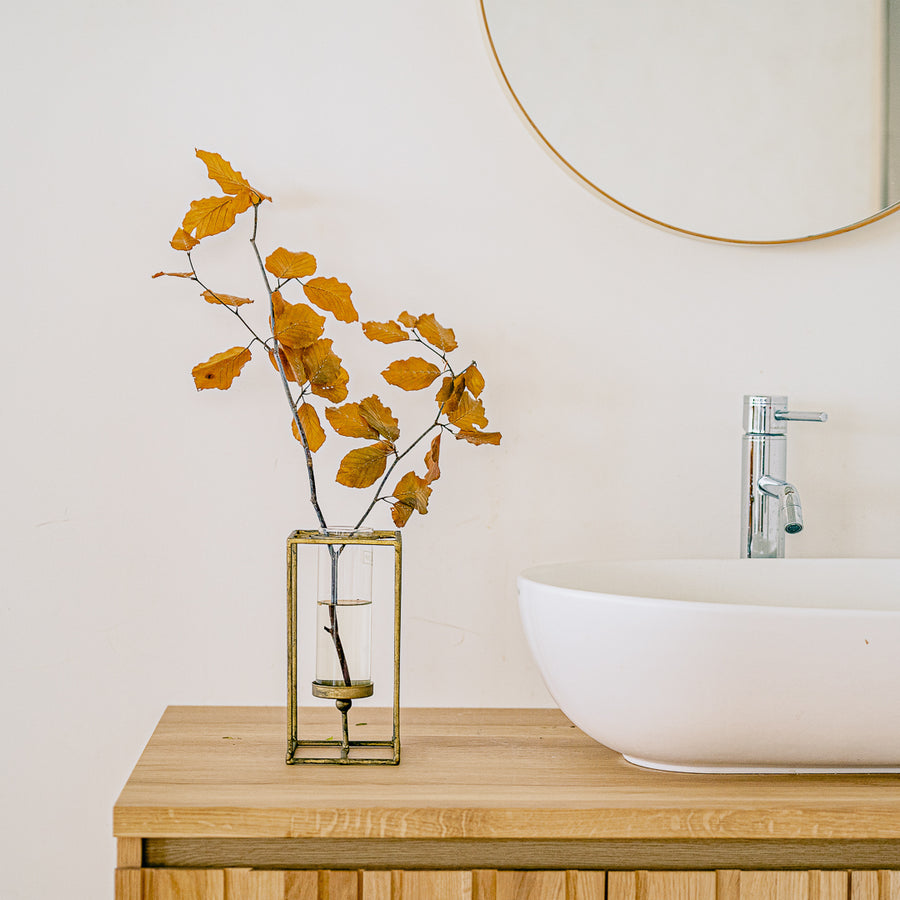
For vases, we recommend those that pair well with natural materials, such as tall, slender bases, unglazed pottery, clear glass vases, or wood-toned vessels. These choices will enhance the texture and color of the leaves, adding a subtle accent to your space.
To utilize the natural shape of the branches, arranging them with a slight angle creates movement and a beautiful overall look. Even a rough arrangement of a few branches will highlight the shades of green, giving a refined impression.

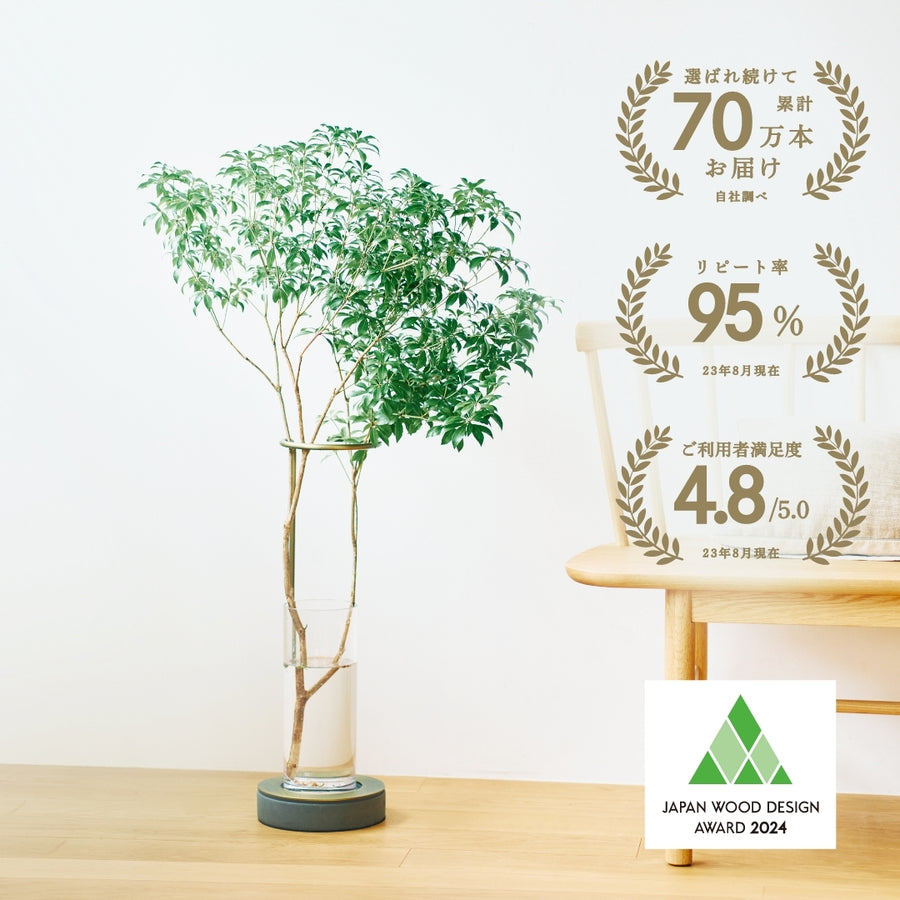
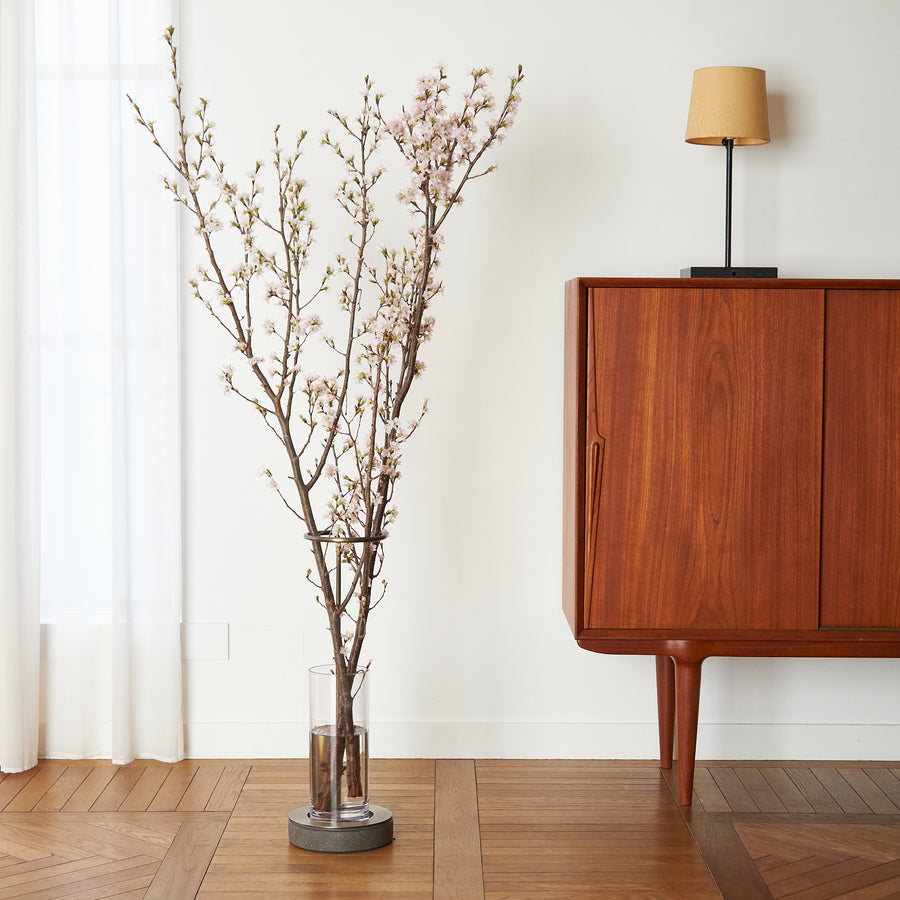
Balloon | A charmingly plump branch vase
View Product 〉
Interior Examples Featuring Feijoa
Feijoa is highly recommended as a refined green interior accent, perfect for natural-style interiors and botanical spaces.
You can display feijoa on its own, or combine it with other popular fruiting branches during this season.
Feijoa leaves also have the advantage of retaining their beautiful color even when dry, allowing for long-lasting enjoyment. Experience the transformation from their fresh, vibrant state to the slightly subdued, rustic charm of dried leaves.
Tips for Arranging in a Vase
When arranging in a vase, the first important point is to cut the branches to size if they are too long. Leaving them too long can create an imbalance or cause the branches to spread out excessively, making it difficult to achieve a cohesive arrangement.
Making an incision in the cut end of the branch that will be submerged in water increases the surface area exposed to water, which improves water absorption. Fill the vase with enough water to submerge about one-third of the branches, and change the water frequently.
When making incisions in branches, it is recommended to use pruning shears designed for branches and woody plants. The key to choosing pruning shears is to select a size that fits your hand comfortably.

Toyama Hamono | Pruning Shears That Can Cut Thick Branches and Last a Lifetime
View Product 〉
Feijoa Care Guide
By understanding its characteristics and taking proper care, you can enjoy the beauty of feijoa for a longer time. Here, we introduce basic care methods for branches.
Basic Care
1. Recutting upon arrival

Feijoa tends to lose water quickly, so it's recommended to recut the stems and arrange them in a vase on the day of arrival. Making a cross incision at the cut end and peeling back the bark will promote water absorption.
Furthermore, using water with a flower preservative will keep the water clean and allow you to enjoy the vibrant color of the flowers for longer.
These small efforts can help you appreciate the beauty of branches for an extended period.
■ Freshness Preservative for Longer-Lasting Branches

Why not try a freshness preservative to provide essential nutrients to your branches and keep the vase water clean? It dissolves sap at the cut ends to improve water absorption, allowing you to enjoy your branches for longer.
Branch-specific freshness preservatives are available here.
■ Florist Knife for Improved Water Absorption

A florist knife from VICTORINOX that improves water absorption by peeling the bark off the submerged part of the stem is available here.
It offers reliable quality, trusted by professionals worldwide.
2. Choosing a Comfortable Spot for Branches
Branches thrive best in a cool, well-ventilated spot away from air conditioning drafts.
Whether in the living room, entryway, or kitchen, they have the power to dramatically transform the atmosphere of any space. Choose a location away from direct sunlight where the branches can comfortably reside.
It's also recommended to display them in quiet, calming spaces like bedrooms or bathrooms.
3. Frequent Water Changes

Change the water frequently before it becomes cloudy. At the same time, recutting the stems will help them absorb water again.
Removing any sliminess from the stems or cutting them diagonally are small efforts that help maintain their beautiful condition.
If Your Branches Are Still Not Doing Well...
Cut them short and enjoy them in smaller arrangements

Even with daily care, branches will inevitably absorb less water over time. In such cases, it's a good idea to boldly cut them into shorter pieces.
Cutting them shorter makes it easier for them to absorb water, and arranging them in smaller vases allows you to enjoy them with a fresh perspective.
Feijoa Trivia

Feijoa Bearing Fruit
While primarily distributed in Japan as leafy branches, feijoa is actually a fruit-bearing plant. Feijoa fruit is characterized by its sweet and rich tropical aroma and a unique flavor reminiscent of pineapple and guava. The flesh is jelly-like and soft, and when ripe, the center becomes translucent and juicy enough to be eaten with a spoon.
The source of this aroma is esters such as methyl benzoate and ethyl benzoate. These compounds are also used in perfumes, making feijoa truly a "fragrant fruit."
Furthermore, it is widely cultivated in New Zealand and other regions. The fruit is not only eaten fresh but also processed into jams, fruit wines, and dried fruit for tea. The taste and enjoyment vary by region; in South America, it is popular in liqueurs and sweets, while in Japan, it is enjoyed as compote and dried fruit.
Explorer Feijó Introduced it to the World
The name Feijoa is derived from João da Silva Feijó, a 19th-century Portuguese explorer.
He was a naturalist who made significant contributions to the study of South American plants. Later, the German botanist Otto Karl Berg named it "Feijoa sellowiana" in his honor.
Although the scientific name was later changed to "Acca sellowiana" due to reclassification of the genus, it is still commonly known as "Feijoa."
In New Zealand, it was introduced in the early 20th century and adapted well to the warm climate, growing into a national fruit. Today, it is widely planted as a home fruit tree, considered the "next garden fruit after kiwi."
Feijoa is also widely loved in Japan as an ornamental plant. Originating from South America, feijoa became a plant cherished worldwide across continents thanks to Feijó's contributions.
Feijoa Summary

Feijoa is an evergreen shrub of the Acca genus in the Myrtaceae family, native to South America. Its branches are beautiful, with glossy dark green leaves contrasting with a silvery-white underside.
It has an exotic atmosphere and is cherished as a valuable green material for interior decoration and floral arrangements in late autumn.
The flower meanings are "trust," "fruitful life," and "contented heart." Its calm and stable presence symbolizes security and abundance.
Feijoa is cold and drought tolerant, making it a popular garden tree in warmer regions. Its serene ambiance makes it an excellent choice for natural and high-quality green interior decor.

【SiKiTOのよみもの】枝もの図鑑
よみもの一覧をみる〉

枝もの定期便|自宅で待つだけ、飾るだけ。
商品をみる 〉
PRODUCTS


![[Made to order] Green Summer Wreath made with summer branches (fresh flowers)](http://sikito.com/cdn/shop/files/20250702_-15.jpg?v=1751530871&width=900)
![[Made to Order] Four Seasons and Bonsai: Summer | Japanese Maple](http://sikito.com/cdn/shop/files/yomimono20250912.jpg?v=1756106914&width=900)
![[Pre-Order] Seasons and Bonsai: Summer | Gardenia](http://sikito.com/cdn/shop/files/DSC09951a.jpg?v=1779693971&width=900)
![[Made to Order] Seasons and Bonsai: Summer | Crape Myrtle](http://sikito.com/cdn/shop/files/DSC0468_2.jpg?v=1779774773&width=900)
We also recommend this article


[Branch & Foliage Encyclopedia | Autumn] Twisted Broom
An evergreen shrub of the genus Cytis...


