

Features and Displaying of Viburnum opulus 'Xanthocarpum' | A Branching Plant with Beautiful, Vibrant Lime Green Leaves

Basic Information About Ninebark
| Plant Name | Ninebark (Kibademari) |
| Scientific Name | Physocarpus opulifolius |
| English Name | Ninebark |
| Also Known As | American Ninebark, Gold-leafed Spiraea |
| Family/Genus | Rosaceae/Physocarpus |
| Classification | Deciduous shrub |
| Origin | Northeastern North America |
| Availability Season | April |
| Availability | ★★★☆☆ |
| Vase Life | ★★☆☆☆ |
※★ indicates a 5-point scale
Characteristics of Ninebark
Ninebark is a deciduous shrub belonging to the Rosaceae family, Physocarpus genus. Native to northeastern North America, it is a branch material that appears when spring buds emerge. It is cherished as a branch material for early summer, with its beautiful, vibrant lime-green leaves that give it a natural feel.
Ninebark appears on the market with the refreshing breezes of spring. It is not widely available during its flowering period, but rather in large quantities around April when new shoots begin to emerge.
As its Japanese name "Kibademari" (literally "yellow-leafed temari") suggests, it is named for its bright, soft yellow-green leaves, and its coloring varies depending on the season and origin.
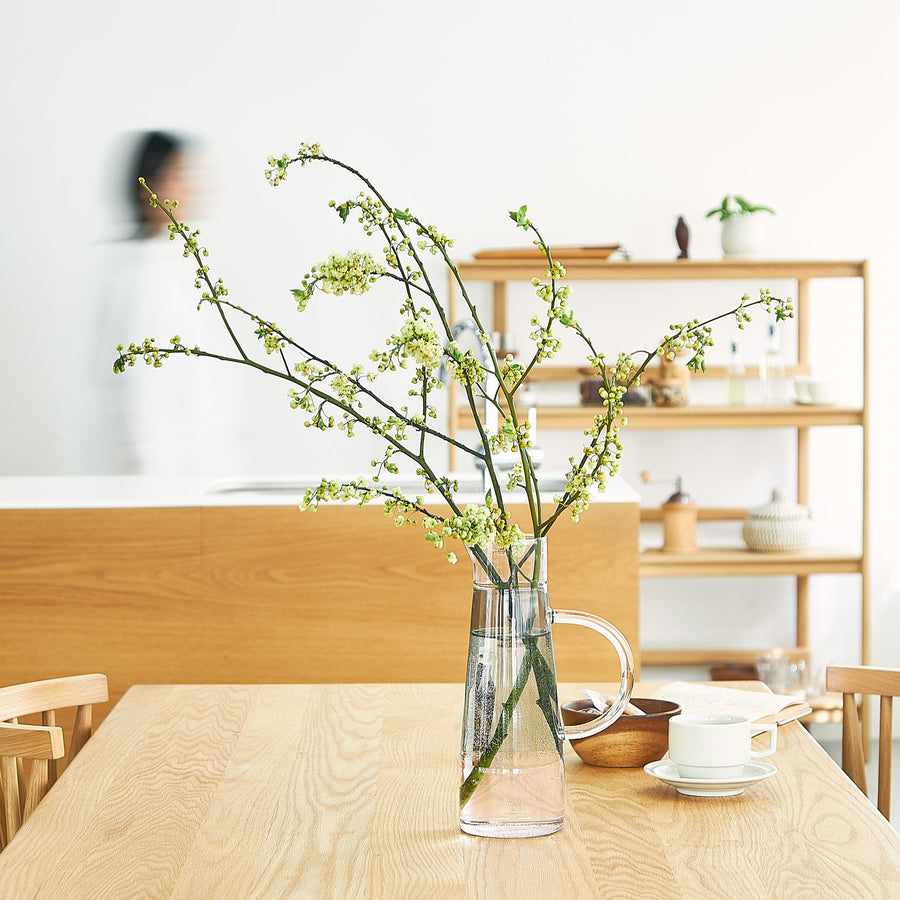
In spring, small white flowers bloom in clusters along its slender, arching branches, allowing one to enjoy the contrast between the soft new greenery and the white flowers. Its flowers are said to resemble those of the Bridalwreath Spiraea.
It possesses a modest beauty that is not overly showy, and it harmonizes well with both Japanese and Western-style spaces.
Its naturally weeping lines are beautiful, making it popular for ikebana and natural-themed arrangements. The sight of tiny flowers clustered among yellow-green leaves is lovely, creating a refreshing seasonal feel from spring to early summer.
It is a branch material with a gentle and light expression, offering enjoyment not only of its blooms but also of its branching movements and leaf colors.

Ninebark Flower Language
The flower meanings of Ninebark include "elegance," "effort," and "refined beauty." It is cherished as a gentle and elegant flowering shrub, owing to its gracefully weeping branches and its multitude of delicate small flowers.
"Elegance"
Ninebark, with its slender, arching branches and soft clusters of small white flowers, exudes an elegant and serene atmosphere. Its beautiful form swaying in the breeze also contributes to the flower meaning of "elegance."
"Effort"
Rather than being overtly showy, Ninebark carefully blooms each tiny flower. This modest yet beautiful display suggests accumulation and earnestness, hence the meaning "effort."
"Refined Beauty"
The harmony of small white flowers and bright yellow-green leaves makes Ninebark's natural beauty its charm. With its natural and delicate ambiance, it gently adorns any space, perfectly suiting the flower meaning "refined beauty."
The flower meanings of Ninebark are derived from its supple branches and its delicate and gentle blossoms. From spring to early summer, it is a branch material that evokes a sense of natural lightness and freshness◎
How to Display Ninebark

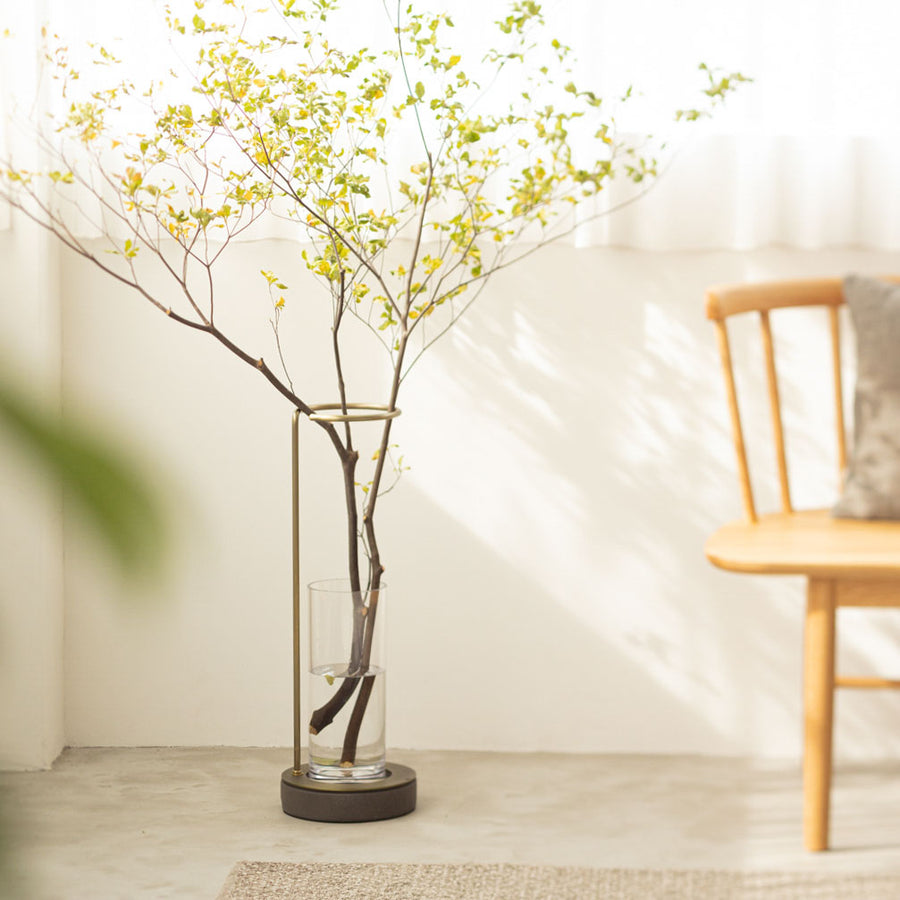
The key to displaying Ninebark is to utilize the graceful lines of its weeping branches. By allowing the branches to flow naturally and spread out gently, you can highlight its natural and soft atmosphere.
Consciously creating a balance between the clustered flowers and the negative space of the extended branch tips will add movement to the space, allowing you to enjoy the delicate beauty unique to Ninebark◎
As Ninebark is a light branch material, it pairs wonderfully with clear glass vases and rustic ceramic vessels.
Incorporating it into your spring and early summer decor will bring a refreshing seasonal feel to the space with its soft new greenery and lovely white flowers, creating a natural and comfortable atmosphere.

Vase Collection Perfect for Branches
View Products 〉
Precautions when arranging in a vase
Change the water in the vase daily to help keep your branches beautiful for longer. It's also important to clean the vase regularly to maintain its cleanliness.
When cutting branches, use clean pruning shears and cut the stem at an angle to help with water absorption. Since nandina branches are flexible, lightly splitting the base can further improve water uptake.
When cutting branches, it is recommended to choose pruning shears that fit comfortably in your hand and are easy to use. Shears with sharp blades that can smoothly cut thin branches are ideal.
With just a little care, you'll see the buds transform into flowers, and then you'll be able to enjoy them for even longer!

Toyama Hamono | Pruning Shears for Life, Even Cutting Thick Branches
View Products 〉
Ninebark Care Instructions
Ninebark, with its attractive bright yellow-green leaves, actually tends to droop easily and absorbs a lot of water. By being mindful of these characteristics and caring for it accordingly, you can enjoy its beauty for longer. Here, we'll introduce basic care tips for branches.
Basic Care
1. Recutting on the day of receipt

When you receive branches, recut them on the same day before arranging them in a vase.
Additionally, make a cross-shaped cut at the base and use a knife to peel off the surface bark of the stem. It is recommended to peel only the part that will be submerged in water. This will help the branches absorb water more easily and keep them fresh for longer.
Moreover, using a flower preservative can further help maintain the freshness of the branches◎
■Flower Preservative for Long-Lasting Branches

SiKiTO has researched the ideal nutrient balance for branches and created an original new flower preservative. This preservative provides necessary nutrients to flowers and branches and is expected to keep the vase water clean.
The dedicated branch flower preservative is available here.
■Florist Knife for Better Water Absorption

A florist knife for cutting flower stems is also useful for stripping bark from branches. The VICTORINOX florist knife, which helps improve water absorption by stripping the bark from the submerged part of the stem, is available here.
It boasts reliable quality trusted by professionals worldwide.
2. Choose a comfortable spot for your branches
Branches prefer a spot with good air circulation and sunlight, and moderate humidity. Displaying them in a bright place, such as by a window, will help them thrive.
On the other hand, direct exposure to air conditioning can cause dryness and negatively affect flowering, so be careful.
It's also recommended to display them in quiet, calming spaces like bedrooms or bathrooms◎
3. Frequent water changes

Change the water frequently before it becomes cloudy. This helps the stems absorb water and prevents bacteria and mold from growing in the water. Recutting the stems at this time will also help them absorb water better.
By putting in a little extra effort, you can enjoy the beauty of branches for much longer.
If your branches are still not thriving...
Cut the branches to enjoy them in a compact way

Even with continuous care, water absorption can gradually worsen over time. In such cases, it's a good idea to boldly cut the branches short.
Shortening them improves water absorption, and arranging them in a smaller vase allows you to enjoy the branches in a different atmosphere.
Ninebark Trivia

Ninebark's Availability and Appeal as a Branch Material
Ninebark is characterized by its more common market availability as a branch material to enjoy "branches rather than flowers". Starting around April when buds emerge, shipments of Ninebark branches in their budding state begin.
While its small white flowers are delicate, they are not overly assertive, so the beauty of the branches themselves is prioritized in terms of commercial value. This is because the gracefully arching branches and naturally drooping lines create movement in a space, making them valued for ikebana and display materials.
Furthermore, because the delicate impression can be somewhat lost when the flowers are in full bloom, they are often cut during the bud to early blooming stage, which is also suitable for ease of transport and handling. Additionally, their relatively low availability and seasonal nature as a branch material make them a prized natural and rare material.
The Origin of its Name: "Yellow Leaves" and "Temari-like" Flowers
The name Kibademari (キバデマリ) comes from its bright yellow-green leaves that appear during budding, as suggested by its Kanji characters "黄葉手毬" (yellow-leafed temari).
Also, the way small flowers gather and bloom together, resembling a round "temari" (traditional Japanese handball), is also the origin of its name.
The contrast between the bright yellow-green leaves and the white flowers is refreshing, offering a light and pleasant spring-to-early-summer scene. The sight of flowers gently blooming at the tips of the branches gives a soft impression, evoking the charm of a natural landscape captured as if in a snapshot.
Ninebark Summary

Ninebark is a deciduous shrub of the Rosaceae family, Physocarpus genus. It is a branch material that is not widely available during its flowering period but is found in abundance around April when new shoots begin to emerge. As its Japanese name "Kibademari" (literally "yellow-leafed temari") suggests, it is named for its bright, soft yellow-green leaves.
When in bloom, the contrast between its bright yellow-green leaves and delicate white flowers is beautiful, making it a beloved branch material that exudes natural gentleness. Its flowing branches are also a charm, as they add movement and depth to any space just by being displayed.
The flower meanings of Ninebark include "elegance," "effort," and "refined beauty." These meanings are inspired by its gracefully swaying branches and its modest yet lovely blossoms.
Ninebark, blooming from spring to early summer, adds a refreshing and gentle touch to any space. It is a flowering tree that allows one to appreciate the natural beauty of its flexible branches and the charming appearance of its clustered small flowers◎

【SiKiTOのよみもの】枝もの図鑑
よみもの一覧をみる〉

枝もの定期便|自宅で待つだけ、飾るだけ。
商品をみる 〉
PRODUCTS

![[Made to order] Green Summer Wreath made with summer branches (fresh flowers)](http://sikito.com/cdn/shop/files/20250702_-15.jpg?v=1751530871&width=900)



![[Made to Order] Four Seasons and Bonsai: Summer | Japanese Maple](http://sikito.com/cdn/shop/files/yomimono20250912.jpg?v=1756106914&width=900)
![[Pre-Order] Seasons and Bonsai: Summer | Gardenia](http://sikito.com/cdn/shop/files/DSC09951a.jpg?v=1779693971&width=900)
![[Made to Order] Seasons and Bonsai: Summer | Crape Myrtle](http://sikito.com/cdn/shop/files/DSC0468_2.jpg?v=1779774773&width=900)
We also recommend this article

Spiraea, which was delivered to many ...

[Branch & Blossom Guide | Summer] Viburnum Snowball & Japanese Kerria
Viburnum opulus 'Roseum' (also known...


%0A%0A%0A%0A%0A%0A%0AScientific%20Name%0A%0APhysocarpus%20opulifolius%0A%0A%0A%0A%0A%0A%0AEnglish%20Name%0A%0ANinebark%0A%0A%0A%0A%0A%0A%0AAlso%20Known%20As%0A%0AAmerican%20Nineba...)