

[Visit to a Branch Flower Farm] Toyoda-san, a Spiraea prunifolia farmer in Kosai City, Shizuoka Prefecture

With its warm climate and abundant sunshine, the Hamamatsu area of Shizuoka Prefecture is one of Japan's leading flower production regions.
Located on the western shore of Lake Hamana, Kosai City, in the westernmost part of Shizuoka Prefecture, is Japan's largest producer of spirea, boasting an astonishing 80% share of the national market.
Spirea, with its snow-like small flowers blooming profusely on branches in early spring, was highly popular in our "Branch Subscription Service," but it is said to be one of the most challenging plants to cultivate among all branch varieties.
To learn about the production site of these beautifully blooming branches, SiKiTO representative Sato visited Mr. Masafumi Toyoda (41), a spirea farmer in Kosai City.
First, please tell us about the plants you produce.
Currently, I am most focused on spirea. I ship about 100,000 branches in the spring.

I also grow tangerines and pampas grass. Usually, it's just my family, but during busy seasons, we have about 10 support staff.
When did you start growing spirea in Kosai City?

It was about 70 years ago, around 1952.
There were many tangerine farmers around Lake Hamana due to its warm, favorable climate. Spirea cultivation spread during the post-war agricultural reconstruction because it provided an income source for farmers in winter and could be grown in small areas.
Currently, there are 52 growers in an area of about 10.5 hectares, shipping about 1.8 million spirea branches annually.
Around 1972, individual farmers began shipping through agricultural cooperatives (Kyosen/joint selection), and now Kosai City's spirea is distributed nationwide to major markets.
The usual flowering season for spirea is March to April. The "Branch Subscription Service" offered it in February, which is quite early, isn't it?
That's because we use "forcing cultivation" to make them grow faster than usual.
In the process of growing spirea, we intentionally defoliate the plants once they become dormant. By removing the leaves and encouraging new buds, we trigger the release of hormones that promote stronger growth.

After exposing them to cold temperatures in winter, we warm them in a greenhouse with heaters. By carefully controlling the room temperature, we make the flowers bloom earlier than usual.

There's a large heater inside the greenhouse.
Flowers cultivated in this manner are shipped from around January, followed by those grown warmly in greenhouses without heaters, and finally, field-grown ones[*].
Those grown in greenhouses are highly demanded by the market because their leaves remain undamaged and beautiful. The market often requests shipments by the end of the year, but forcing them to bloom that early would damage the plant itself for several years, making it difficult.
[*]Cultivated outdoors in fields, closer to natural conditions, without the use of greenhouses, etc.
Please tell us about your annual farming schedule.
The new year begins, and from January to February, spirea starts to bloom and shipping begins. After shipping, we remove the greenhouse vinyl, apply fertilizer for the next year, and continue managing the fields.
In parallel, from March to April, we ship tangerines grown in other fields, and after Golden Week, we thin out the spirea.
About 200 buds emerge from one spirea plant, but the final size of the branches changes depending on how many are thinned out. For M to L sizes, we leave about 30 to 50 buds out of 200. We aim for larger grades of 2L or more, so we reduce them to about 20 buds.

Sizes 2L to 3L are not often found in flower shops. They are used for hotel lobbies and event floral arrangements because they don't look inferior to any other flower.

Pre-shipping work. Grades are determined by weight.
Pampas grass is shipped in autumn, but during that time, we also disinfect spirea to prevent insects and give additional fertilizer... Come to think of it, I'm always tending to spirea all year round (laughs).
So you put a lot of time and effort into growing them.
That's right. Actually, I've grown other branches before too.
Miniature chrysanthemums, Erica, Gny Eucalyptus, holly, holly osmanthus, bamboo... I've grown and shipped various things, but spirea is particularly difficult to cultivate.
It's been 23 years since I started farming, but I still make mistakes. Even 80-year-old veterans seem to make mistakes sometimes.
What are the difficult points?
First, temperature control. Even a small mistake can affect flowering.
Spirea is a plant that changes color in autumn and loses its leaves to go dormant in winter. Good flowering requires about 40 days of cold below 15℃ after November.
In other words, if there isn't enough cold in winter, the dormancy period will be shorter, and flowering will be poor. This makes January shipments very difficult.
Inside the cultivation greenhouse. The larger ones in the back will be shipped soon, and the smaller ones in the front will be shipped in a year.
Each producer tries various methods based on their experience and intuition, but it's rare for everything they produce to be shippable. In the worst case, everything can be ruined. Since the environment differs depending on the shape of the greenhouse, heater temperature, and field, there's no single common solution.
We are dealing with nature. The fact that it doesn't go well every year is what makes it difficult yet interesting.
Another problem is the lack of successors.
When I started farming, there were 128 spirea farmers, but now there are about 50. I'm 41, but I'm still one of the youngest, probably the second or third youngest.
It takes many years to get started and get on track, and there's the hardship when the crops aren't in good condition or don't sell... Nevertheless, I continue this work because I find working with nature enjoyable and rewarding.
For you, Mr. Toyoda, as a producer, what is the appeal of spirea?
It's the clear beauty created by the countless white flowers, green leaves, and gently drooping branches.

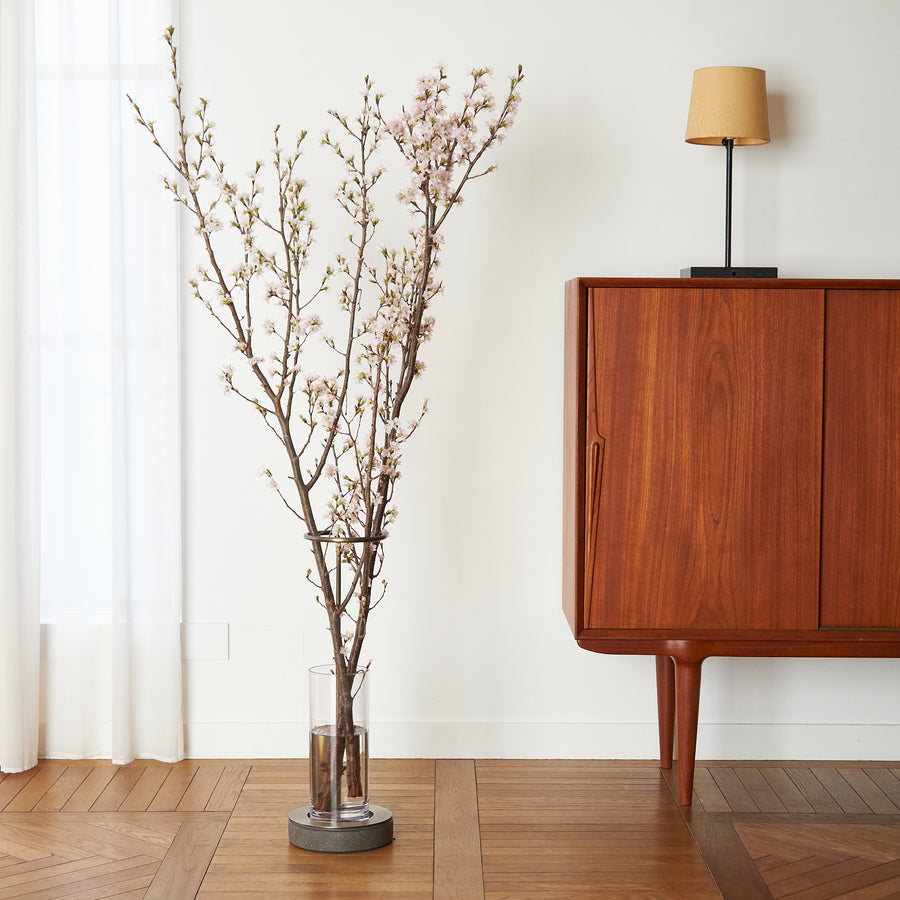
Large spirea has a lot of volume on its own, so even just arranging it simply creates a powerful and beautiful display. Its appeal also lies in how easily it can be shaped and its volume adjusted to your liking.
If you cut the branches into smaller pieces, you can expand its uses, such as arranging it with other flowers.
Do you have any tips for spirea care or for enjoying it more?
It tends to wilt easily, so first, make sure it doesn't run out of water.
Also, this is a well-known trick among producers, but after enjoying the white flowers of spirea, try mixing food coloring or dye into the water. This will dye the flowers and give them color. It's fun to dye them yellow or light blue, for example.

But in the end, I think the original "white" is the most beautiful.
I definitely want to try that! Finally, please give a message to users of the "Branch Subscription Service."

I hope to continue delivering spirea that has a strong presence, looking beautiful whether displayed alone or with other flowers.
Please enjoy a life with flowers.
Spirea, lovingly cultivated for a year with the blessings of nature. I was amazed by the bold technique of dyeing the delicate white flowers. It seems that autumn pampas grass can also be dyed using a similar method!
We look forward to your spirea, Mr. Toyoda. Thank you very much.
PROFILE | Masafumi Toyoda

(Photo left. Right is Mr. Kamimura from JA Topia Hamamatsu)
Masafumi Toyoda is a spirea farmer in Kosai City, Shizuoka Prefecture, primarily producing 100,000 spirea branches and tangerines in spring, and 12,000 pampas grass branches in autumn.
He is dedicated to the challenging cultivation of spirea.
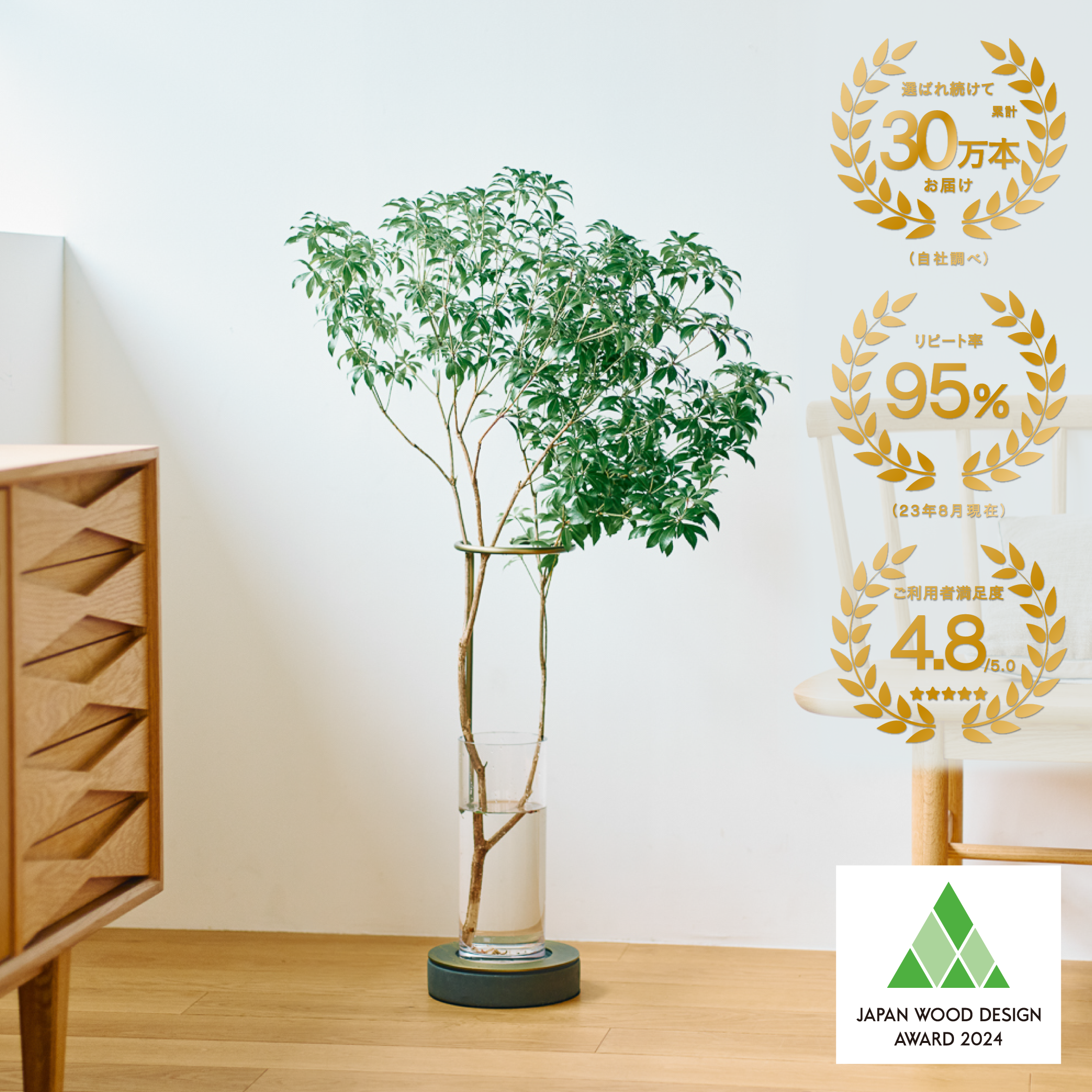
Branch Subscription Service | Just wait at home, just decorate.
View product 〉
PRODUCTS

![[Made to order] Green Summer Wreath made with summer branches (fresh flowers)](http://sikito.com/cdn/shop/files/20250702_-15.jpg?v=1751530871&width=900)
![[Made to Order] Four Seasons and Bonsai: Summer | Japanese Maple](http://sikito.com/cdn/shop/files/yomimono20250912.jpg?v=1756106914&width=900)
![[Pre-Order] Seasons and Bonsai: Summer | Gardenia](http://sikito.com/cdn/shop/files/DSC09951a.jpg?v=1779693971&width=900)
![[Made to Order] Seasons and Bonsai: Summer | Crape Myrtle](http://sikito.com/cdn/shop/files/DSC0468_2.jpg?v=1779774773&width=900)
We also recommend this article

[Branch Subscription 1st Anniversary Event] Gathering of Branches to Experience the Seasons
To commemorate the first anniversary ...

Kibademari (Physocarpus opulifolius...


