

Characteristics and Display of Plum Blossoms: An Early Spring Branch Flower with Round Buds and a Dignified Appearance

Basic Information about Ume (Japanese Plum)
| Plant Name | Ume (Japanese Plum) |
| Scientific Name | Prunus mume |
| English Name | Japanese apricot, Japanese plum |
| Other Names | Harutsugugusa (Spring Announcing Grass), Kobunboku (Literary Tree) |
| Family/Genus | Rosaceae / Prunus |
| Classification | Deciduous tall tree |
| Origin | China |
| Availability Period | December - January |
| Availability | ★★★★☆ |
| Longevity | ★★★☆☆ |
※★ indicates a 5-point scale
Characteristics of Ume
Ume (Japanese plum) is a deciduous tall tree of the Rosaceae family, genus Prunus. Originally from China, it was brought to Japan in ancient times and has been cherished since antiquity as a representative spring branch for both ornamental and culinary purposes.
From the lingering cold of winter, before its leaves emerge, the ume tree bears plump, round buds all over its branches. From the winter solstice through the New Year, red (kobai) and white (hakubai) ume blossoms slowly open with a fragrant aroma. As a cut branch, it is available with a chain of rounded flower buds, and as they bloom, their gentle fragrance evokes the arrival of spring. Its dignified branch form pairs well with Japanese aesthetics, making it popular for arrangements and ikebana.
Ume blossoms have an elegant, sweet-and-sour fragrance, and have been cherished since ancient times as the "fragrance announcing spring." Beyond their ornamental value, ume fruits are also used for umeboshi (pickled plums) and umeshu (plum wine), deeply rooted in Japanese life.
Depending on the variety, the flower color and bloom style vary, allowing enjoyment of various expressions from single to double blossoms. The sight of them blooming in the clear air of early spring conveys both delicacy and strength.
It is a branch that allows you to slowly enjoy the transition from bud to bloom, bringing a sense of the changing season from winter to spring.

Ume Flower Language
The flower meanings of ume include "integrity," "fidelity," "patience," and "elegance." The ume tree, which blooms with dignified flowers at the end of a harsh winter, has been loved by the Japanese people since ancient times for its nobility, strength, and beautiful fragrance.
"Integrity"
The ume blossoms are the first to bloom in the still cold air, presenting a pristine and noble appearance. The ability to bloom beautifully even in harsh conditions gave rise to the flower meaning "integrity."
"Fidelity"
The ume consistently signals the arrival of spring each year. Its unwavering nature conveys sincerity and devotion. Having been close to people's lives since ancient times, it embodies the meaning of "fidelity."
"Patience"
The sight of the ume patiently swelling its buds in the lingering cold of the season, and eventually blossoming into beautiful flowers, symbolizes the strength to move forward without succumbing to difficulties. Its ability to bloom after enduring winter is linked to the flower meaning "patience."
"Elegance"
With its soft colors and faintly sweet fragrance, the ume blossom. Not overly showy, its quiet beauty is well-suited to the word "elegance." As a cut branch, its rounded buds are strung together, and the charm lies in being able to enjoy the progression of its blooming for a long time.
The flower meanings of ume arise from its strength in blooming at winter's end and its delicate, graceful beauty. It's a branch that announces the arrival of spring and evokes a distinctly Japanese charm ◎
How to Display Ume

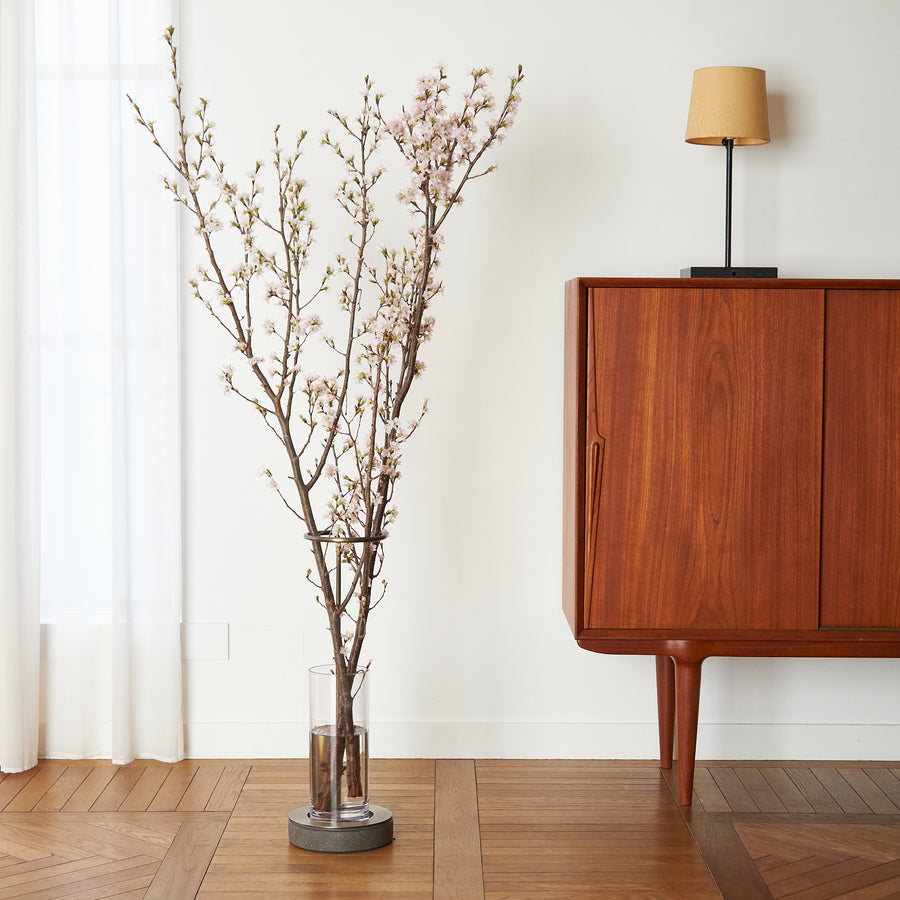
When displaying ume, the key is to highlight the beautiful rounded buds and beginning blooms by utilizing the curves and flowing lines of the branches. Arranging them with varying heights and spreading them out gently will enhance the ume's unique dignified charm.
By considering the balance between the flowering parts and the gracefully extending empty spaces, you can enjoy the strength and elegant beauty within their daintiness ◎
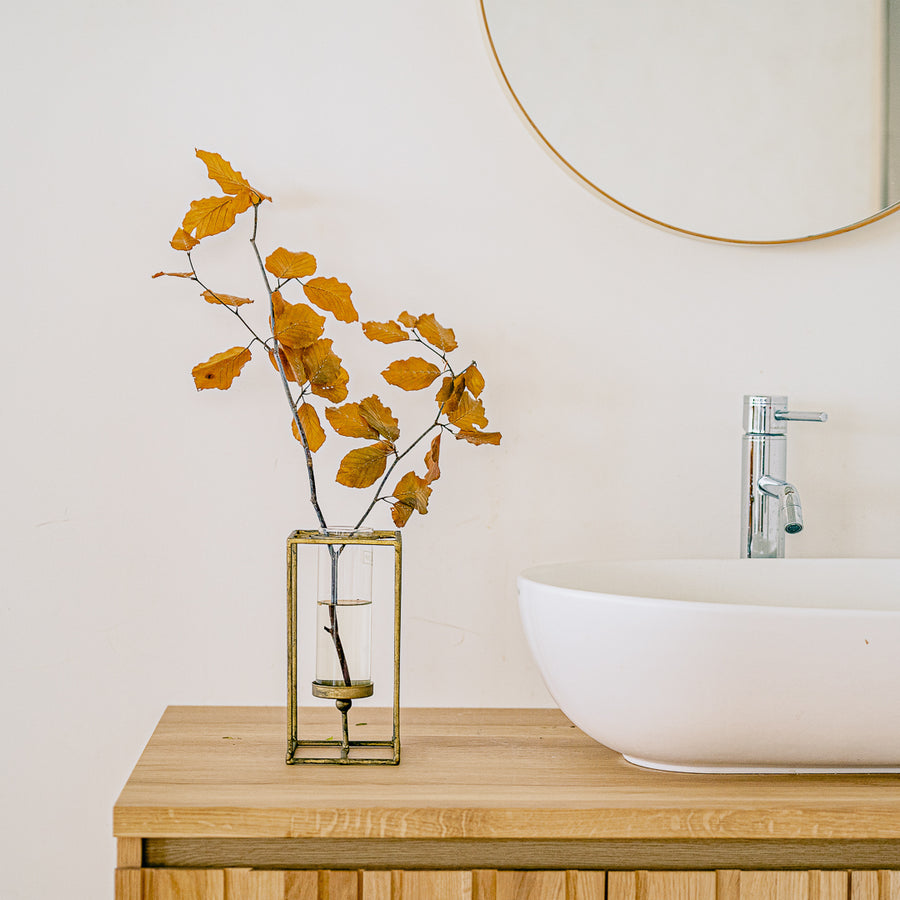
Ume branches have a significant presence, making them perfect companions for simple glass vases or tranquil ceramic vessels.
Incorporating them into an early spring display will add a gentle fragrance and elegant floral presence to your space, evoking the arrival of spring.

Vase Collection Perfect for Branches
View Products 〉
Precautions when arranging in a vase
Change the water in the vase daily to help the branches stay beautiful for longer. It's also important to clean the vase regularly and keep it in a sanitary condition.
When cutting branches, use clean pruning shears and cut the stem diagonally to aid water absorption. Nanten (heavenly bamboo) has flexible branches, so lightly splitting the base will further improve water uptake.
When cutting branches, it is recommended to choose pruning shears that fit comfortably in your hand and are easy to use. Shears with sharp blades that can smoothly cut thin branches are ideal.
Just a little care allows you to observe the changes from bud to bloom, and enjoy them for an even longer time!

Toyama Hamono | Pruning Shears for Life, Even for Thick Branches
View Products 〉
Ume Care Guide
Ume is a branch that allows you to enjoy the transformation from plump buds gradually swelling to beautiful flowers blooming. By keeping a few characteristics in mind when caring for it, you can enjoy its beauty for even longer. Here, we introduce basic care methods for cut branches.
Basic Care
1. Recutting upon receipt

Upon receiving the branches, recut them before placing them in a vase.
Additionally, make a cross-shaped incision at the base and use a knife to peel off the bark from the surface of the stem. It is recommended to only peel the part that will be submerged in water. This will help the branch absorb water more easily, keeping it fresh for longer.
Furthermore, using a freshness preserver can help maintain the freshness of the branches even more ◎
■ Freshness Preserver for Extended Enjoyment of Branches

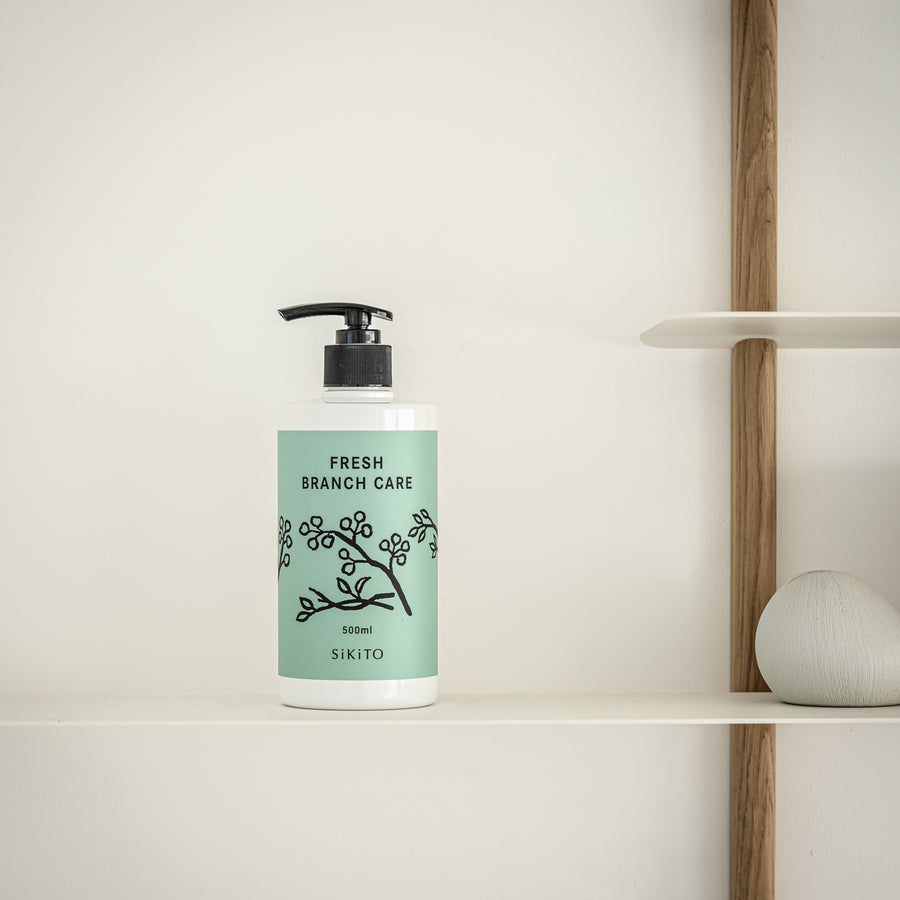
This is a new freshness preserver created by SiKiTO, through research into the ideal nutrient balance for branches. This preserver is expected to provide necessary nutrients to flowers and branches, and keep vase water clean.
The freshness preserver specifically for branches can be found here.
■ Florist's Knife to Improve Water Uptake

A florist's knife, used for cutting flower stems, is also useful for stripping the bark of branches. The VICTORINOX florist's knife, which improves water uptake by stripping the bark from the part submerged in water, can be found here.
It is a reliable quality trusted by professionals worldwide.
2. Choosing a comfortable spot for branches
Branches prefer a well-ventilated, sunny, and moderately humid location. Placing them in a bright spot, such as by a window, will help them thrive.
On the other hand, direct exposure to air conditioning can cause them to dry out and hinder flowering, so caution is advised.
It's also recommended to display them in quiet and relaxing spaces such as bedrooms or washrooms ◎
3. Frequent water changes

Change the water frequently before it becomes cloudy. This helps the stems absorb water and prevents bacteria and mold from growing in the water. Recutting the stems at this time will also help them absorb water more easily.
A little extra effort allows you to enjoy the beauty of branches for longer.
If the branches are still not thriving...
Cut the branches and enjoy them compactly

Even with continued care, water absorption can gradually worsen over time. In such cases, it's a good idea to consider cutting the branches shorter.
Shortening them improves water absorption, and by arranging them in a smaller vase, you can enjoy the branches in a different atmosphere.
Ume Trivia

Ume: The Herald of Spring
Because ume blossoms are among the first to bloom in the still-cold season, they are affectionately known as "Harutsugugusa" (spring-announcing grass). In the barren winter landscape, the sight of plump buds slowly opening gently signals the arrival of spring.
Their gentle fragrance and delicate appearance have been beloved by many people since ancient times, frequently appearing in Japanese waka poetry and paintings. Especially during the Heian period, the culture of appreciating ume was more widespread than that of cherry blossoms.
The sight of them blooming with dignity despite the cold possesses both elegance and strength, making them a floral tree that evokes a distinct sense of the Japanese seasons.
A tree that flourishes when culture thrives
Ume is also known as "Kobunboku," which is said to originate from an ancient Chinese legend.
Once upon a time, there was a Chinese emperor. It was believed that when his reign was prosperous, the plum trees would bloom profusely, and conversely, when his governance faltered, the plum trees would cease to bloom.
From this, it came to be called "Kobunboku" (好文木), meaning "a tree that blooms well in a world that values literature (i.e., culture and scholarship)."
This name also spread to Japan, and in conjunction with the ume's elegance and cultural image, it became used as an alternative name.
Thus, Kobunboku can be said to be a name born from the image of "a tree that blooms beautifully when culture and learning prosper."
The History of Ume Sung in the Manyoshu
It is said that over a hundred poems dedicated to ume remain in the Manyoshu, suggesting that it was a familiar and special flower to the Japanese people from ancient times.
In an era of still harsh winters, ume, blooming early at the end of winter, was cherished as a herald of spring's arrival. Since ancient times, it has been a floral tree that gently comforted the hearts of people enduring severe cold and inspired hope.
For example, in the Manyoshu, there is a poem by Kakinomoto no Hitomaro:
"Ume blossoms, yet unseen, as the long-lasting snow, falling universally from the hazy heavens."
This poem describes a snowy landscape where the ume blossoms are so covered by falling snow that they are indistinguishable.
Also, as a poem about ume:
"When spring arrives, will I spend the spring day alone, gazing upon the ume blossoms in my garden, which are the first to bloom?"
This poem conveys a sense of reflection through the ume blossoms, wondering if one will spend a spring day alone, admiring the first ume blossoms to bloom in the garden.
Ume has been deeply rooted in Japanese culture since that time, both as a source of solace for people enduring harsh winters and as a symbol of early spring.
Summary of Ume

Ume is a deciduous tall tree of the Rosaceae family, genus Prunus. It is a flowering tree cherished in early spring, characterized by its round, plump buds and the delicate white, pale red, or red flowers that eventually bloom across its branches.
It possesses a soft, sweet-and-sour, elegant fragrance and has been loved since ancient times as a plant that gently brings the scent of spring during the still-cold season. It is sometimes available in bud form, and one of its charms is the ability to enjoy watching the flowers gradually open as you display them.
The flower meanings of ume include "integrity," "fidelity," "patience," and "elegance." These meanings are attributed to its dignified appearance blooming amidst severe cold and its consistent herald of spring each year.
The ume blossoms that bloom in early spring add a gentle yet dignified touch of color to any space. It's a floral tree that evokes the beginning of the season, allowing you to enjoy the beauty of its branches and the transition from bud to bloom ◎

【SiKiTOのよみもの】枝もの図鑑
よみもの一覧をみる〉

枝もの定期便|自宅で待つだけ、飾るだけ。
商品をみる 〉
PRODUCTS

![[Made to order] Green Summer Wreath made with summer branches (fresh flowers)](http://sikito.com/cdn/shop/files/20250702_-15.jpg?v=1751530871&width=900)
![[Made to Order] Four Seasons and Bonsai: Summer | Japanese Maple](http://sikito.com/cdn/shop/files/yomimono20250912.jpg?v=1756106914&width=900)
![[Pre-Order] Seasons and Bonsai: Summer | Gardenia](http://sikito.com/cdn/shop/files/DSC09951a.jpg?v=1779693971&width=900)
![[Made to Order] Seasons and Bonsai: Summer | Crape Myrtle](http://sikito.com/cdn/shop/files/DSC0468_2.jpg?v=1779774773&width=900)
We also recommend this article


%0A%0A%0A%0A%0A%0A%0A%0A%0A%0A%0A%0A%0A%0A%0A%0APlant%20Name%0A%0AUme%20(Japanese%20Plum)%0A%0A%0A%0A%0A%0A%0AScientific%20Name%0A%0APrunus%20mume%0A%0A%0A%0A%0A%0A%0AEnglish%20Name%0A%0AJapanese%20apricot,%20Japanese%20plum%0A%0A%0A%0A%0A%0A%0AOther%20Name...)