

Characteristics and display methods of scarlet firethorn | A branch full of vibrant red berries in the cold season

Basic Information about Winterberry
| Plant Name | Winterberry |
| Scientific Name | Ilex verticillata |
| English Name | Winterberry, American Holly |
| Also Known As | Winterberry, American Holly |
| Family/Genus | Aquifoliaceae / Ilex |
| Classification | Deciduous shrub |
| Origin | North America |
| Season Available | October to December |
| Availability | ★★☆☆☆ |
| Longevity | ★★★★☆ |
*Ratings are on a scale of 5 stars.
Characteristics of Winterberry
Winterberry (Ilex verticillata) is a deciduous shrub belonging to the genus Ilex in the family Aquifoliaceae. It is a striking branch with its beautiful and impressive appearance of dense, bright red berries on branches that have shed their leaves in winter.
The name "Umemodoki" (梅擬) or "winterberry" is derived from its leaves and branches resembling those of a plum tree (Ume), but it is not a plum relative, belonging instead to the Aquifoliaceae family. It produces small, pale purple flowers around June, but it is primarily admired in autumn when its berries ripen.
When the berries ripen from late autumn to winter, their beautiful red color stands out even against a snowy landscape, making them popular for flower arrangements, Christmas decorations, and New Year's ornaments.
The fruits also serve as a valuable food source for birds, and in nature, they are cherished as "winter berries" that attract wild birds.
Being cold-hardy and easy to grow as a garden tree, it is widely planted for ornamental purposes even in colder regions.

Flower Language of Winterberry
The flower language of winterberry includes "tolerance," "deep affection," "cheerfulness," and "wisdom." Its ability to bear vibrant red berries even in the cold of winter has led to many associated words symbolizing patience, warmth, and positive energy.
"Tolerance"
Winterberry only produces fruit when both male and female plants are present. The beautiful red berries are a result of their mutual existence, which gave rise to the flower language "tolerance," meaning "an accepting heart" or "compassion." It is also popular as a symbol of valuing human connections.
"Deep Affection"
Winterberry withstands the harsh winter winds, retaining a profusion of berries on its branches. This appearance, reminiscent of "unwavering love in difficult circumstances" and "bonds of mutual support," led to this flower language. It's a perfect meaning for winter gifts and Christmas wreaths.
"Cheerfulness"
The brightly shining red berries in a snowy landscape are like a ray of light breaking through the dark season. From this, flower meanings such as "brightness," "hope," and "positive spirit" have been attributed and cherished.
"Wisdom"
Winterberry fruits contain a germination-inhibiting substance, so they don't easily germinate on their own. The seeds can only germinate after birds eat the fruit and pass them through their digestive system. This reproductive mechanism led to the flower meaning "wisdom."
The flower language of winterberry originated from its vitality in bearing beautiful fruits even in the cold, and its presence that illuminates the winter scenery. Its vibrant branches are widely loved as a winter branch that brings warmth to the hearts of those who see it in the cold winter.

How to Display Winterberry

When displaying winterberry, the key is to utilize the beauty of its red berries and its graceful branch structure. The sight of lustrous berries lining the branches adds warmth and elegance during the cold season.
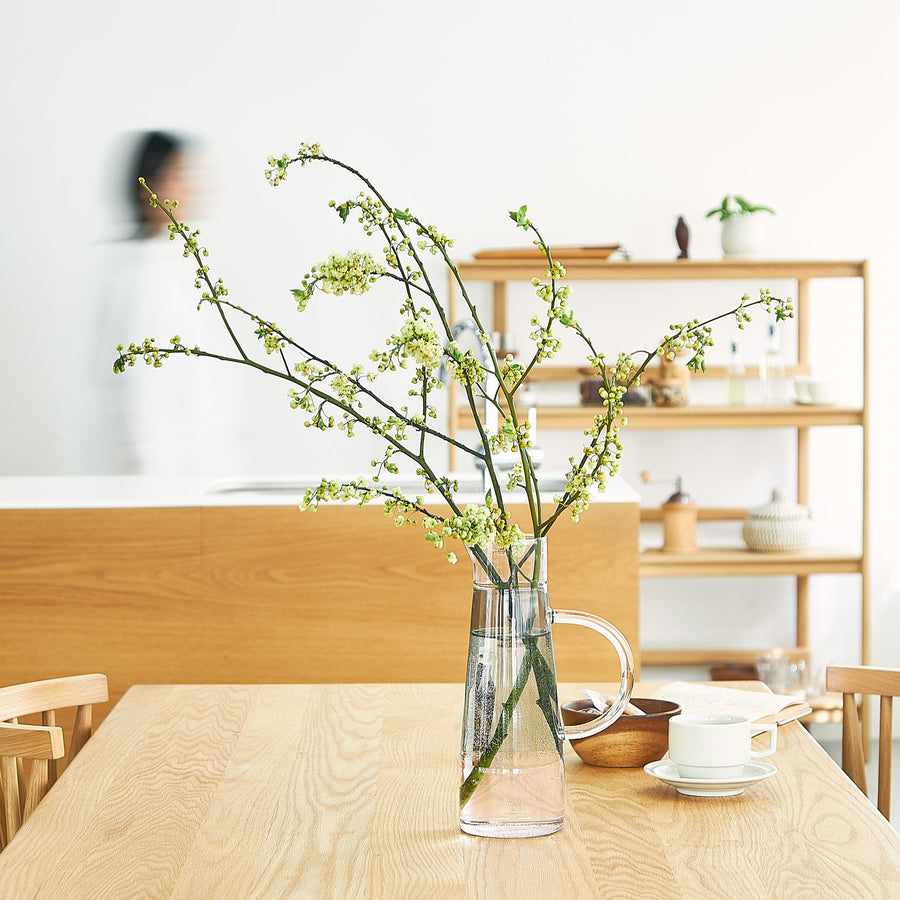
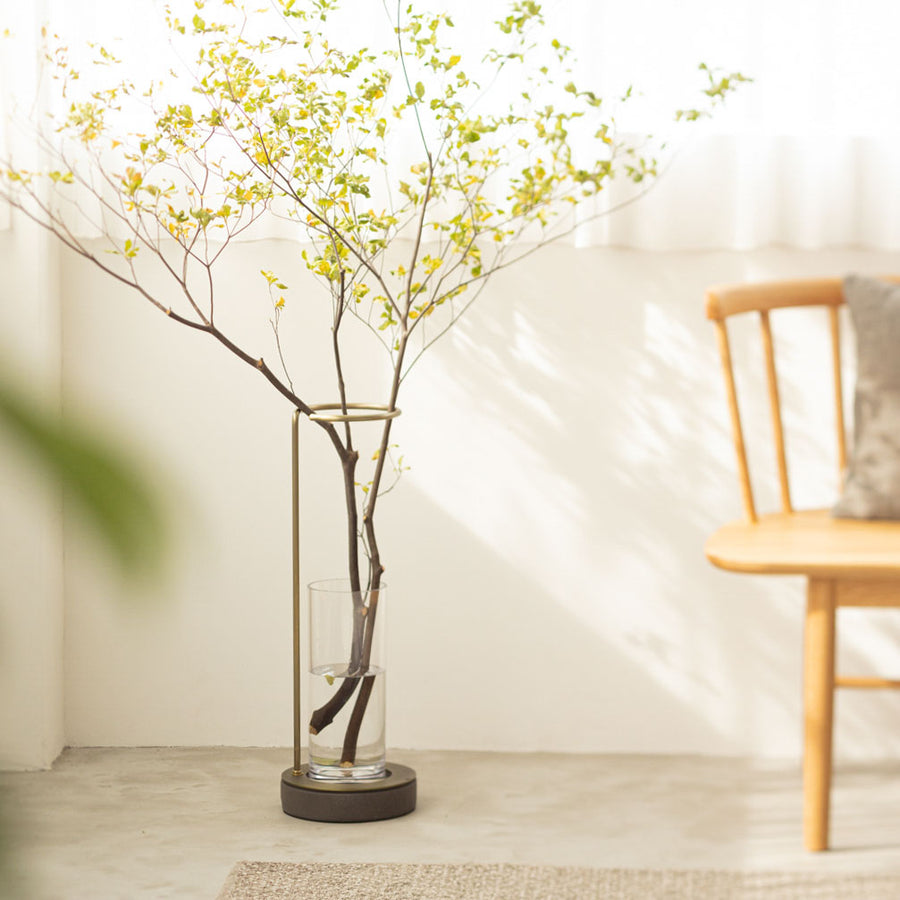
For vases, calm-colored ceramic pieces or simple glass bases that enhance the vibrancy of the berries are recommended. Choosing neutral-colored vessels like white, black, or grey will further highlight the contrast of the red berries, creating an elegant and modern look.

Vase Collection Perfect for Branches
View products 〉
Interior Decor Examples with Winterberry
Simply placing winterberry in a room draws attention with its vibrant red color.
By arranging the branches to emphasize their natural flow and lines, the delicate beauty unique to winterberry stands out. Even a rough arrangement of a few branches makes a statement, perfect for winter interiors and New Year's decorations.
Winterberry, with its seasonal feel of berries and dignified presence, is a quintessential winter branch that adds warmth and depth to any space.
Precautions when arranging in a vase
When arranging in a vase, the first thing to be careful about is to cut the branches to fit the vase if they are too long. If left too long, they can become unbalanced or spread out too much, making it difficult to create a cohesive look.
Making an incision in the part of the branch that will be in the water will increase the surface area in contact with the water, improving water absorption. Fill the vase with water just enough to cover about a third of the branch, and change the water frequently.
When making incisions in branches, it is recommended to use pruning shears designed for branches and woody plants. The trick to choosing pruning shears is to select a size that fits your hand.

Toyama Hamono|Pruning Shears for Life, Even for Thick Branches
View Products 〉
How to Care for Winterberry
Winterberry branches are adorned with dense berries that are relatively difficult to drop, making them easy to care for. By understanding their characteristics and providing diligent care, you can enjoy their beauty for even longer. Here, we introduce basic branch care methods.
Basic Care
1. Recutting upon arrival

It is recommended to recut the branches on the day they arrive and display them in a vase. Making a cross-shaped incision in the cut end and peeling back the bark will promote water absorption.
Additionally, using water with a floral preservative will keep the water clean and allow you to enjoy the vibrant color of the flowers for longer.
This is a small effort to enjoy the beauty of branches for a longer period!
■Freshness Preservative for Longer-Lasting Branches

To provide necessary nutrients to your branches and keep the vase water clean, why not try a freshness preservative? It has the effect of dissolving tree sap at the cut ends to improve water absorption, allowing you to enjoy your branches for longer.
Branch-specific freshness preservatives are available here.
■Florist Knife for Better Water Absorption

The VICTORINOX florist knife, which improves water absorption by peeling the bark off the part that will be submerged in water, is available here.
It offers reliable quality, trusted by professionals worldwide.
2. Choose a comfortable spot for your branches
Branches thrive in cool, well-ventilated areas away from air conditioning drafts.
Whether in the living room, entryway, or kitchen, they have the power to dramatically transform the atmosphere of a space. Be sure to choose a spot that avoids direct sunlight and allows the branches to stay comfortable.
Placing them in quiet and serene spaces like a bedroom or bathroom is also highly recommended.
3. Frequent water changes

Change the water frequently before it becomes cloudy. At this time, recutting the stems will also help them absorb water again.
Removing any sliminess from the stems or cutting them diagonally are small efforts that help maintain their beautiful condition.
What to do if your branches are still not thriving...
Cut them short and enjoy them in smaller arrangements

Even with daily care, branches will inevitably absorb less water over time. In such cases, it's a good idea to boldly cut them into shorter pieces.
Cutting them shorter makes it easier for them to absorb water, and arranging them in small vases allows you to enjoy them with a fresh perspective.
Winterberry Trivia

"Umemodoki" born in America
The scientific name for winterberry is Ilex verticillata. It is known in English as "Winterberry" and is a deciduous shrub of the Aquifoliaceae family native to North America. It belongs to the same group as the Japanese winterberry (Ilex serrata), and was given this name to mean "Western version of Umemodoki".
Originally, it was cultivated in America based on the Japanese and Chinese native Umemodoki.
Because it bears fruit all over its branches despite the cold of winter, it is cherished in Western countries as an indispensable plant for Christmas decorations and wreaths. It is also said to have been named "Winterberry" because its red berries stand out beautifully in snowy landscapes.
Winterberry, cherished as an auspicious tree in Japan since ancient times and loved as a symbol of winter in America, is a beautiful berried branch that warms people's hearts across nations.
Growth and Cultivars of Winterberry
Winterberry is dioecious (male and female flowers are on separate plants), and only female plants can produce the vibrant red berries that densely cover the branches. Therefore, to enjoy the iconic bright red berries, a male and female pair must be planted together.
Cultivars include 'Magical Berry' and 'American Red,' which produce dense red berries, 'Golden Buboom' with orange berries, and 'Snowberry' with beautiful yellow berries.
These branches, with their varying tree shapes and berry colors, are available from October to December. They are ideal for garden trees, potted plants, and decorations like Christmas wreaths, and are popular as a branch that evokes the atmosphere of autumn and winter.
All varieties are characterized by densely packed berries on the branches, which are relatively resistant to falling, making them attractive for ornamental use and as floral material in arrangements.
Winterberry Summary

Winterberry (Ilex verticillata) is a deciduous shrub of the Aquifoliaceae family. Its beautiful appearance, with vibrant red berries densely covering its spreading branches, evokes the feeling of autumn and winter.
It was named "Umemodoki" (梅擬, literally "plum imitation") because its branches resemble those of a plum tree.
Its flower language includes "tolerance," "deep affection," "cheerfulness," and "wisdom." Its steadfast presence, blooming gracefully even in the cold winter, is cherished by people.
Winterberry is popular for garden trees, potted plants, Christmas wreaths, and New Year's decorations. The sight of its lustrous berries densely covering the branches provides comfort and elegance, bringing warmth and cheer during the cold season.

【SiKiTOのよみもの】枝もの図鑑
よみもの一覧をみる〉

枝もの定期便|自宅で待つだけ、飾るだけ。
商品をみる 〉
PRODUCTS






![[Made to order] Green Summer Wreath made with summer branches (fresh flowers)](http://sikito.com/cdn/shop/files/20250702_-15.jpg?v=1751530871&width=900)


![[Made to Order] Four Seasons and Bonsai: Summer | Japanese Maple](http://sikito.com/cdn/shop/files/yomimono20250912.jpg?v=1756106914&width=900)
![[Pre-Order] Seasons and Bonsai: Summer | Gardenia](http://sikito.com/cdn/shop/files/DSC09951a.jpg?v=1779693971&width=900)
![[Made to Order] Seasons and Bonsai: Summer | Crape Myrtle](http://sikito.com/cdn/shop/files/DSC0468_2.jpg?v=1779774773&width=900)
We also recommend this article

Eucalyptus populnea is an evergreen t...


